TV Antenna Installations Guides & Resources

Trending Searches

Plumbers

Dentists

Hairdressers

Electricians

Do You Need an Antenna for Digital TV?

Do You Need an Antenna for Digital TV?

Digital antennas come with a built-in filter to improve image quality, as well as to reduce blur. The era of digital television in Australia began in 2013. If you do not have cable or satellite services a digital antenna provides the station signals to be transmitted more clearly on your TV, and helps amplify the signal, especially if you are on the edge of the station range. The only drawback is that the reception will not be as good and unless you live in a very flat area, most likely you will need to adjust your antenna after it is installed. Antennas come in all shapes and sizes depending on where they are installed. If they are placed on a roof mount most likely they will look like any other TV antenna with two metal arms. However if they are mounted indoors, such as on a wall or near a window or door, they might look more like an architectural model of the Eiffel Tower than an antenna since most building materials do not allow for proper reception. This can be used to their advantage in some cases since unlike traditional antennas these newer ones designed for interior installation can often incorporate style factors. Unfortunately it is almost impossible to recommend one antenna suitable for all applications; the best thing to do is visit a store and compare products. The most important factors are range and location; if you live very close to the transmitters then your reception will be much better than someone who lives further out and wants especially strong signals. ## How does a digital antenna work? Digital signals work a little differently from analog. With analog, the signal is transmitted directly from your antenna to your TV. So in case of any signal problems, you may experience blurring in the program (sound or image). With digital, the signal needs to be decoded before you can see or hear a program. Digital antennas come with a built-in filter to improve image quality, as well as to reduce blur that may occur because of a blurry signal. This is done through the UHF Band (Ultra High Frequency) and VHF Band (Very High Frequency). HDTV antennas receive electromagnetic signals that convert them into video and audio. An exterior-mounted HDTV antenna also pulls signals from more than one station, which decreases your risk of picking up a weaker signal during an outage at another station along the same line of sight. In fact, many service providers will recommend an exterior installation because it's less likely you'll lose reception during bad weather. The downside to an exterior installation is that your signal may be affected by trees and buildings. The higher your antenna, the further its reach under most circumstances. Some antennas are better at sending signals around objects than others, although a high-quality HDTV antenna will usually outperform a standard model regardless of where it's located. In cases where you live in a rural area or other location where you cannot get a clear line of sight to the broadcast towers, an outdoor HDTV antenna should work best because it can capture very weak signals from long distances away. ## How much will a digital antenna cost me? When installing a digital antenna, specialised equipment may be required, such as additional internal wires and electrical switches. Depending on the complexity of the job, the installation of a digital TV antenna can cost from about $250 to over $600. Various factors that influence the price of the antenna installation are listed below. - Location - Size and quality of the antenna - Time required to install equipment - Experience and workmanship of the technician - If you require a TV booster or amplifier - Complexity of work - Access to the antenna

Tv Antenna Installations Guides & Resources
TV Antenna Installation Cost

TV Antenna Installation Cost

There are many types of TV antennas on the market, each with its own set of pros and cons. Depending on the difficulty of the project, installation of a digital TV antenna may cost anything from $200 to over $500. To install a TV antenna, a professional first needs to determine the location of the best signal. They will then need to measure the distance between the antenna and the TV points. The type of antenna system and any faulty components obstructions must also be considered when estimating the cost of antenna installation. To determine the best location for a new TV antenna, a professional will need to take some measurements. The first measurement is from where the antenna will ultimately be located to an optimal place on the home's roof. Once installed, an amplifier may need to be connected between the cables leading up to each TV point and the antenna to ensure good signal strength and reception. If there is more than one TV system in the home, the amplifier will need to be connected to each. The price of an amplifier can range from $25 for a cheap antenna to $100, depending on the brand and quality of the TV antenna installed. The type of TV antenna chosen for a home also affects the overall digital TV antenna installation cost. Roof-mounted digital TV antennas are typically less expensive to install than an attic-mounted antenna, but they may be less effective in picking up signals. Many factors go into the cost of installing a new antenna, so it is essential to consult with a professional before starting any digital TV antenna installation project. ## What types of TV antenna can I get? There are many types of TV antennas on the market, each with its own set of pros and cons. The type of antenna that is best for a particular home depends on various factors, including the distance between the house and the nearest broadcast tower, the size and shape of the home, and the number of TV systems. The most common type of antenna is the rooftop antenna. This type is typically installed on or near the roof of a home to get an excellent line-of-sight to broadcast towers. Rooftop antennas come in both amplified and unamplified varieties. ## Do I need a digital or analog antenna? A digital antenna will be required if a home has a digital TV or converter box, but not if it only has an analog TV that cannot receive high definition signals. Analog antennas are no longer being manufactured since they are considered underperforming TV antennas. However, many people still use them to pick up over-the-air signals though they are considered cheap and nasty antennas. If you have an HDTV, you will need a new digital TV antenna to get the best picture quality. If your TV is not HD, you may still be able to use a digital antenna to receive some high-definition channels. However, the picture quality will not be as good as HDTV. Some people choose to use an indoor TV antenna, while others prefer an outdoor TV antenna. Indoor antennas are smaller and can be placed on a tabletop or mounted on a wall. Outdoor antennas usually give better reception than indoor antennas. Still, they can be more challenging to install and may require a higher price since they may involve drilling through your home's roof or exterior walls. ## How much does a roof antenna cost? The [cost of a roof antenna](/guides/tv-antenna-installations/tv-antenna-cost) typically varies depending on its size, brand, and technology. For example, an outdoor amplified HDTV antenna may cost $60 to $80 at the low end or up to $200 for higher quality brands. Most rooftop antennas are mounted permanently on the roof of a home, so there is often an installation fee charged by a professional. The installation cost can range from the price of $50 to $200, depending on the job's complexity. ## Can an electrician install a TV antenna? Many homeowners choose to have a professional install their TV antenna rather than attempt the job themselves. If a homeowner decides to hire professional antenna installers, they will need to find someone who specialises in TV antenna installation. Antenna installers typically charge digital antenna cost installation of an hourly rate between $50 and $100 for their service. ## Can you install a TV antenna yourself? If you're comfortable working on your roof or with electrical wiring, you may be able to install a TV antenna yourself. However, it's important to note that not all antennas are created equal, and some may be more difficult to install than others. Before installing antennas, you will need to consult with the manufacturer or a professional to determine which type of antenna is best for your home. If you choose to install an outdoor antenna, you will need to have access to the roof of your home. You may also need to hire a professional to help with the installation, especially if the antenna must be mounted on a tower or chimney. Installation instructions will typically come with the new TV antenna, and most antennas can be installed in just a few minutes. However, if you're not comfortable working on your roof or with electrical wiring, it's best to leave the job to an antenna installations professional. ## Can I get a wireless TV antenna? Wireless TV antennas are a newer technology that allows people to watch TV without installing an antenna on their roof. These antennas typically use a set-top box or USB stick to receive signals, then send them to your TV. Wireless antennas are a good option for people who live in apartments or condos, as they do not require any tv antenna installation. They also come in both amplified and unamplified varieties so that you can choose the best antenna for your needs. However, wireless antennas can be more expensive than traditional rooftop antennas, and they may not work as well in rural areas. If you live in a rural area, it's best to stick with a traditional rooftop TV antenna. If you need some help with your reception and interference, take a [look at this troubleshoot](https://www.acma.gov.au/tv-reception-and-interference) from the Australian Communication and Media Authority. When choosing an antenna, it is crucial to consider the following factors: - The type of antenna (indoor or outdoor). - The size of the antenna. - The technology of the antenna. - Whether or not the antenna is amplified. - If the antenna is wireless or uses a cable.

TV Antenna Cost

TV Antenna Cost

Outdoor antennas are more expensive than indoor antennas due to their ability to hold a signal despite weather conditions. A simple TV antenna typically costs between $20 and $70. Larger antenna that are designed to pick up signals farther away tend to be more expensive than a smaller antenna. | Type of TV antenna | Estimated cost | | -- | -- | | Basic indoor digital TV antenna | $30 | true | | Indoor digital TV antenna (power boosted) | $50 | true | | Indoor amplified digital TV/DAB antenna | $80 | true | | HD outdoor antenna (non-amplified) | $100 to $150 | true | | High gain and low noise variable gain amplifier | $130 | true | ## TV antenna types There are indoor antennas and outdoor antennas. Indoor antennas are small and are generally placed near the television. Outdoor antennas are more extensive than indoor antennas and must be mounted outdoors. Indoor antennas typically plug directly into the back of the TV set just like a cable box or DVD player would. Outdoor antennas must be mounted on top of the house using an extended mast, pole, or chimney mount to avoid damages in case of a power surge. In addition to finding a good spot for the antenna, a cable runs from the antenna down to where you will have your TV. ## What is the difference between a digital and analog antenna? Digital antennas can receive both digital and analog signals, while analog antennas can only receive analog signals. All major networks broadcast in digital, and most local stations also broadcast digitally. Analog antennas are slowly being phased out since they are considered cheap and nasty antennas, and most broadcasters are now only transmitting in digital. An expert will be able to specify what you need [and the installation cost](/guides/tv-antenna-installations/tv-antenna-installation-cost). If you have an analog TV, you will need an analog antenna to receive any channels. However, you do not need a separate digital antenna if you have a newer TV that can decode both digital and analog signals (called a "digital tuner"). Your TV will be able to receive both types of movements with just one antenna. ## TV antenna tips There are a few things antenna installers need to keep in mind when installing antennas. - You may need an outdoor antenna for better signal quality. - Outdoor antennas work best if mounted with the extended mast in an open area with a clear view of the sky. - The further away you are from the broadcast towers, the larger the antenna you will need to enhance signal integrity. ## Which antenna do I need? The type of antenna system you need depends on the available channels in your area. An indoor antenna will be perfect if you only want to watch local channels. They are the cheapest antennas to install. ## What antenna do I need for HDTV? If you want to watch HDTV channels, you will need an HDTV antenna. HDTV antennas are designed to receive digital signals in HD quality. ## Is digital TV broadcast on a UHF or VHF frequency? Digital TV can be broadcast on either a UHF or VHF frequency. Most new digital tv antenna are designed to receive signals on both UHF and VHF frequencies. ## Can I use a cable or satellite box with my antenna? You can use cables or satellite boxes with your new antenna, but you still need an antenna system to pick up the channels. The cable or satellite box will act as a receiver for the channels broadcast by the new TV antenna. ## What is an amplifier and do I need one? An amplifier is a device that can be used with a TV antenna to improve the signal strength for better reception. If you have difficulty a clear picture with your antenna, an amplifier may help. However, not all antennas require an amplifier and using an amplifier when you don't need it can worsen the signal. ## Do I need an antenna for satellite TV? Satellite TV signals are transmitted directly to your home from a satellite orbiting the Earth. Antennas are only used for terrestrial TV signals broadcast from towers on the ground. Satellite TV works by receiving these signals and then decoding them into a picture that can be displayed on your TV. ## Will I need a signal booster for my television? A signal booster is a device that can improve the signal strength of a TV antenna. If you are having trouble getting a clear picture with your antenna, a signal booster may help. However, not all antennas require a signal booster and using one when you don't need it can worsen the signal. So before purchasing a signal booster, make sure you test your new antenna without one. If you want to watch HDTV channels, you will need an HDTV antenna. Most digital antennas are designed to receive alerts on UHF and VHF frequencies, so they will work regardless of what type of broadcast towers your home is closest to. If you need some help with your reception and interference, take a [look at this troubleshoot](https://www.acma.gov.au/tv-reception-and-interference) from the Australian Communication and Media Authority. ## What is an antenna point? When you purchase an HD antenna, it comes with several "antenna points". An antenna point is simply a connector that allows you to connect multiple TV antennas. This is useful if you want to improve your antenna's signal strength and range and pick up more channels. ## Will I have to get an antenna outlet installed inside my home? Getting an antenna outlet installed inside your home is an option but not a requirement. If you don't want to install an antenna outlet in your home, you can run the coaxial cable from your HDTV antenna out a window or door and hook it up to the TV points directly. However, suppose you decide to install an antenna outlet within your home. In that case, you will need extra labour from someone with technical expertise who has undergone industry training to complete this task. They might charge an hourly rate. ## What are the types of cable used in a TV antenna? Most consider a cable with a solid copper core the best cable type for a TV antenna. However, many cheap antenna(s) now use co-axial cable, which also works well. In most cases, you will have the choice between solid copper-core and co-axial lines when buying your new TV antenna. ## What is the coaxial cable? Coaxial cable is a type of cable that consists of a solid copper core surrounded by insulation and then covered with a metal shield. A cable with a solid copper core is generally considered the best cable type for a TV antenna.

Frequently Asked Questions

Can I save money by installing a new antenna myself?

It may be cheaper upfront but you’ll need to know exactly what type of aerial you need, install it correctly and be able to run cabling for success.

What is the difference between an analog and a digital signal?

Analog television is more prone to fading and interference, while digital television tends to be clearer and receive all transmissions.

What should be the maximum distance between my TV Antenna and my TV?

If the distance is greater than 15 to 20 metres, you may need a television amplifier if your aerial is not powerful enough to make up for the loss.

Download Our App

Screenshot of the Localsearch App
Card highlighting that you can claim and future proof your business with the Localsearch App

Localsearch App

Find local businesses - anywhere, anytime.

Available on the Apple App Store iconAvailable on Google Play icon
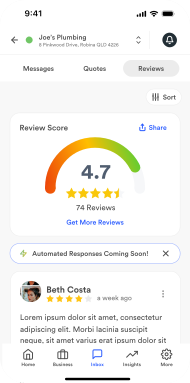
Screenshot of the Localsearch For Business App
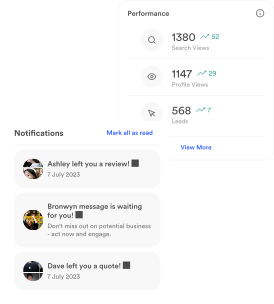
Screenshots of the Performance and Notifications sections of the Localsearch for Business App

Localsearch For Business App

Manage your business - anywhere, anytime.

Available on the Apple App Store iconAvailable on Google Play icon