Private Schools Guides & Resources

Trending Searches

Plumbers

Dentists

Hairdressers

Electricians

Private School Costs in Australia

Private School Costs in Australia

Private school fees vary dramatically from state to state and even from school to school. In some areas, the average total cost of a year at a private institution can be between $10,000 and $40,000, with higher education costs the older the child is. You tend to get what you pay for and it's generally accepted that non-government schools have smaller classes, better facilities and experienced teachers who are able to focus solely on their pupil's needs as compared to public schools. In some areas, private education has a long history and a prestigious reputation. In other areas, experience has taught public school parents that they can often get just as good an education for lesser school fees at a [government school](/guides/public-state-schools/private-school-vs-public-school). This is particularly the case with high schools because of their size and the fact that the bulk of year level planning only needs to cater for one year group. ## Is private school expensive in Australia? The answer really depends on individual circumstances. Some parents are happy to pay high private school fees of around $30,000 as compared to public schooling or catholic schooling. But with the rising cost of living, stagnant wage growth and less discretionary money, for the many families who are paying off a mortgage and trying to feed their kids at the same time, it's not easy to justify spending thousands of dollars each year on [private school](/guides/private-schools/what-is-a-private-school) fees of up to two children or more just so they can have 'a good education'. Some people manage their livelihood and family budget by sending their children to public schools or catholic education such as a Catholic school or a Catholic college. This option has the advantage of offering educational values and a caring environment, but this advantage comes at a price: usually under $5,000 per year. Other Australian families may choose to receive scholarship funds in order to provide their children with quality education. Many people choose to send their kids to catholic education from a Catholic school to a Catholic college because they feel that the system is more stable than those operated by non-denominational private institutions. ## Do kids learn better at private schools? This is a multi-faceted question that can really only be answered by considering the whole spectrum of [non-government school sectors](/guides/public-state-schools/what-is-a-public-school). In general, it's believed that kids at independent schools get a better education as compared to public education because they're surrounded by motivated peers who are encouraged to reach their full potential. Parents often cite smaller class sizes as another reason why their children do better at private schools. Research has shown that this isn't always the case, but it makes sense intuitively because most teachers are able to focus more on individual child's learning without having to worry about management issues with larger classes. In other areas, research has shown that the number of years a student spends at a private school is not necessarily indicative of how well they will do in their final exams as it's easy to underestimate the value of a good education at a disadvantaged school. ## Why is private school expensive? This is a question that only the parents who send their kids to a private school can answer. Generally, though, secondary school fees are going up all over Australia and especially in capital cities. And this has been borne out by the increasing fees charged by many of the country's top private schools. The futurity investment group's planning for education index showed that the estimated cost of the complete private education of a single child born in 2018 for Sydney parents is around $448,035 which is way more above the national average cost. Independent school parents pay these sorts of private school fees because they feel that they're getting value for money. Private schooling tends to have smaller class sizes and better facilities than state-run institutions, so from this perspective, it makes sense to pay top dollar for an education that will give your child a huge advantage in life. In addition, non-government schools' reputations often precede them: this means parents often want their children to be part of something special and justify paying higher fees by focusing on what will be gained rather than lost. There are also a number of non-financial benefits that come with an expensive private school education, including the fact that they may encourage school children to try their hardest and, through this process, they learn how to set goals for themselves and maintain high standards throughout the course of their lives. Whether or not private schooling is worth the money varies according to individual circumstances, but for many parents, this isn't really the point. They're more interested in making their children happy and giving them an education that they will cherish forever. ## What are the extra costs associated with sending your child to private school? As well as increased private school fees, it's important to consider all of the extra expenses and extra tuition fees that can be incurred by a school when deciding whether or not to send your kids to a private school. While you don't pay directly for textbooks at government schools, most non-government institutions expect students to purchase their own books every year. Of course, this doesn't just apply to textbooks: there are also outside tuition fees, stationery costs and any other sports equipment or resources needed for extracurricular activities and school camps. Australian families can spend around $100,000 on extra expenses such as uniforms, sports equipment, outside tuition etc. ## What are the pros and cons of sending your child to a private school? Private schools have some advantages over government institutions: they generally employ better-qualified staff, offer smaller class sizes and provide more opportunities for kids in terms of sport, music and drama. ' This becomes highly valuable as the child progresses to secondary education. However, this comes at a cost: Usually, schools charge around $40,000-$50,000 per year depending on the individual school. An added bonus for most parents is the way in which many private institutions encourage everyone involved (students, teachers and parents) to work together towards one common goal: providing the very best educational experience possible for all of its pupils. At the end of the day, private schooling works for some families but not others. Parents need to decide if they're willing to pay more money for their child's education or whether they'd be in a better position with something more affordable instead such as a public primary school. This decision will ultimately come down to the individual family and whether or not their values align with those of the school. Several private schools in Australia schooling fees start at between $30-$50k per year depending on grade level for regular day students and boarding fees could reach up to $70-$90k per year. They offer a wide range of extracurricular activities and school camps too. Also, it is compulsory that all children participate in one team sport each term. This helps them practice teamwork and leadership skills while staying physically active. For more information on schooling in Australia, take a look at the Australian Government's [Study Australia website](https://www.studyaustralia.gov.au/english/australian-education/schools).

Private Schools Guides & Resources
What is a Private School?

What is a Private School?

Unlike state funded schools or government schools, private schools are privately owned and run. Private schools, also known as independent schools, are non-government schools. The term private school is generally restricted to preschool primary, secondary and prep school levels and is not meant for university or other tertiary institutions. Families choose to enrol in private schools for various reasons. Sometimes for stricter discipline and academic prowess or sometimes their religious background. There are so many options out there, from day schools to boarding schools and from religious schools and parochial schools to Steiner schools and vocational schools, it can be hard to tell which ones offer the best advantages for your child. Private schools or independent schools were originally designed as an alternative option for families who wanted their children educated in a particular religiously affiliated environment and amongst their own values. Unfortunately, this term has become associated with academic elitism and high tuition fee. You shouldn't rule out quality private schools just because of their annual tuition fees or where they are. Such schools offer teachers who take a strong interest in their students' success and parents who dedicate themselves to improving school life for everyone. Before you sign your child up, find out what makes private schools so great, or not so great. ## What makes a good private school? Private schools are said to provide enriched learning environments in small classes and more one-on-one time with teachers to help enhance each student's talents. Some students respond well to this close attention, while others like the bigger social learning experience offered in public schools and public universities. Whether an independent school or not, either will work depending on how your child learns best. Make sure you think about what educational benefits are most important to your child's future before you decide. Another great aspect of private schools is that private schools claim to have a lot of structure and discipline. Someone who needs clear guidelines may do well in a private education system. Don't assume that just because a school is expensive it will necessarily provide better education or have better results. You may find that a school's social life has as much of an impact on your child's happiness at school as what happens in the classroom. Private schools and private colleges can get away with being strict because their students are so willing to bond together. This sense of community helps students succeed academically and socially, but it can be more challenging for shy or sensitive kids to survive in private schooling if they don't feel included. Such students might benefit more from [studying in the public sector](/guides/public-state-schools/what-is-a-public-school). When your child is pursuing higher education, you might prefer a smaller class environment where he won't have trouble hearing the teacher, but when they are in preschool this could be just right for him. What seems like a drawback in public schools may work to his advantage in a private high school. ## What is the difference between public and private schools? One of the main key differences between [public schools and private schools](/guides/public-state-schools/private-school-vs-public-school) is who pays for them. Public schools are funded by the government through public funding and taxation, while a vast majority of private schools or non-state schools are usually paid for by private individuals. Private secondary schools can sometimes afford to pay higher salaries for the best teachers. Private schools retain the choice of selecting students, so you'll need to do extra research before deciding on a school. Many private schools and even boarding schools offer education to children with special needs. Parents often assume that a private school or an independent school will be better than a public school, but the opposite is true in many cases. It all depends on how well each individual school fits your needs! Most public schools often strive to provide an education equal to a private school. If you have more questions about what makes the best choice for your child's education, just talk to his teacher or principal at his current school. They can be a great source for information on different school types and what they might offer your child. ## What is the point of private schools? The point of private schools and independent schools is to offer each child the education they need, with added perks like strong community ties and religious education. Tuitions at private secondary schools vary from school to school, they just charge whatever they think people are willing to pay. There's no one standard for private school fees so you should find out what your expected contribution will be before you sign up as many private schools are more on the affordable side too. Even if it isn't free, there are many ways to get financial aid for kids who want to attend a specific school but can't afford the tuition. You may get more money from a scholarship than straight-up charity, so ask around instead of assuming you'll have to [pay it all yourself](/guides/private-schools/private-school-costs-in-australia). ## Can I get a scholarship to a private school? It's possible. An academic scholarship and art scholarship is usually given by organisations who want to support students who are religiously affiliated to a particular religion, or from families with a specific ethnic background, or to bright students who attend a school with high academic standards. If your child is enrolled in the gifted and talented program at his current school, this can also be helpful when it comes to getting financial aid for private schools and independent schools, especially if they specialise in education for advanced learners. Even though there isn't any kind of "exam" that you have to pass before attending private school, many private schools may ask for a transcript from your current school so they can see how well you're doing. This is especially true if your child has special needs or learning difficulties, and they want to know what kind of support he's getting at his current school before they accept them into a more challenging private environment. Interested in more information about scholarships? Check out the [Study Australia guide](https://www.studyaustralia.gov.au/english/australian-education/scholarships). ## What are some benefits of going to a private school? There are many good reasons that families choose to enrol their children in private schools, including smaller class sizes that offer more individualised attention. Private schools students can also participate in sports teams, clubs and other extracurricular activities that the public sector or a state school just don't have the resources to provide. Private schools and boarding schools often emphasise religious or moral education, so this is something that you'll need to find out before attending an interview at any school-even if they're not required by your local government, your child's current school should still be able to help answer any questions you might have about separate classes for different beliefs. Private schools are usually clean, well maintained and beautiful-which makes them appealing for anyone who wants their child to look back on their time in high school with fondness instead of nostalgia. ## What kind of questions should I ask during a school interview? Your first priority when interviewing a private school or private boarding school is making sure that the faculty really care about your child as much as you do. Don't be afraid to ask questions about how teachers, administrators and other faculty members interact with students-if they seem like they're just in it for the job security or salary, you shouldn't enrol your child there, no matter what qualifications or recommendations they may have. It's also important to see if the public or private schools have a real community behind it. If you get the impression that most people are just phoning in their work and couldn't care less about your child's education, then you should definitely visit another school.

Download Our App

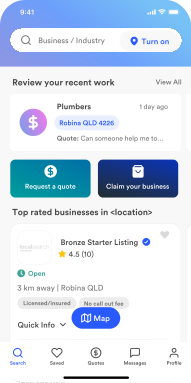
Screenshot of the Localsearch App
Card highlighting that you can claim and future proof your business with the Localsearch App

Localsearch App

Find local businesses - anywhere, anytime.

Available on the Apple App Store iconAvailable on Google Play icon
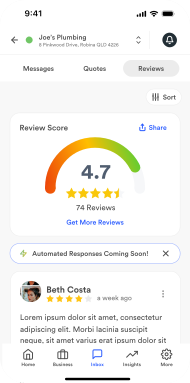
Screenshot of the Localsearch For Business App
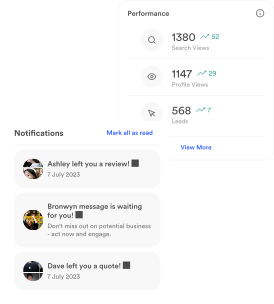
Screenshots of the Performance and Notifications sections of the Localsearch for Business App

Localsearch For Business App

Manage your business - anywhere, anytime.

Available on the Apple App Store iconAvailable on Google Play icon