Plumbing Supplies Guides & Resources

Trending Searches

Plumbers

Dentists

Hairdressers

Electricians

What is a Pipe Cutter?

What is a Pipe Cutter?

Pipe cutters are used by plumbers to cut pipes (and sometimes other round rigid tubes like aluminium bars) to the desired length. A handheld or tubing pipe cutter consists of two wheels (a sharp wheel and an anvil) that can be adjusted to match the circumference of the tube that needs to be cut. The wheel is locked in place, and then the anvil is brought down onto the wheel, which is then turned around the pipe to cut it. Larger pipe cutters can also be attached to a workbench or other surface for more stability. This type of pipe cutter is generally used for larger diameter pipes. The tubing cutter consists of a small wheel that is rotated around the tube to be cut. This type of cutter is better suited for smaller diameter pipes. Pipe cutters can be manual or powered (electric or hydraulic). Manual pipe cutters are usually less expensive, but they can be more difficult to use and require more strength to operate. Powered pipe cutters are easier to use and don't require as much strength, but they are more expensive. Pipe cutter types are suited to the material they are designed to cut. Examples of pipe material types: PVC pipe, plastic pipe, copper pipe, brass pipe, steel pipe and aluminium pipe. ## What is a pneumatic pipe cutter? A pneumatic pipe cutter is a pipe cutter powered by compressed air to make it easier for the user to operate. It consists of a cutting wheel that can be rotated around the pipe, which is locked in place with the anvil. A pneumatic pipe cutter generally uses compressed air at 30 to 40 psi. There are two types of pneumatic pipe cutters: piston-type and ram-type. ### Ram type piston Ram type has 2 pistons with jaws on them, so it cuts with pressure from both sides of the wheel. When cutting larger pipes, sometimes ram-type might not be able to generate enough force so piston-type may be needed as well (which only uses 1 piston). Ram type is more popular than piston type. ### Piston type This type is more compact and lightweight, but it also has a small cylinder that has high-pressure air in it. It usually gives a cleaner cut than ram-type models. However, the only drawback of this is the noise level when it is in use, which is significantly higher. So ram type is more popular than piston type. Pneumatic pipe cutter requires an airflow compressor to operate, so this machine will be heavier compared to electric or hydraulic ones (which don't need any compressed air). The weight of a pneumatic pipe cutter can get up to 23 kg, but some lighter models are available on the market as well. ## How do I use a pipe cutter? To use a pipe cutter, first measure and mark the pipe where you want to cut it, usually a few centimetres from the ends of the pipe. Slip the blade of the cutter over the pipe and tighten the knob on top as far as it will go. Hold on to the pipe and rotate it around the cutter blade. Keep rotating until the blade has gone all the way around the pipe. If you're not sure if you've cut all the way through, try wiggling the pipe; if it moves, keep cutting. When you're done, loosen the knob and remove the cutter. If you’re cutting a copper plumbing pipe in a tight space, you might need to use a [pair of pliers](/guides/plumbing-supplies/what-are-pliers-used-for) for extended grip. If you're cutting a metal pipe, make sure to wear eye protection as a barrier from flying debris. Also, put gloves on to protect your hands from the sharp blade. ## Do I need to file the pipe ends after I cut? No, but it can help to smooth the cut marks. If you have a metal file, use it to remove any jagged edges. If you don't have a file, use coarse sandpaper to smooth the edges. If you're using a pipe cutter to cut plastic pipe, you don't need to file or sand the pipe ends. The blade on the cutter will leave a smooth edge. If you're using a pipe cutter to cut metal pipe, you should file or sand the pipe ends. The blade on the cutter may leave a sharp edge that could cause injury. File or sand the edge until it's smooth. After cutting the pipe, make sure to clean off any debris from the cuts. Use a wire brush, steel wool, or sandpaper to remove any metal shavings or plastic bits. If there is any binding agents or glue on the pipe, use a solvent to remove it. Filing and cleaning are important for copper pipes before applying the material that seals pipe junctions and prevents any leaks. Make sure that the inside of the tube is smooth, any roughness can affect the flow of the fluid inside the pipe, or cause the wires' insulation to wear off. ## Should I use pipe cutters or a hacksaw to cut pipe? A pipe cutter is an efficient method to cut plastic pipes for [sanitary plumbing](/guides/plumbing-supplies/what-is-sanitary-plumbing) and copper pipes. It gives a smooth, exact cut that you can't get with a hacksaw or other hand saws. If you're cutting metal or PVC/CPVC pipes, especially if they're large, use a hacksaw. It can cut through a large diameter or thickness. Using a pipe cutter on these types of pipes will flex and damage the blade and leave jagged edges on the pipe. If you're not sure which type of pipe you have, try cutting a small piece off the end of the pipe. If the pipe cutter works, it will cut through the pipe cleanly. If the hacksaw works, it will cut through the pipe but leave rough edges. There are a few things to keep in mind when using a hacksaw. - Make sure the blade is sharp - if it's not sharp, it won't cut the pipe - Use a fine-tooth blade for metal pipes and a coarse tooth blade for PVC/CPVC pipes - Always use safety goggles when cutting pipes to protect your eyes from flying debris - Hold the pipe firmly against the saw table - Use a vice - undefined ## How to choose the right pipe cutters for plumbing pipes The standard type is made for pipes 1/2 inch to 2-1/4 inches in diameter. A non-standard pipe cutter is used for larger pipes than 2-1/4 inches. There are three types of cutting blades: - A fixed blade that can cut through any material - Some have interchangeable blades for different kinds of materials - Some have adjustable blades, which allow you to choose between two cutting angles such as one for plastic and the other for metal - undefined Also, the choice of pipe cutting tools can depend on plumbing pipes material, for example: - Hacksaw for PVC pipe - Copper tubing cutter for copper pipe to have a clean cut - undefined ## How to use pipe cutters with proper pressure? Proper pressure means you should apply just enough pressure on the handle so that the handles don't move up or down during the cutting process. It will help prevent damage to the cutter and make it easier to cut the pipe. You rotate the pipe cutter around the pipe. It requires more rotations according to pipe size, wall thickness, sharpness of the cutting blade, and pipe material. With a thick iron pipe, the pipe cutting wheel will rotate into the groove cut in the tube to create a clean-cut circle. If you need a stronger hold on the pipe, [try using pliers](/guides/plumbing-supplies/what-are-pliers-used-for). ## Can I use a pipe cutter on galvanised steel pipe? No, you can't use a pipe cutter on galvanised steel pipe. The blade will not cut through the galvanising and you'll end up with a jagged edge on the pipe. Use a hacksaw to cut a galvanised steel pipe. For more information on plumbing, including plumbing standards, take a look at the [NSW Department of Fair Trading website](https://www.fairtrading.nsw.gov.au/trades-and-businesses/construction-and-trade-essentials/plumbers-and-drainers/plumbing-code-standards-and-notes). Check to see if it applies to your local area.

Plumbing Supplies Guides & Resources

What is Sanitary Plumbing?

What is Sanitary Plumbing?

Sanitary sewer systems are critical for our environment as well as our health. Sanitary plumbing is a term that applies to pipes that carry wastewater from bathrooms, related fixtures, and appliances to waste disposal holding tanks or wastewater treatment systems. In construction works, the goal of sanitary plumbers is to get all of this water out of your home safely without any spills or leaks and keep it flowing smoothly through the discharge pipes. A properly installed system will avoid problems such as pressure issues, backflow prevention, corrosion, clogs, failed ball valves and blockages. All of these things contribute to maintaining a safe and clean environment in your home and industrial buildings. ## What is the difference between sanitary plumbing and regular plumbing? Sanitary plumbing is a system of wastewater pipes that collects all wastewater from the sinks, bathrooms, toilets, washing machines and drains it into the wastewater treatment system. This sewerage and soil pipe system is separate from the other water supply and waste systems in your home, such as the sprinkler system and irrigation drainage. Sanitary sewers move sewage to sewage treatment plants where it is processed. Building regulations govern the installation of a sanitary system. The pipework of a sanitary plumbing system involves installing sanitary stacks where all waste pipes and fittings connect to. ## How do I know if I have sanitary plumbing? If you have bathrooms or fixtures that are connected to a sewage line, then you have sanitary sewers. This might include your bathtub, sinks, toilets, or washing machine drains. A connection can be made with PVC piping which must be properly sized according to local regulations code for proper water flow out of your home. If you are having problems with water not draining away from your home, then your plumber might suspect that these waste pipes are [becoming blocked](/guides/plumbers/how-do-plumbers-unclog-drains). There can be many reasons for this, including tree roots growing into the pipe or debris floating upstream in the sewage system itself. ## What is grey water plumbing? Grey water plumbing is a system of waste disposal pipes that carries water from your showers, laundry appliances, and bathtubs to the sanitary system. This is separate from the plumbing and drainage that carries waste along with it. The water from your laundry, sinks, and tubs is called grey because it isn't as dirty as the wastewater from the toilets. But even though it's fairly clean, this water must still be carried out of your home through a system of white plastic pipes instead of copper or metal ones so that they don't get mixed up with the other plumbing. ## Does sanitary plumbing save water? Using sanitary plumbing helps conserve water in your home. It reduces the amount of water that has to be treated at the sewage treatment plant by removing it from your home before it becomes wastewater. Sanitary sewer systems are critical for our environment as well as our health. They help prevent flooding and pollution of rivers, lakes, and oceans by keeping wastewater out of these sources. Cities often have their own set of rules for plumbers to follow regarding sanitary plumbing systems because there are so many dangers associated with them. These include the potential for backflow from sewage treatment plant water into your drinking water supply, as well as contaminated storm water runoff that can pool in street gutters and local waterways. ## What is sanitary plumbing made from? Sanitary storm sewers are made from PVC, ABS, or cast iron. They are usually white. Sanitary discharge pipes usually start at the building drain and terminate at the public sanitary sewer main line. ## Why do I need sanitary plumbing lines? If you purchase a home that was built years ago, then it's likely that the water supply and wastewater systems were connected. This means that these two types of pipes are running together in some areas of your home. While this might not be a problem during normal operation, if one of these systems experiences backflow or debris blockage, then there is a possibility for contamination of the other system. This might cause issues. These days, building construction codes require that water supply and wastewater sanitary plumbing pipes are separated to avoid this scenario. ## What happens if my sanitary plumbing line gets blocked? Blockages in sanitary sewers can lead to wastewater backing up the drainage work and entering your home. If this happens and you find out about it soon enough, then the damage might be limited to just a few connection fixtures that get contaminated. A local plumber may give you a [good price estimate](/guides/plumbers/australian-plumbing-cost-guide). However, if you don't discover these plumbing fixture problems until they have spread throughout your existing pipework, then the damage could prove devastating for your home and costly to repair. This is why homeowners need to check their drainage work regularly for any signs of trouble. Sanitary plumbers themselves are only able to determine that there are issues with connected discharge pipes when they can see them or hear evidence of water movement through them during routine maintenance checks. ## How do I maintain my sanitary sewer line? Maintaining sanitary sewer lines isn't really necessary unless you suspect problems. It's always a good idea to be on the lookout for sewage backups, especially after heavy rainfall or snowmelt events. If your plumbing system backs up during one of these times, then it's possible that your line is blocked and needs repair or replacement. In this case, you should call a plumber as soon as possible to take care of this problem. The last thing you want to do is take care of this issue yourself because there are so many dangers involved with dealing with sanitary plumbing systems – broken lines have been known to inject raw sewage into homes. Backflow from treatment plants can contaminate groundwater supplies if not properly contained. However, on noticing a drainage problem, you can check for clogging issues in the inspection shaft. Or at the boundary trap shaft point. ## Who fixes sanitary plumbing? Sanitary plumbers can fix sanitary sewers. This is especially important if the damage to your sanitary system isn't just a small blockage but rather something more serious like a break in the plumbing and drainage pipe itself. If ever sewage backs up into your home or you notice wastewater contamination on your property after heavy rainfall or snowmelt, act fast and call a sanitary plumbing service provider for help. The last thing you want to do is try to take care of this issue yourself because there are so many dangers involved with dealing with sanitary sewers. ## How long does it take to fix a sanitary sewer? The time it takes to fix a sanitary sewer varies depending on the size and depth of the sewer line break. Residential buildings with a simple architectural plan are easier to fix. This fact is also true for straightforward industrial buildings. It can take longer to fix multi storey residential buildings with suspended pipework on the exterior walls. That is why it's important to call a plumber as soon as you notice an issue with your sewerage system. Typically, it only takes about an hour to find the waste pipe disposal problem and start the repair. ## How much does it cost to fix sanitary plumbing? The amount it will cost to fix a sanitary plumbing system depends on the depth of the break. Generally, prices start at $200 for a shallow repair and go up from there, depending on the depth of the problem. It will cost more if the plumber has to access hidden sections of existing pipework or the work requires demolishing concrete parts of the walls or floors to access damaged ground floor waste gully pipe work. It will also cost more where the work needs installing sanitary stacks afresh or replacing irreparable parts, fixtures, [general plumbing traps](/guides/plumbers/what-is-a-trap-in-plumbing) or components of sanitary plumbing system. For more information on plumbing regulations and other resources, take a look at the [Victorian Building Control website](https://www.vba.vic.gov.au/plumbing). Check if any regulations apply to your local area.

What is a Breacher in Plumbing?

What is a Breacher in Plumbing?

A breacher is usually the tap most outside of a water pipe. It allows the water flow to be controlled prior to entering a device. The primary function of the breacher is to reduce water flow velocity and pressure. The chief reason for this is that it protects inanimate objects from damage when they are in close proximity to the pipe. A breacher in plumbing helps distribute water throughout an entire building or house. Breachers can come with or without handles, making them different valves. When there is no handle, then it closes completely when rotated all the way counterclockwise. It does not allow water to flow. Handleless valves are often called gate valves. As with other plumbing system parts, breachers break, leak, and require repair. ## How is a breacher different from other plumbing fixtures? A breacher in plumbing is similar to shut off valves and stop valves because they all serve the same basic function; they control water movement throughout a building or house. The difference between these three types of plumbing fixtures is that while the shut-off valve and stop valves do close completely when rotated all the way counterclockwise, they maintain some level of water flow. In contrast, a breacher allows for no such flow through it at all. ## What is a breacher used for in plumbing? A breacher is a pipe device most commonly connects kitchen taps, showers, and bathtubs to the main pipework. It sits behind the wall and tiles and helps [control the pressure](/guides/plumbers/water-pressure-vs-flow-rate) of the cold and hot water coming out of the tap. This ensures that water will not damage anything or anyone when close to the pipe. However, it is also helpful for preventing injury with other plumbing fixtures such as sinks and hot water heaters. ## What does a breacher look like? The different types of breachers come round or square-shaped. They can have long necks, where the head meets the base of the valve or very short necks. Each style of breacher comes with a different type of handle. The long neck or gate valve does not have any handles attached to it, and the shorter neck or non-gate valve has one open end used to control water flow. ## How do you install a breacher? Plumbers may need to install a breacher if you are experiencing a leaking shower or tap washer. Leaks could have occurred after the tear and wear caused by the expansion, contraction, and constant pressure of the hot and cold water mains. You may also have to install a breacher in case you want to renovate or modify an old bathroom or sink pipework. For this repair job, you or your plumber will need the right tools to install, fix or do repairs to a breacher. A breacher is a plug-type valve, which means that once installed, it cannot be removed without cutting the pipe. - Turn off the water supply to the taps. - Select location for new fixture and mark with a pencil on the wall. - Remove cover from new fixture to expose piping. - Loosen two compression nuts within exposed piping as far as they will go by hand or wrench until there's no more resistance. A vice grip can also be used if necessary. These are located below and above, where the nut will be tightened later. The Teflon tape that came wrapped around the threads of the new valves should also be removed before proceeding any further. - Remove the entire compression ring from the valve. - Slide the valve into the piping before closing off both openings with your hand to avoid water spills. - Once fully seated, tighten compression nuts by hand until snug. If using a wrench, ensure that it's tight enough to prevent leakage but not so tight that you crack or split the product. Then wrap Teflon tape clockwise over each nut several times and finish with another compression ring to secure in place. Make sure valves are also completely closed when completing the installation process. ## How do you test a breacher in plumbing? A breacher can be tested by rotating it counterclockwise all the way and allowing it to sit like that overnight. This will ensure that there is no leakage when water pressure rises throughout the day. If there's no noticeable leakage, then the valve has passed successfully. ## What is a plumbing boundary trap? A boundary trap prevents foreign objects from entering the drainage system. It also captures unwanted objects after we flush toilets. It has a horizontal bend at the bottom that angles upward, which prevents objects like hair and debris from dislodging into the pipe. The boundary trap is the outlet that drains [sanitary plumbing](/guides/plumbing-supplies/what-is-sanitary-plumbing) into the municipal or local sewer lines. ## How do you maintain a boundary trap in plumbing? Like the house sewer line, it is essential to maintain a boundary trap. Over time debris and other substances may fill it up. Plumbers use an in-floor auger (snake) equipment to remove hair and other objects from the boundary trap. It's also important not to over-tighten screws on fixtures attached to the drainage pipe to prevent obstruction. For information on plumbing codes and standards, take a look at the [NSW Department of Fair Trading](https://www.fairtrading.nsw.gov.au/trades-and-businesses/construction-and-trade-essentials/plumbers-and-drainers/plumbing-code-standards-and-notes). Check to see if any laws apply to your area. ## What does a T connection look like? As the name suggests, a T connection pipe has a T shape. The T shaped fitting has two openings: one smaller and one larger, which connects separate pipes. The purpose of the T shape is to assist water flow in both directions without any interference. T connection pipes are made of PVC, galvanised steel, or copper. T connecting pipes have a wide range of use in property plumbing services. They combine or divide water mains to various destinations like toilet cisterns, sinks, or [bathroom taps](/guides/plumbers/do-you-need-a-plumber-to-change-taps). ## How do you install a T connection in plumbing? A T-shaped fitting must be installed prior to the installation of each fixture. It is important to take extra precautions and not forget this step, or there will be no way for water to flow into the fixture. If you want to do the installation job in person, follow the below steps. 1 Turn off the water supply. 2 Unscrew a small portion on top of the new faucet with an adjustable wrench until it comes completely loose. Some fixtures may have plastic or metal mounting nuts that can be removed by hand instead. These will need to be replaced later when finishing up your modifications. 3 Remove cover from exposed pipework and loosen compression nut using adjustable equipment such as a wrench or vice grips approximately three-quarters of the way around if possible. Again, some fixtures may only have plastic or metal mounting nuts that can be removed by hand. This nut must also remain loose until the end of this step. 4 Once the small portion at the top is completely detached from the main fixture, tighten the compression nut with an adjustable wrench or vice grips, ensuring it's evenly tightened around all sides to prevent leakage. Failure to do so could result in a broken product and serious damage if water leaks inside the wiring during the installation process. Make sure not to over tighten as this will damage the swivel mechanism. 5 Once all bolts are secure, re-tighten the compression nut with a piece of adjustable equipment and replace plastic/metal mounting nuts if necessary. Make sure to tightly screw these down as well, so there is no leeway for them to become loose and cause a clog or leak after installation.

What Are Pliers Used For?

What Are Pliers Used For?

Pliers are tools used to hold objects firmly and have been around since Bronze Age Europe where they were used in shaping metal. This is the reason why they are typically made with long handles and jaws capable of exerting great gripping force. They are also useful for working and shaping a wide range of materials. People often use pliers as simple pincers, to grip and bend wires, for example. Others use them as clamping devices by placing the object to be clamped in the jaws and then tightening a screw or bolt on the handles making pipes [easier to cut](/guides/plumbing-supplies/what-is-a-pipe-cutter). Some other pliers are also specifically designed for electrical work, such as wire strippers. These have blades that strip away the insulation from electrical wires. There are also locking pliers, which can be used as a vice to hold objects firmly in place. ## What are the different types of pliers? There are various kinds of pliers that are differentiated by their size, shape, or function. ### Diagonal-cutting pliers Diagonal-cutting pliers, also known as wire cutters, are a hand tool used to cut hard materials like wires and tough plastic bands. It is one of the most common tools found in workshops. The diagonal pliers can be distinguished from other types of cutting pliers because their jaws open at an angle; the lower jaw slides forward with respect to the upper jaw which remains fixed during the cut. ### Long nose pliers Long nose pliers, sometimes called needle nose pliers, are another type of spring-loaded gripping tool that works best when you need to manipulate small objects. This type of plier is not only used with jewellery but is also useful for electrical work or general repair. The types of pliers used for electrical work are insulated against electric shock. ### Slip joint pliers Slip joint pliers, as the name suggests, can be adjusted to fit objects with different thicknesses, either small or larger like bolt heads. They have relatively flat jaws with teeth on their gripping surface to help hold small objects. Some have scissors-like cutting-edges to cut wires. Which makes them ideal for working on plumbing and automotive projects alike. ### Water pump pliers Water pump pliers, sometimes known as groove joint pliers, are designed to hold pipes in place while tightening nuts and bolts. It comprises a pair of serrated gripping jaws that can be rotated by rotating an upper handle to secure an object between the teeth in the head of the pliers. These are often used when installing pipework for [sanitary plumbing](/guides/plumbing-supplies/what-is-sanitary-plumbing). ### Bolt cutters Bolt cutters are used for cutting metal and designed to cut through smaller objects like nails or bolts. Bolt cutters are much larger than wire cutters and have serrated jaws which allow you to grip an object before it is cut. ### Pipe-cutters Pipe-cutters, also known as tube-cutters, are particularly useful when you need to make clean cuts in copper tubing or other soft metal pipes. These types of pliers consist of a pipe cutter blade attached to one end of the handle. ### Tongue-and-groove pliers Tongue-and-groove pliers have two flat gripping surfaces separated by a thin web that comes in different sizes. These pliers are perfect for gripping pipes, and holding, or pulling objects made of soft metal like copper, aluminium and lead. ### Channel lock pliers Channel lock pliers, also known as groove joint pliers, contain an adjustable flat jaw with serrated teeth placed inside an adjustable sliding upper jaw. ## What should I look out for when buying pliers? Here are a few things to think about before selecting your ideal pair of pliers. ### Jaw size The first thing you need to consider is the width of the jaws because this determines how large your workpieces can be. For instance; if you're using it to strip wire then it's best to go for a pair of pliers with larger jaws. However, if you're using it for jewellery then small or medium-sized adjustable pliers will do just fine. ### Construction material Construction material is another factor you should consider before buying your pair of pliers. Pliers made from electrical steel are capable of tackling tough tasks since they have a higher tensile strength and malleability compared to non-electrical steel. This means that they can withstand a lot more strain without breaking apart or becoming deformed. ### Manufacturer Lastly, choose the manufacturer carefully as well because there are those manufacturers who offer pliers which are not up to standard. For instance, some manufacturers use poor quality materials in their pliers which can lead to the pliers breaking easily. So, always do your homework on the different brands before settling for one. ## What are pliers not used for? Pliers are not only used for gripping and holding objects but can also be used for cutting. However, there are some objects which pliers should not be used to cut. Wire cutters should not be used to cut nails or bolts as this can damage the blades of the wire cutter. It's best to use bolt cutters or a hacksaw for metal objects that need to be cut. Pipe-cutters should not be used to cut through metal pipes as this can damage the blades of the pipe cutter. It's best to use a hacksaw for metal pipes that need to be cut. ## How do slip joint pliers work? Slip joint pliers are the type of pliers where the jaw can be adjusted by pulling out or pushing in the flat handles. Slip joint pliers have two to three positions for the pivot point. This allows you to grip objects of varying sizes while minimising pinching your hands. ## How do needle nose pliers work? Needle-nose pliers, also known as precision pliers, are ideal for tasks requiring fine motor skills like jewellery making and electronics because it allows you to pick up small items easily. Needle nose jaws usually contain teeth that help maintain a firm grip on smaller objects which also minimises slipping during use. Furthermore, needle nose pliers come with long handles that are easy to grip, making them ideal for delicate tasks. ## How do wire cutters work? Wire cutters are used for cutting wire by forcing the wire against a flat serrated blade running along one or both edges of the jaws. Wire cutters usually have curved handles with an L-shaped handle section and a smooth notch where you can place your index finger while cutting wires. This allows you to make cleaner cuts when using it in tight spaces like electrical ducts and wiring conduits because your hand is well-concealed from the sharp blades. No matter what tools you are using you need to keep safe. WorkSafe Tasmania has a [handy guide to workshop safety](https://worksafe.tas.gov.au/topics/Health-and-Safety/hazards-and-solutions-a-z/hazards-and-solutions-a-z-pages/w/workshop-safety).

Download Our App

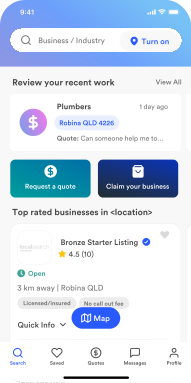
Screenshot of the Localsearch App
Card highlighting that you can claim and future proof your business with the Localsearch App

Localsearch App

Find local businesses - anywhere, anytime.

Available on the Apple App Store iconAvailable on Google Play icon
Screenshot of the Localsearch For Business App
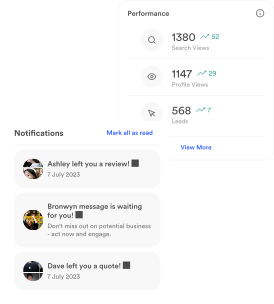
Screenshots of the Performance and Notifications sections of the Localsearch for Business App

Localsearch For Business App

Manage your business - anywhere, anytime.

Available on the Apple App Store iconAvailable on Google Play icon