Mobile Auto Electricians Guides & Resources

Trending Searches

Plumbers

Dentists

Hairdressers

Electricians

What is a blue slip?

What is a blue slip?

A Blue Slip serves as an important part of the compulsory third party car insurance process in New South Wales. Owners of unregistered vehicles in NSW need a blue slip inspection to ascertain the roadworthiness of the vehicle. A Blue Slip is a safety check report from Service NSW that confirms that a car has met the necessary roadworthy, design and identification standards. It is an official inspection you must undergo to check that your car meets certain criteria, including the below. - The correct year model for registration purposes - The stated odometer reading is accurate - The vehicle has a current roadworthy certificate - The vehicle identification number (VIN) does not contain any missing numbers or letters which are illegible due to paint overspray, rusting, chipping, or fading - The design inspection confirms that the vehicle meets the manufacturer's standards - The vehicle passes the written-off vehicle check - To ascertain details that have changed significantly, like a new engine, are correctly reported in the registration records. Blue Slips are also used in cars that have been imported into New South Wales from another location within Australia before RMS can issue number plates. ## What gets checked for a Blue Slip? he Blue Slip Safety Check is a full inspection of a car's current condition. Blue slips serve as a certificate from the NSW Government that says your vehicle meets all relevant standards under the Road Transport Act. Every unregistered vehicle or one whose registration is more than three months after expiry must pass a blue slip vehicle inspection. In order to pass the blue slip inspections, there are several things that must be confirmed at the service centre. These include: - That the vehicle identification number (VIN) is readable and not worn away, obscured by rust or paint, or otherwise illegible - All seatbelts must work properly - Horns and brakes need to function correctly - Flashing lights need to work properly - Windshield wipers and washers need to operate at all speeds without interruption or failure of any kind - The car's headlights need to work properly, including high beam and direction indicator lights - The car's taillights need to work properly, including the right colour of lens tinting for each light type - Reverse lights must be functional ## How much is a Blue Slip in New South Wales? The cost of a Blue Slip inspection for a car in New South Wales is around $70. Depending on the type of vehicle (light vehicle, a trailer, or a motorcycle), the cost ranges between $50 to $70. ## What is the difference between Blue, Pink, and Green Slips? A Blue Slip is a certification that your vehicle meets the state government's requirements to be registered and driven on the roads. You need blue slip inspections for an interstate transfer if you have just imported your vehicle and when you want to re-register an unregistered vehicle. A Pink Slip is a safety report issued by a service centre. It is required by the police to confirm that your vehicle meets all state government standards for safe driving. This Pink Slip is also known as an annual safety certification. A pink slip is typically the safety inspection report for your vehicle. Also known as e-safety checks, pink slips are mandatory annual vehicle roadworthiness inspections for all registered vehicles. If you have a failed pink slip, you have 14 days to get defects repaired. After that, the slip expires. A Green Slip is the NSW equivalent of car insurance. It is the insurance policy for compensating third party property damage, third party personal injury, fire, and theft. In NSW, CTP insurance is legally required for all motor vehicles, except for trailers. Trailers should get a green slip for a towing vehicle ## How long does a Blue Slip inspection take? If you need a Blue Slip, you can get it at an authorised inspection station. The Blue Slip Safety Check is a thorough inspection of your car's current condition. It can take up to 40 minutes, but the average time on site for an inspection is around 20 minutes. ## What are some things that could fail my Blue Slip inspection? Not all the components of your vehicle will be checked during the Blue Slip safety check, but there are some components that inspectors will be looking for specifically. These include the below. ### Tyre tread depth and condition The minimum legal tyre tread depth in NSW is 1.5mm; any less than this and you risk having your tyres replaced by the inspector and receiving a failed inspection result. ### Exhaust emissions The inspection is designed to measure the exhaust emissions in your engine, and any increase beyond the legal limit will lead to an automatic fail. ### Brakes Brakes are tested by stopping your vehicle on a slight incline, watching it roll back for 3 seconds, then releasing the brake pedal quickly. This test is also designed to check that there are no leaks in the brake lines and issues with the brakes. ### Seat belts All seat belts are checked during the inspection process. If you have faulty seat belts of any kind, this can be grounds for failing an inspection . ### Lights Your car's lights are checked for proper function and can include high beams, directional indicators, taillights, and more. Any fault with your lights will lead to a failed inspection. ### Windshield wipers and washer fluid The wiper blades themselves must be inspected at their full length, checking them for any cracking or damage. ### LPG/CNG tanks If you have any gas bottles in the car that require servicing by qualified personnel (such as under the bonnet), it is necessary to produce documentation confirming this has been done before you receive a Passed result at an inspection station. A vehicle that fails a blue slip test has 14 days to have the defects corrected and present for re-inspection at your local inspection centre. A new blue slip inspection must be booked If the 14 days expire. ## Where Can I find my VIN number? The Vehicle Identification Number may also be called the "chassis" number. Every car has a unique, 17 digit number found in several places on the vehicle. - Inside the driver's door frame near where you sit when driving - Underneath the steering column - On the left side of the engine bay firewall (a wall between the engine and passenger compartment) - On or around your windscreen, either directly above your wiper blades or behind them - On your registration papers ## What is a Green Slip? A Green Slip is also known as Compulsory Third Party Insurance. It covers injuries and damages caused by your vehicle so long as they do not exceed the specified sum insured provided in the Green Slip itself. Your car must be covered by a Green Slip before you can register it with Roads and Maritime Services (RMS). The insurance companies issue the Green Slip. Green Slips are compulsory in NSW. ## What is Service NSW? Service NSW is a website that handles almost all aspects of car registration and licensing in New South Wales. You can visit the site at https://service.nsw.gov.au/ ## My car has no rego, how do I get it? Your vehicle must be registered with RMS before driving it on any public road in New South Wales. If you own an unregistered vehicle or do not have current green slips, you will need to take your car down to an RMS centre so they can register it for you; this process generally takes up to 30 minutes (or longer). RMS will require a blue and pink slip inspection for registration renewal if the vehicle is older than 5 years.

Mobile Auto Electricians Guides & Resources
Mobile Auto Electrician Costs

Mobile Auto Electrician Costs

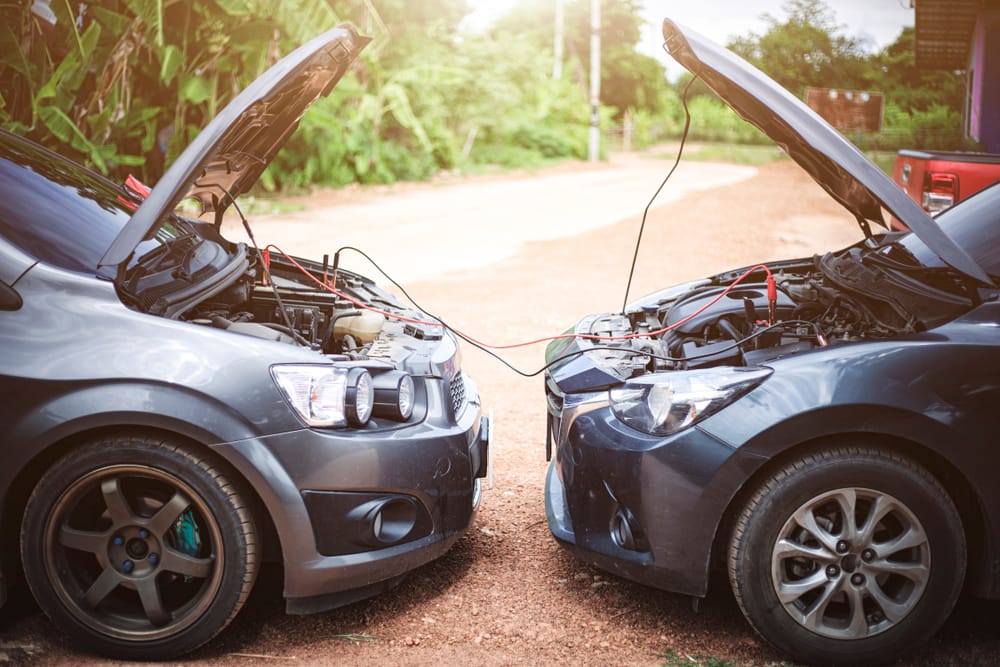
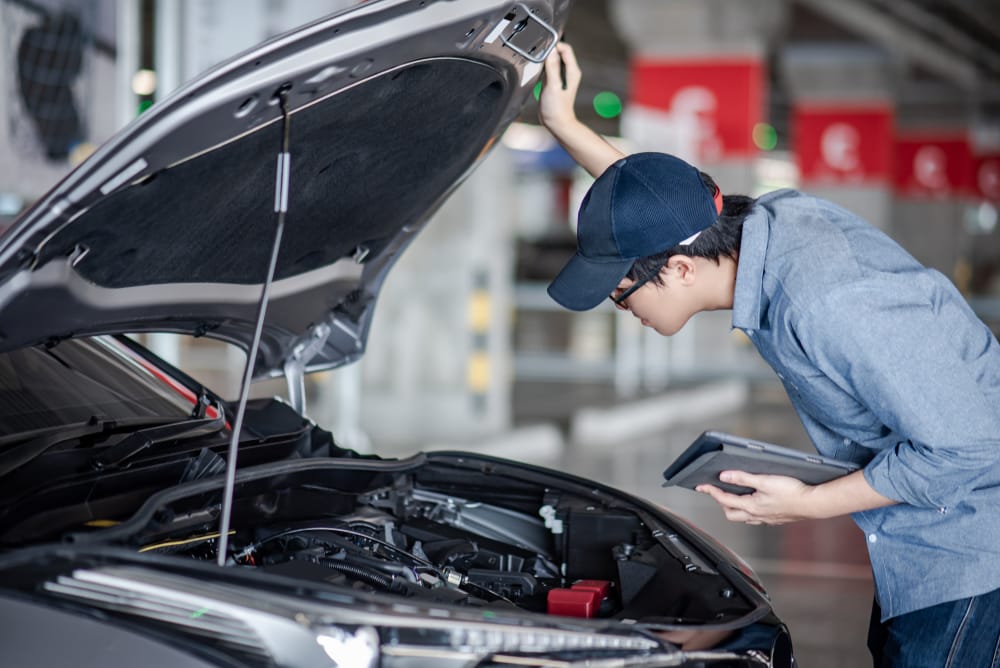
Mobile auto electricians can repair your car's electrical system anywhere and can quickly get your car back to life. Mobile auto electricians give you the convenience of not having to take the car to a garage for repairs. Mobile auto electricians can repair your car's electrical system at any place without causing damage to the surroundings or disturbance to others. These auto electrical repair experts are well trained and able to identify auto electrical issues easily. They will access if you have a dead battery, a failed starter motor, or a faulty alternator. They have complete knowledge of automotive software systems, the latest technology tool, and equipment used in modern and older cars. Some mobile mechanics offer 24×7 auto electrical services so that you can take advantage of their labour services at any time. These experts also offer a warranty on their work and are happy to repair your car in front of you. [Mobile auto electrician](/guides/mobile-auto-electricians/auto-electrician-vs-electrician) costs vary according to various factors such as those listed below. ## Type of job Repairing a big engine is more difficult than repairing smaller components like spark plugs, etc. So, the cost will go up. ## Type of vehicle Servicing some vehicles is more difficult. Modern hybrid and electric vehicles have more intricate wiring systems that are more complex to fix. The expertise required will cause the price to go up. Expect the price of replacement parts for such cars to be higher. ## Number of hours taken to complete the task If the mechanic has a call-out fee or charges by the job or in time increments, make sure you get a clear picture of the pricing structure. ## Authorised certified dealer charges A reputed company charges higher when compared to unauthorised companies or third-party mechanics that may work from home. ## Cost of tools and equipment Specialised tools and equipment may be needed when working on particular cars which may or may not be on hand. ## Onsite auto electrician costs Mobile mechanics do not have shop rents to pay, so they may offer services at lower prices. ## How much do mobile auto electricians charge? Many mobile technicians charge a flat fee for each visit. Some might also charge per hour rate depending on the type of repair required and the kind of equipment used to complete the task, as well as the callout fee. Every auto electrician has a different pricing structure. An average per-hour fee in Australia would be around $65 to 85. Most mechanics claim to charge a minimum of one hour for their services, so if you are being asked to pay them less than this fee, you should question the quality of their service. Hourly rates vary from $50 to $100 depending on where you live and the nature of the repair work. There are some who charge an additional fee if there is no advance booking whereas others will charge a flat rate for night service as well. A typical service may include the below. - Diagnostics services (charged on an hourly basis). - Parts. They either use original equipment manufacturer (OEM) parts or cheaper aftermarket components. Most second-hand car dealers provide such types of replacement parts at reasonable rates. - Labour charges - The duration involved in completing a repair is one of the most important factors that influence labour costs. ## What work won't a mobile mechanic do? Mobile auto electricians may only offer the most basic of services such as car battery replacement, starter motor repair minor service, broken lights, broken power windows, and emergency callouts. They may help with work getting your project car [ready for a blue slip](/guides/mobile-auto-electricians/what-is-a-blue-slip). Some of the jobs that they will not do include the below. - Replacing a major engine part - Repairing major electrical problems - Installing new alloy wheels or tyres - Replacing a gearbox or transmission - Changing an air conditioning compressor - Replacing a timing belt - Installing an exhaust system ## Can I call a mobile mechanic after hours? Scheduling an appointment in advance is advisable so that your car is picked up and repaired at a time convenient for you. However, there are some mechanics who offer 24×7 services for emergency callouts. So, if you have any roadside breakdown, you can contact the mechanic directly. Mobile auto electricians charge higher rates when they visit onsite outside standard business hours. ## Do mobile mechanic services replace parts? If a part is damaged or needs repair during the visit, mechanics will either suggest you replace it with a new one depending on its usability. If your car part is still under warranty and can be covered by your insurer, mobile mechanics will advise you to file a claim and get reimbursed later. ## Do mobile mechanics stock parts? Mobile mechanics do not have a shop to store parts and replacement parts. So, they will require you to purchase the part from a local auto-electrician or car dealer. Getting their hands on the correct spare parts should be an easy task as most mechanics will suggest you use the original parts. However, you can always ask them to check whether a similar replacement part can be used or not. Many mobile auto-electricians may only offer the most basic of services such as battery replacement, testing to find broken wires, or minor service and emergency callouts. The cost of using aftermarket components is cheaper than OEM parts; however, they might not last as long and may affect the performance of your vehicle in comparison with genuine spares. ## What are OEM parts? OEM or original equipment manufacturer parts are car components that are manufactured by the same company as the car. These parts must be standard equipment on a specific model and cannot be purchased separately from the dealer. Car owners who install aftermarket replacement components may void their warranty. However, aftermarket parts are cheaper, saving you money. It is always advisable to purchase OEM parts for your vehicle as they conform to industry standards and offer optimum performance compared with cheaper aftermarket parts. Most reputable mechanics in the industry will not recommend you to install any other type of part except OEM items when carrying out servicing or repairs on your car. ## Does using a mobile mechanic invalidate my car warranty? If your vehicle's battery, alternator, essential lights, or sensors can fail in the middle of nowhere, you may be forced to make emergency repairs yourself or get assistance from a mobile auto-electrician. Such a case may have no effect on your warranty coverage. However, this does not extend to third party accessories that are fitted aftermarket If any of these parts were installed outside the dealer network. For more information on auto electricians, and future job prospects, take a look at the [JobOutlook website](https://joboutlook.gov.au/occupations/automotive-electricians?occupationCode=3211).

Auto Electrician vs Electrician

Auto Electrician vs Electrician

An auto electrician can specialise in re-wiring, maintenance, or repair work of motor vehicles and their complicated computers. Auto electricians are electricians who specialise in the electrical aspect of car engines and general automotive repair. They usually cover areas such as wiring, rewiring, diagnostics, and auto-electric systems. The work of an automotive electrician can be extremely varied depending on their location. Some automotive electricians may also install alarm systems or sound equipment, others concentrate simply on fixing problems with lights or accessories or even replacing the [battery on your car](/guides/mechanics/what-car-battery-do-i-need). Electricians are responsible for the installation of all electrical products, including various appliances found in homes and commercial buildings, both large and small. An electrician's job might include installing fixtures like light switches, repairing fire alarm devices, testing power circuits for shorts or open circuits, replacing fuses, circuit breakers, and outlets. Electricians with specialised skills install and repair electrical components such as air conditioning. ## Do mechanics do electrical work on cars? Many mechanics cover the electrical aspects of cars as part of their overall service. Their work is likely to include troubleshooting electrical faults and the maintenance or replacement of faulty components like alternators and voltage regulators. After the testing process, an auto mechanic can also carry out installation work like fitting mobile phone chargers, sound equipment, cabling for alarms, and anti-theft systems. ## What are the tasks of an auto electrician? An auto electrician can specialise in rewiring, maintenance, or repair work of motor vehicles. The former might include fault finding of car's computer-based equipment, component replacement, and system upgrades involving wiring, systems for alarms, radio communication, sound equipment. Necessary repairs may involve replacing faulty components like starters or alternators. Other tasks would include diagnosing electrical or electronic faults, installing lighting systems, changing broken brake lights, and cabling for audio equipment, including speakers, radios, and CD players. With additional apprenticeship and training, automotive electricians also extend their services to customers who own heavy vehicles such as specialised trucks and equipment used in mining, construction, and excavation activities. ## Do auto electricians diagnose faults with a car? In order to repair a car, an auto electrician needs to diagnose the problem. In most cases, this means carrying out tests with a multimeter to establish whether a component is faulty or there is a break in the wire somewhere. Once the broken part has been located, it can be replaced, and repairs carried out to ensure the smooth running of systems, including ignition and start-up. ## Does an auto electrician need accreditation? Certification and accreditation are requirements for those who want to engage in the testing and repair of car electrical systems. Auto electricians must have achieved the competency requirements to be licensed or certified. Automotive electricians must undertake structured training. The education process includes a combination of both practical and theory modules and a period of placement working with a qualified auto electrician. In order to meet certification requirements, an individual must complete several years of apprenticeship before they are considered competent enough to go it alone. To become a certified or qualified auto electrician, you will need to undertake either a Certificate course in Vehicle Technology or Automotive Electrical Technology. The course will combine both theory and practical modules carried out at TAFE colleges across Australia, which are approved training providers for this particular discipline. Besides having minimum qualifications, you must be physically fit to be an auto electrician or an auto mechanic. These two careers involve a lot of manual work, lifting, and long standing hours. There are many job opportunities after completing electrician programs and the necessary apprenticeship. ## Can an electrician work on cars? The majority of electricians have completed electrician programs. They are not trained or qualified to carry out the work of automotive electricians on cars. It is possible for an electrician to carry out diagnostics and repair work if they have completed the automotive electrician certification process needed for accreditation as outlined above. However, in order to call themselves an auto electrician, individuals must undertake years of intensive training combined with real-world experience doing automotive electrical work alongside other qualified professionals. ## Do mobile mechanics do electrical work on cars? Mobile mechanics will not generally carry out electrical repairs or diagnostics for car owners, but a [mobile auto electrician](/guides/mobile-auto-electricians/mobile-auto-electrician-costs) will. Some mobile mechanics offer service contracts which include the replacement of electronic components [like the car battery,](/guides/mechanics/is-a-car-battery-ac-or-dc) warning lights; GPS units; CD players; sound systems, cabling for mobile phones, etc. However, most people would need to have their car taken to a garage where it could be worked on by an auto electrician. Tradies with knowledge of electrical systems as well as mechanical issues can offer emergency roadside assistance. Such a technician can use his auto mechanical knowledge to fix vehicle electrical systems and carry out oil changes and fit brake pads. ## How much do auto electricians charge? For an average automotive electricians work, an electrical wiring mechanic can charge anywhere from $60 to $100 per hour depending on factors like location, skills, and experience. Those who have completed accreditation will generally be able to charge more. It's possible to ask for quotes in advance of work being carried out, but this depends largely on the knowledge of the individual auto electrician. Someone dealing exclusively with rewiring or replacement systems rather than diagnostics may be able to offer a quote after looking at the car and assessing it in person. ## What kind of tools do auto electricians use? Auto electricians will need a basic tool kit to carry out diagnostics and repairs containing a multimeter, hand tools like pliers and screwdrivers; wiring looms and terminals etc. An auto electrician might also use specialised equipment such as oscilloscopes for testing various electronics on the car, including solenoids, ignition systems, fuel pumps, etc. They could also use advanced diagnostic tools like peak and trace meters and digital multimeters. ## How long will it take an auto electrician to fix my car? This time it takes depends on the nature of the electrical wiring or repair work required. Some jobs could take as little as one hour; other jobs could require a complete strip-down and rebuild, which would obviously be a lot more time-consuming. Automotive electricians need to be as precise as possible when it comes to quoting a cost for a job because the time taken can have a significant impact on the overall price. ## Will an auto electrician flash my car's ECU? Some auto electricians are qualified to flash ECUs. However, it's important to double-check whether this is included in the price for repairs before getting any work done on your car because you could be paying for something which has already been carried out. This may also depend on who works on the the ECU as it needs to be flashed with a suitable key by someone who understands the process and how it works. ## What tools does an electrician use? The most basic tool is the wire stripper. This can be used to remove insulation from wires, but it's also handy for removing tags on connectors or terminals. A basic side cutter or diagonal pliers can be used for cutting and bending wires, but if you intend to do more serious work, then you might want to invest in a pair of combination pliers which offer even greater versatility. You'll need some cable crimps so that you can fix your connections securely with insulated grips. If you've got access to a workshop, then it makes sense to purchase an electrician's kit so that everything is gathered in one place rather than having to rummage around for each individual piece of equipment when it comes time to carry out repairs or installation work. ## What is the typical cost for an electrician in Australia? The typical cost of an electrician varies depending on location, experience, and the kind of work they're completing. There are many factors that can affect the final bill, like how much material is required; whether or not permits need to be issued; if it's necessary to undo any existing wiring before the new system can be installed; how long it takes for someone to complete each job; additional charges like call-out fees, etc. A simple re-wiring job could start at $100, but something more complicated might potentially reach up into the thousands depending on what needs doing. For more information on auto electricians, and future job prospects, take a look at the [JobOutlook website](https://joboutlook.gov.au/occupations/automotive-electricians?occupationCode=3211).

Download Our App

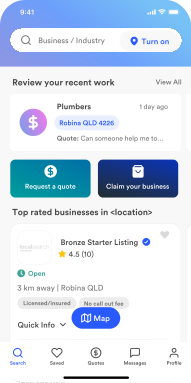
Screenshot of the Localsearch App
Card highlighting that you can claim and future proof your business with the Localsearch App

Localsearch App

Find local businesses - anywhere, anytime.

Available on the Apple App Store iconAvailable on Google Play icon
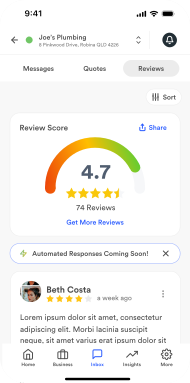
Screenshot of the Localsearch For Business App
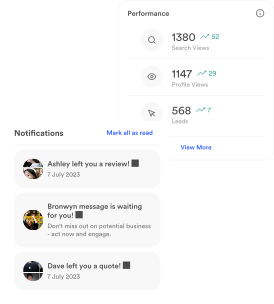
Screenshots of the Performance and Notifications sections of the Localsearch for Business App

Localsearch For Business App

Manage your business - anywhere, anytime.

Available on the Apple App Store iconAvailable on Google Play icon