Lighting & Accessories Guides & Resources

Trending Searches

Plumbers

Dentists

Hairdressers

Electricians

Halogen light vs LED

Halogen light vs LED

Smart LED bulbs allow you to control elements such as colour range, light warmth and strength to your liking. Each type of light has positives and negatives but when put alongside LED technology, Halogen bulbs are mostly on the losing side. Because of their high energy efficiency, [LED lights](/guides/lighting-accessories/making-sense-of-led-lighting) are more affordable to run. For the same amount of light, a halogen bulb consumes up to 500 watts per hour, while LED light uses a maximum of 20 watts per hour. Halogen lights are based on a light-emitting filament. This filament can be extremely hot, consequently leading to heat wastage. Further, this component is prone to shock when on. LED lights are shock and vibration-proof. The average life span of a halogen light is around 1,200 hours compared to 50,000 hours for LED lights. ## Is it worth replacing halogen lights with LED? Changing to LED lights from halogen lights immediately translates into energy savings. Reducing 500 watts per hour to 20 watts per hour for the same light amount is impressive. When it comes to durability, the LED bulb lasts longer than a Halogen bulb. LED bulbs present 50,000 hours lifespan, compared to up to 15,000 hours for Halogens. LED light bulbs require very minimal maintenance and are preferable due to their low environmental impact. Most LEDs are made from recyclable material. With a 40-watt bulb LED gives out 4,000 lumens of light output. A CFL and incandescent bulb of the same wattage provides 2400 and 450 lumens respectively. ## Are LED lights safer than halogen? LEDs use solid-state technology - their light is produced from a semiconductor. This is different from gas emission in halogen lights. Considering fire risk, this is an advantage to LEDs. Overheating is a popular cause of fire in electrical and electronic equipment and LED lights are highly unlikely to overheat and generate a fire. The running temperature for LEDs is significantly lower compared to halogen bulbs. The LED bulb is much cooler compared to the halogen bulb because it features a heat sink. At the lower section of the light, there is a central place where all the heat goes. LED technology ensures that the majority of the electricity is used to illuminate the actual light. The halogen bulb has a significantly higher energy emission which poses a serious fire risk, especially where carpets and curtains are nearby. ## LED light bulb colour temperature meaning When buying lighting, it is important to understand the concept of colour temperature. A simple approach is to imagine heating a metal strip. With sustained heat, the strip assumes different colours. It usually starts with red and ends with blue. Colour temperature refers to the white light shade being produced. If you have ever heard a salesperson talk about a light being “warmer” or “cooler”, they were referred to colour temperature. Colour temperature is measured in degrees Kelvin and cooler temperature corresponds to higher degrees Kelvin while warmer temperature relates to lower degrees Kelvin. Newer fluorescent tubes have cooler temperatures, but conventional incandescent bulb are warmer. LED bulbs can emit warm colour from 2700K to 6500K.

Lighting & Accessories Guides & Resources
Chandelier Installation Guide

Chandelier Installation Guide

Whether in your living room, bedroom or kitchen, you can never go wrong with chandeliers in your home. Installing a chandelier by yourself can be pretty tricky if you've no prior experience. This chandelier installation guide will put you through every step as you replace your old light fixture with your new stunning chandelier. You should also follow along with the instructions guide that came with your box. Get rid of the previous light fixture. Before you start to install a chandelier, the first thing you need to do is to turn off the power supply to the old fixture and start uninstalling it. Confirm that the beam or roof you intend to mount your chandelier on can support the weight. A standard support should hold about 20 kg. Find the right height for your new chandelier: Your light fixture might come with a chain with a length longer than you needed. Decide how high you want your chandelier to be and remove the excess chain links with a pair of pliers. ### Installing your chandelier Every model has its instructions. Assemble your chandelier according to the instructions in the user guide. Ensure that you thread all the wires through each of the chain links. Then, install the mounting strap into the electrical box and hang the chandelier to it via a strong hook. ### Wiring the lighting fixture First, turn off the electricity to your home entirely in order to connect the wires. Then, wrap them around the grounding screw. Follow the wiring procedure in the users' manual and connect all other necessary cables. Finally, tuck the wires into the junction box. Probably best to [refer to the professionals](/guides/electricians/how-to-wire-a-light-switch) for this. Attach and secure the canopy cover to cover the electrical box. Then, add other additional accessories and turn on the power to test your new fixture. ## How do you secure a chandelier to the ceiling? There are several steps involved in attaching a chandelier to the ceiling. Assemble the chandelier components: When it's time to install the light, assemble all the parts in the box first except the bulbs and the canopy which are to be attached later. Measure the required chain length: You can use pliers to remove the excess links after you have your desired size. Next, place and screw a mounting bracket into the electrical box and pass the chandelier's wires through each of the chain links. Hang the fixture onto the mounting strip. Wire the fixture following the users' guide and push the wires into the junction box. Then, add additional items like light bulb nds, and test the lights to see if it works well by flipping the light switch on. Finally, secure the chandelier to the ceiling using lock nuts or bolts. Depending on the model, the process might vary. Check through the users' manual to guide you through each step. You may even have to install your own bulbs - in this case, [LED might be a great option](/guides/lighting-accessories/making-sense-of-led-lighting). ## How high should a chandelier be above a dining table? Before you decide how high your chandelier should be, there are certain factors that you should consider. These factors will help to determine the suitable height to fix your chandelier. - How high the ceiling is. - How high or large the dining table is. - How broad or long the chandelier is.

Do I need heat covers for my downlights?

Do I need heat covers for my downlights?

Heat covers are specially designed to act as an insulator around your light fittings. Heat covers are specially designed shrouds that help prevent the fading in colour, rusts, dents and chips. Downlight LEDs generate heat which must be allowed to dissipate. Heat covers serve as a shield to effectively traps the heat and provide an airtight seal to reduce heat leakage and heat loss. Glass behind light fittings and in the plastic boards of downlights allow warm air to escape so the effectiveness of downlight insulation is reduced. Heat covers are [essential for downlights](/guides/electricians/getting-an-electrician-to-install-downlights). Heat covers stop heat from escaping by filling up the gaps between the plastic board and light fittings. ## Do you need fire hoods for LED downlights? The prime alternative of a fire hood is to slow or stop down the passage of fire through holes cut in the ceilings where the LED downlights sit. If your LED downlights already have a fire rating then fire hoods are not required. You shouldn't use a fire hood in the absence of a fire rating on your LED downlights. Fire hood installation requires disconnecting the wires and reconnecting and fitting the hood. This will cost you more, so it is recommended you get LED downlights that are fire rated. ## Is it OK to put insulation over downlights? Putting insulation over a downlight may be an issue when it comes to safety. It is essential to know the type of downlight that is involved. Downlights are typically are [halogen and LED](/guides/lighting-accessories/halogen-light-vs-led) or integrated LEDs. You can put insulation over some downlights, though it is not often recommended. Use a down light that has been tested and trusted from a reliable source.

Making sense of LED lighting

Making sense of LED lighting

It takes much less power to light up small LEDs than any other type of lighting solution. LED lighting started off from being large and unfeasible for use in homes to accessible and in a wide variety of solutions and applications. LED lights have numerous benefits over other lights - the most major benefit is their energy efficiency. It takes much less power to light up small LEDs than [any other type of lamp.](/guides/lighting-accessories/halogen-light-vs-led) Some LED manufacturers claim a lifespan of over 10 years. But they still have some drawbacks. LED lamps are not always compatible with dimmers, so you cannot dim them when you need to. With time, the circuit of an LED light may give in and deteriorate the brightness of the light. Also, LEDs are known to emit blue light. As per some health researchers, blue light tends to disrupt the user's sleep. ## What should I look for when buying LED lights? You can get LEDs in a very diverse range of [shapes and sizes](/guides/lighting-accessories/creative-lighting-ideas-for-your-home), but not all are fit for everyone. When looking for an LED lamp that fits your needs you should try to check the following things; ### Compatibility This refers to the size, shape and voltage of the bulb. It should be the same as the ones already fitted in your home. Check especially for bayonet or an Edison-type screw base. ### Safety rating The bulb must have passed minimum safety requirements to have earned a safety rating. ### Lifetime and guarantee A quality LED should last from 15,000 to 30,000 hours. If you're buying a product claiming to be in that range, it should have a warranty of about 2-3 years. ### Bulb efficiency Compare the efficiencies in lumens per Watt before buying led bulbs. ### Colour temperature There are a variety of colours that you can get LEDs in, and you should see whether a warmer or cooler colour suits your home and buy accordingly. ## How can you tell how bright an LED light is? It was common practice to rank the brightness of a bulb based on its wattage. Even though it worked fine with incandescent lamps, it is still an imprecise way of measuring the brightness of a bulb. The case becomes a little different when it comes to LED bulbs. Compared to incandescent lamps, LEDs are much more power-efficient. They only need a small part of the wattage of an incandescent lamp to give the same amount of light A better way to know the brightness of a bulb is to see the lumens it provides. Lumens (SI unit lm) measure the visible light a lamp or any other light source can emit. Compared to wattage, it is a much more efficient way to determine how bright a bulb would be, precisely a measure of light. The wattage, on the other hand, only describes the power input a bulb needs to operate.

How to reset sensor lights

How to reset sensor lights

Motion sensors should turn on whenever the sensor range gets breached but with time, the sensors can become unresponsive and get stuck. Some of the movement detectors have built-in override functionality. So whenever the override function gets engaged, the motion lights remain in their current status, which can be on or off until you interfere. In most cases, the override function gets engaged accidentally. A power outage or power surge can also trigger the override function. Both situations may lead you to think the sensor light is broken but before you make that conclusion, try resetting the motion detector light. Just turn the switch off for about 30 seconds to a minute and switch it on again. If this doesn't reset the sensor, go to your switchboard and turn all the lights circuit off. Wait for about one minute before you turn on the circuit. By now, the sensor light should work and if It isn't working, something could be wrong with the sensor. ## Why do sensors get stuck? When motion sensor lights are operating correctly they add an extra layer of security to your home but like any other system, they are not flawless. For example, they can stay on for hours without going off or vice versa. It can be a nuisance with [outdoor lighting.](/guides/lighting-accessories/outdoor-lighting) Only a few potential reasons can cause your sensor lights to get stuck and most of the solutions required are quick to fix. ### Sensitivity Settings Most modern motion lights have sensitivity settings that you can customise appropriately. If your motion lights are on all the time, maybe the sensitivity settings could be too high. Hence, the triggering of the sensor can even result from tiny bugs, heavy dust, cars passing in the distance. The solution is to adjust settings while testing the range. ### Duration settings Duration is another issue you need to check. Most have a range of five minutes to half an hour, and others have more, so ensure the duration isn't too high. ### Jammed This mostly happens when the motion sensor gets triggered and you accidentally flick the motion light switch off and back on immediately. To fix this, turn off the power supply to the motion sensor for ten seconds before restoring the power. ## Why has my sensor light stopped working? There are several reasons why your motion detector lights might have developed a fault. It can range from a simple malfunction, sensitivity, and range settings to specks of dust. Therefore, if your motion sensor light stopped working, it does not mean it's faulty. But luckily, you can try fixing some issues before calling a professional. For example, you can clean the sensor using a piece of cloth and adjust sensitivity and sensor range by following this simple procedure: Step 1: Loosen screws holding the sensor on the fixture and rotate the sensor until centred where you want to monitor. Tighten all the screws and switch the toggle to test position. Step 2: Test by walking in front of the area you want to monitor and verify if it's working. Tilt-up to broaden the detection zone and down if you want to narrow. Step 3: Fine-tune detection range and ensure it's sensitive enough. If you want to detect only what is in front, adjust sensitivity to maximum, then contract the range by turning it down. Step 4: After you finish adjusting, switch the toggle away from the test position. If the sensor light doesn't work, turn off the circuit breaker for half an hour. Turn on and if it's working, adjust sensitivity and range accordingly. ## Why does my motion sensor light stay on all the time? There is a reason motion sensor lights turn on and off automatically. Whenever you notice they are staying on for a long time, it means they have a malfunction and need troubleshooting. If it doesn’t work, call a professional electrician for further help. However, several things may cause your motion detector to malfunction. These could range from power surges, power outages, storm damage, improper installation, improper settings to age. But if your lights are staying on throughout, check out the following tips before calling a professional. ### Extended duration setting The longer a motion detector light should stay on is at least 30 seconds after triggering. However, you can change settings and have them last longer. This may seem like they never switch off. ### High sensitivity setting If the sensitivity is too high, your sensor is likely to respond to minor triggers like insects or blown leaves, or dust particles that settle on the motion sensor. ### Stuck in auto mode Most light sensors have an auto setting that you can trigger by accident, causing them to remain on all the time. Again, malfunction issues can make them get stuck in auto mode.

Creative Lighting Ideas for your Home

Creative Lighting Ideas for your Home

A single pendant or crystal and gunmetal chandelier can be a welcoming talking point in an entryway. While you are planning to execute your lighting ideas, consider what would look best in each of these parts of the home. ### Entrance The entrance to your home is perfect for a chandelier and should be [followed by downlights](/guides/electricians/how-much-does-downlight-installation-cost) which will ultimately direct the visitors to the heart of the home. ### Hallway A beautiful array of wall lights with an aesthetic directional touch can serve multiple purposes. These wall lights might lead to the various parts of the house such as living rooms and kitchen. For this purpose, LEDs can be the best option. ### Living room A bedroom or living room is a place of rest so, a gentle and warm lighting idea with smoky glass shades can be the best choice. Glass pendant lights or table lamps on both sides of the master bed will give the room a standout statement however, a hanging pendant light can also be the alternative if there is not enough space. ### Kitchen Kitchen lighting is a deft mix of form and function. Combined with the dining room, they both require adequate lights to serve various purposes. A stylish light above the dining table can be the best lighting idea. Natural light with the pendant lights and other lights will give a different look to the interior's colour scheme. ## Best lighting for your home interior Every place or space inside the home has a perfectly lighting solution. Your home needs a flexible lighting scheme in the kitchen. It is used for multiple purposes, so it needs to have light according to all situations. Overhead lights, bulbs and [LED lights](/guides/lighting-accessories/making-sense-of-led-lighting), must be according to the perfect size and height. The second important thing is a bedroom. Standard downlights and ceiling lights must be properly layered to make an air of rest and sleep. Low-lumen globes are the best option for this. Living room and dining areas need lighting in a proper scheme as these are also multipurpose spaces, so lights must be arranged accordingly. ## Finding creative room lighting ideas Executing the perfect lighting idea can give your home an impact - here's a few good ideas to start. ### Tracking trends Whenever you are planning to renovate your home lighting, check with the trends online and ask your electrician to give you some ideas. ### Pendant lights Pendant ideas are a modern, unique lighting solution to give your space a whole new look. ### Lively LEDs LED lamp design is in trend as they give an elegant touch and minimalist look. ## Lighting ideas for a room without a ceiling light Many homes require modern lighting ideas. Check the following lighting ideas to give your room a new glow. ### Plug-in ceiling pendants Plug-in ceiling pendants are a great way to illuminate rooms without ceiling fixtures. These lights do not even need extra wiring. They can light up the room and give it a style. They can be hung with the help of hooks and a cord helps to light them up. ### Plug-in sconces They can be hung anywhere around the room at different heights. The design of the sconces can be selected according to the style and art of the room. Plug-in sconces mainly come in pairs and look beautiful on either side of the bed or couch in the living room. ### Floor lamps and table lamps Floor lamps can prove to be one of the best lighting ideas in homes without overhead lighting. Stylish floor lamp design lifts a room with a soft tone. Table lamps are universal lighting ideas as they do not occupy much space and are the best options for corner spaces.

Outdoor Lighting

Outdoor Lighting

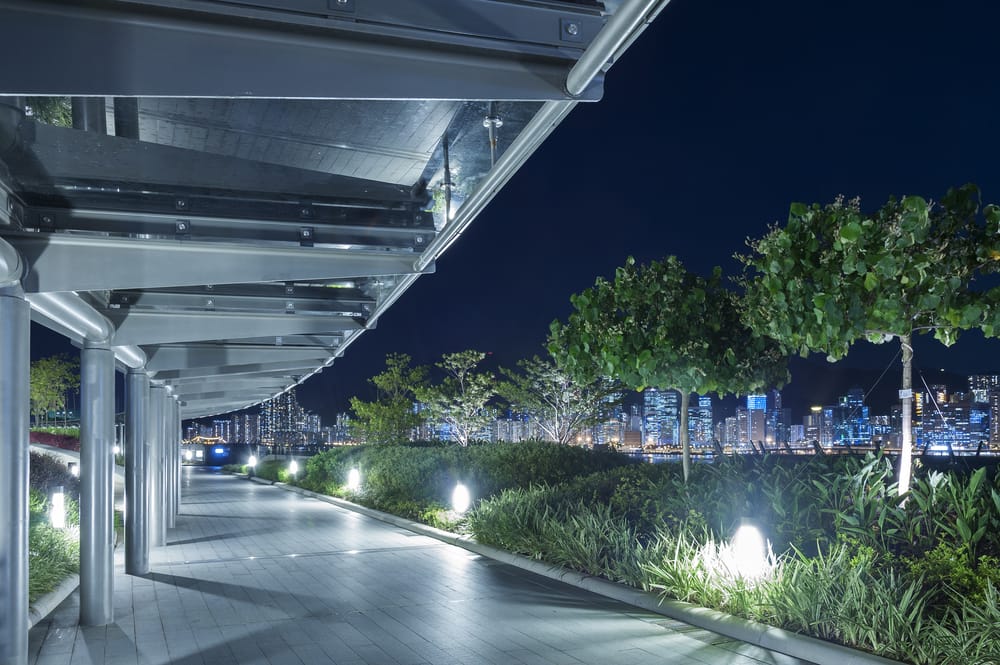
Not all outdoor lighting is made equal and it takes a lot more than simply hanging string lights and calling it a day to make an outdoor space pop. Finding an ideal type of outdoor lighting solution for your home is a must when it comes to transforming it into a well-lit after-hours retreat. You can illuminate paths, yards/gardens and other areas surrounding your house to add a crucial design aspect to your home's appeal. When summer hits you will probably want to spend the majority of your time outside lounging in your backyard or hosting guests for an alfresco supper. Don't let your enjoyment end when the sun goes down solely because your outside lighting is ineffective or non-existent. It all comes down to selecting the perfect type of lighting fixture for your backyard to generate the ideal look and feel. You can choose from a broad range of practical lighting options, including solar lights, bollard lighting, deck lights, path and garden lights, security and [sensor lights](/guides/lighting-accessories/how-to-reset-sensor-lights) and more. ## What types of outdoor lighting are available? Generally, there is a range of outdoor lighting options that you can pick from according to your individual choice. Spotlights are unidirectional lights that are versatile and primarily used to illuminate plants, signs, statues, or anything you can point at. Floodlights are specifically used to lighten up larger areas as they have high brightness and a broad coverage range. If you have driveways around your home, these can be the perfect fit there. Another popular form of outdoor lighting is installing a light onto your home's outer wall. You can use these wall lights if you specifically want to illuminate critical areas around your home where you may have to operate or work at night, such as your garage or porch. Additionally, wall lights can be both decorative as well as practical. Light up a dark space easily around the sides or back of your home. If your home or office has a porch or a ceiling covering a portion of the outside space, or if you have an enclosed patio, outdoor ceiling lights are an option but always keep in mind that these cast downward shadows. Finally, if your entryway involves some stairs, step lights can be the best fit for you. Other lighting options to consider are garden lights, bunker lights, pillar lights and even lights with motion sensors. Whichever outdoor lighting solution you prefer, be sure to check whether it has an IP rating or not. IP rating in a lighting solution generally enables you to check the solid and water protection levels. The higher the IP rating number, the better your [LED light's](/guides/lighting-accessories/making-sense-of-led-lighting) solid and water protection. ## How much do outdoor lights cost? The cost of buying outdoor lights doesn't include paying for the installation - there are various other factors to be considered. These factors may range from labour cost to cost of materials and so on. Outdoor lights may cost you between $20$to 500$ depending upon their type. If you want to purchase some spotlights from a local shop, it would cost you around $75 to $100. If you opt for a floodlight with a range of 1000 watts, you can expect to pay anywhere between $400 to $500. Garden lights range in price from $30 to $100. Step lights are comparatively cheaper and cost around $20 to $50. Bollard lights typically cost about $30. ## Can I install outdoor lights myself? Like any other electrical work, installing outdoor lights also needs to be carried out by an expert professional. Carrying out electrical works illegally could have a negative impact on your home insurance policy. Subsequently, it may lead to a severe accident as well. Regardless, there are some sections where you, as a homeowner, can tweak and install some outdoor lighting products. Ordinarily, you can fit low voltage products, such as garden lights that easily plug into a transformer, as well as unwired solar-powered garden lights. On the other hand, every other electrical work to be done while installing your outdoor lights must be performed by an electrician accompanying a compliance certificate. Doing so will help you cover any possible defects that may occur during the installation process and guarantee that the work complies with the relevant Australian Standard. ## How much does it cost to install outdoor lights in Australia? In general, lighting installation in Australia will cost you around $77.50 per hour. Prices, however, vary depending on the type of light to be installed. If you require downlighting, you should expect to pay roughly $67.50/hr. LED lighs installation, on the other hand, averages $72.50/hr. You'll have to pay around $78 per hour for outdoor lighting. The cost of installing outdoor lights in Australia may alter depending upon the state of your residence. For a standard installation, lighting specialists in New South Wales charge around $66/hr. At the same time, light installation in Queensland costs roughly $75 per hour. In Victoria, the cost of adding outside lighting is roughly $70/hr. For more information on cost-efficient lighting, take a look at the Australian Government's [Your Home website.](https://www.yourhome.gov.au/energy/lighting)

Download Our App

Screenshot of the Localsearch App
Card highlighting that you can claim and future proof your business with the Localsearch App

Localsearch App

Find local businesses - anywhere, anytime.

Available on the Apple App Store iconAvailable on Google Play icon
Screenshot of the Localsearch For Business App
Screenshots of the Performance and Notifications sections of the Localsearch for Business App

Localsearch For Business App

Manage your business - anywhere, anytime.

Available on the Apple App Store iconAvailable on Google Play icon