Cleaners Guides & Resources

Trending Searches

Plumbers

Dentists

Hairdressers

Electricians

How to Clean a Sheepskin Rug

How to Clean a Sheepskin Rug

Not only does the wool ensure the rugs are soft, they also have a natural oil that helps give them dirt and odour-resistant qualities. Natural sheepskin rugs are made when wool fibres are permanently fixed to the sin of a sheep during the tanning process. The main way to clean a sheepskin rug is to have it dry-cleaned, however, there are rare instances where this is not possible. In such cases, you can, instead, hand wash a sheepskin rug with a mild detergent (you can find a sheepskin detergent meant to work on sheepskin fibres in many department stores) and rinse it with plain water after which the excess water should be squeezed out and the rug should be left out to air-dry. 1 Gently brush off any loose dirt from the skin using a soft hair or wire brush. Alternatively, you can also use a sheepskin brush from a department store for best results. If this doesn't work then use a vacuum cleaner on the sheepskin rug to clear away as much dirt as possible. 2 Mix a small amount of mild soap solution in warm water and submerge the sheepskin in this for about fifteen minutes. Gently rub the upper side of the skin with your fingers while submerged in order to ensure thorough cleansing. 3 Rinse the soap solution off thoroughly by running it under a tap, preferably using cold or lukewarm water. 4 If the sheepskin does not still feel clean enough after hand washing with soap solution, use this alternative method; Mix one part white vinegar to three parts water (the ratio may vary depending on how large your sheepskin rug is). Submerge the sheepskin in this mixture for fifteen minutes then rinse thoroughly with cold water. Squeeze out the excess moisture gently. 5 Hang up a large sheet of plastic and cover a smooth floor in a well-ventilated room before laying out the sheepskin flat on the plastic and leaving it to dry for a few hours. You can also use an outside space where there is plenty of direct sunlight to help your sheepskin rug dry faster. ## Can sheepskin be washed? The best way to clean your sheepskin is by using a vacuum cleaner and brushing off any dirt with the help of a wire brush or even a soft hairbrush. You must also avoid disinfectants and solvents during the washing process as these would badly damage your sheepskin rug instead of cleansing it gently. ## How to clean sheepskin rug with vinegar If you want to go for an alternative method of cleaning sheepskin rug, then you must create a solution of one part white vinegar and three parts water. Make sure that the solution is just strong enough to be able to submerge the entire skin in it without difficulty. Once this has been done, simply submerge your skin in this solution for around fifteen minutes before taking it out and rinsing it under running cold water so that no trace of the vinegar is left on your sheepskin rug. You can also use lemon juice if you don't have any vinegar lying around your house. After this, place your sheepskin rug outside in the sun as the ultraviolet rays will help disinfect and sterilise your rug of any dust mites or harmful bacteria since sheepskin is very sensitive to such things. Diluted vinegar also works well [cleaning vertical blinds](/guides/blinds/how-to-clean-vertical-blinds). ## Can you machine wash a sheepskin rug? A sheepskin rug is machine washable but you cannot tumble dry it. Machine washing of your sheepskin rug can be done every two to three months in order to remove dirt and dust, however, there are a few things that you will need to bear in mind before putting your whole rug in a washing machine. Place your sheepskin products into a large pillowcase and tie the end shut before placing it inside your washing machine along with some soap powder and two tennis balls. Alternatively, you can add sheepskin detergent instead of soap powder. Sheepskin detergent will help keep your rug soft and the tennis balls help agitate the water which enhances cleaning. The detergent will create a wool wash. Wool washes should be free of enzymes that could damage your rug. This is why many sheepskin detergents are infused with natural lanolin, a natural fat found in wool. A lanolin-infused wool wash will help keep your rug soft. Set the washing machine on a warm/cold cycle for small rugs and a cold cycle for larger ones. Make sure that you select an agitator-free option if your washing machine has this capability as this greatly reduces wear on the skin of your sheepskin rug. Do not put your sheepskin through the spin cycle after it has been machine washed as this will stretch it out of shape. It should not undergo tumble drying or rough handling. Even during the washing process, it should be on a delicate cycle. If you are unsure whether or not your washing machine is capable of washing a sheepskin rug, refer to the manufacturer's instructions before proceeding. ## Can you clean a sheepskin rug with baking soda? Baking soda is another great substance for cleaning sheepskin rugs as it softens the hard water which is usually present in your home and removes any soap residues that might be leftover after it has been hand washed with vinegar. Mix one part baking soda with five parts water to create a paste then scrub this into the skin using circular motions. Leave this paste on for around fifteen minutes before rinsing it off with cold water. Then, gently squeeze out the excess water and allow your sheepskin rug to dry naturally. Animal skin rugs are not that hard to clean as long as you know exactly what you're doing and keep a few helpful tips in mind. ## How do I make my sheepskin fluffy again? If you want to make your sheepskin rug fluffier then simply place it in the sun for half an hour before shaking it gently. If you have a hairdryer then use this on the lowest heat setting to melt the wool fibres slightly. After this, use a comb or a good brush to make it look as fluffy as possible. Ideally, use a wide-tooth metal brush. You should be able to find one at your local pet shop. Regular brushing will help ensure it stays soft and fluffy whenever you want to use it. ## What soap can I use to wash a sheepskin rug? You can use any lather shampoo (including wool shampoo) or even unscented baby shampoo for washing sheepskin. Make sure that there is no soap or wool shampoo residue left behind after thoroughly rinsing the sheepskin rug. Soap, or detergent works wonders for [cleaning venetian blinds](/guides/blinds/how-to-clean-venetian-blinds) as well. ## Can I dry clean sheepskin rugs? You can definitely dry clean a sheepskin rug, however, you will first need to ensure that it is free from any dirt or dust as these could be extremely damaging. It is important that the leather backing of the rug maintains its original shape during the cleaning process so that it does not become distorted. ## How do I protect my sheepskin rug? When you are done using your sheepskin then you should always put it away in a closet or on the floor where it will be safe from getting dirty which can affect its colour. If possible, use some type of cloth cover to protect your rug while storing it. If you cannot afford to buy a cover for your skin then place some old sheets on top of it before closing up the container that it is kept in securely. Sheepskin rugs are expensive and care must be taken when handling them if you plan to keep them around for years to come without want them to get worn out too quickly. When it comes to protecting your rug during storage or while not in use, there are some other things that you need to bear in mind too such as: - Keep it away from sharp objects which could tear your rug. - Don't put anything on top of it when stored. - Avoid direct sunlight as it could discolour the skin. ## What is the best way to store a sheepskin rug? The best way to store a rug properly is to roll it up tightly and place it inside a plastic bag. You should then put this storage bag inside a larger plastic bag and seal that as well. This will keep dirt from getting on the rug and keep moisture away from it as well. This storage method isn't perfect though because the rug may still become dirty over time even if you do store it properly. If your rug doesn't get damaged by dust or water for long periods of time though, storing it this way will do the job just fine. ## Why are sheepskin rugs so expensive? Wholesale prices for a good quality natural sheepskin rug are anywhere from $150-$250 on average. While you may find cheaper, lower quality rugs out there, it's important to remember that you get what you pay for. A cheap, low-grade rug will shed its wool easily and lose its shape quickly as well. The cost of processing these types of skins is very low because they don't conform to strict standards as better quality wool does. You can easily tell what type of skin you're looking at by looking at the colour of the handle on the backside of your rugs. If it's pink, then you own dyed sheepskin rugs. A natural, uncoloured sheepskin handle will be an ivory colour. Also, cheaper wool may contain excess fluff or dirt that can get stuck easily in the fibres of your rug. These things won't vacuum up very easy and will become permanent even after several cleanings. While you may not want to spend $150-$250 for a good quality rug, remember that natural skins are much more durable than man-made alternatives. They're also completely biodegradable and don't require furniture pads underneath them to keep from slipping all over the place. ## Can you put sheepskin in the dryer? No, you should not put sheep wool in the dryer because it will lose its shape over time and become damaged. To prevent this from happening, you should hang your rug from a clothes rack and allow it to dry naturally. After the initial cleaning process is done, always let your sheepskin rug air dry before storing it away or using it again. Make sure the rug is completely dry before packing it away. You can also add some type of scented oil to your skin while washing it to bring out its natural scent. Most people will choose a fragrance that smells like the outdoors such as pine needles, oakmoss, or sandalwood. Using a fabric softener while washing/drying your skin will cause the wool fibres in the pelt to mat together and become tangled which can result in a shorter lifespan for your sheepskin rug. ## How do you clean a matted sheepskin rug? You can easily spot clean a matted sheepskin rug by using a pair of scissors to remove all the matted fur. Try to match up the fur with its original places as best you can and set it aside once it's removed completely. Next, soak your skin in warm water for about 10 minutes so that the fibres have time to loosen up from each other. Once this process is done, take out your skin and brush any excess dirt or loose hair out of it. You can use a sheepskin wool carding brush to do so. You may need to use a cotton ball soaked in hydrogen peroxide for spot cleaning if there are still some stains on your rug at this point because it can be difficult to remove stains of this type otherwise. Alternatively can put some wool wash in a spray bottle and apply it to the stain before rinsing the mixture and the stain out. It's essential to spot clean spills as soon as they happen so that they don't turn into stubborn stains that take ages to get out. The final stage is drying off the pelt and then spot cleaning and brushing it once more to get rid of any remaining stains, lint, or dead fur. After the drying process, you should then lay your skin out on a towel and roll it up tightly as you would normally before placing it in a plastic bag for storage. This will keep moisture from getting inside the rug which can damage it over time if this step isn't done properly. Without regular cleaning, sheepskin can harbour mites and other nasties that are bad for allergy sufferers. The [Australian Government's Health Direct website](https://www.healthdirect.gov.au/dust-mites) has some good advice for dealing with such household issues. ## Can you use sheepskin rugs outdoors? You can definitely use outdoor sheepskin rugs outdoors but they must first be protected against water by applying a clear, waterproof sealant to them. Once this process is done, your sheepskin will have natural dirt-resistant qualities, and you shouldn't wash your rug unless it becomes extremely dirty because liquids may start seeping through the sealant otherwise. Also, place heavy furniture pads on these types of rugs to keep them from sliding around on your flooring. One other consideration to think about when using sheepskin rugs outdoors is the heat. Direct heat and sunlight can damage the pelt and cause it to crack or discolour if you're not careful, so this is also something that needs to be protected during the cleaning process. If your rug has been treated or dyed during the tanning process, there's a greater chance that it could revert back to its usual colour after a wash - however, make sure this is the case before using it outside. Finally, there's a risk your sheepskin could catch an odour. If this does happen, sprinkle baking powder onto the rug. Then, use a comb to work the baking powder into the sheepskin. Leave it overnight, then shake it out of the rug or dust it out using paper towels. It's essential to remember that no matter how well you wash your rug, the leather side will never be as soft as it was when the rug was new. Additionally, if your rug is over 15 years old, it's at high risk to wash. This is because the leather side slowly deteriorates over time. While the leather on older rugs may look fine, once you get the rug wet, the leather will fall apart. If you do choose to wash an older rug, make sure you're using a leather safe washing solution. This will help protect the leather of your rug to some extent. Additionally, if the leather backing goes hard, there's not much you can do. There's a number of reasons that the leather may go hard, including issues during tanning, the age of your rug, and the possibility that you used a shampoo that wasn't safe for leather when the rug was in the wash. However, once the leather hardens, it's time to say goodbye to your rug. If you're still concerned with how to wash your sheepskin rug, consider getting it professionally cleaned. Professionals will be able to deal with any issue that arises, including black mould, and will return your rug to you in tip-top condition.

Cleaners Guides & Resources
How to Clean a Glass Splashback

How to Clean a Glass Splashback

Splashbacks are one of those things that always look great in the showroom, but quickly become dirty and grimy from food splatters and general use. Fortunately, you can use a few simple methods to get your glass splashbacks looking like new again. ### Bleach One of the best ways to clean a glass splashback is by using bleach. Make sure you always use protective gloves when doing this, because although bleach is very effective at killing mould and bacteria it does have its hazards. To clean your glass splashbacks with bleach mix up one part chlorine in four parts water in a spray bottle. Spray the area down and leave for 10 minutes before wiping off with a damp cloth or sponge to reveal a sparkling shine. Rinse thoroughly and allow to dry completely before re-installing in the kitchen. Bleach may be effective but it can also be corrosive so make sure you take great care not to allow it to come into contact with fixtures or fittings. It should also be noted that you shouldn't use bleach on glass splashbacks if it's been treated with an anti-fog solution as this could cause the chemicals in the product to bubble and blister, allowing water to seep behind it which can then lead to more serious problems for your walls and flooring. ### Salt and white vinegar Another good way to clean glass splashbacks is by using salt and white vinegar. To do this simply mix up a solution of one part salt in two parts white vinegar, creating a paste that you can apply to the area with a cloth or sponge to clean glass splashbacks. Rinse off thoroughly once it has been allowed to sit for 10 minutes before rinsing again with water and seeing how much difference it has made compared to other methods. The combination of salt and vinegar is also great at getting rid of bad odours coming from your kitchen so if your glass splashback have started smelling after cooking strongly flavoured foods then give them a quick polish with this method with a lint-free cloth afterwards just to ensure they stay fresh smelling. If you're looking for a little extra cleaning power you can add a half cup of bicarbonate of soda to the mix, which will help grind away stains and marks with a lint free cloth. ### Use vinegar and baking soda Finally, if none of these methods makes your glass splashback sparkle like new again then it's time to give up on that expensive purchase and buy yourself a replacement. There are lots of great deals available online where you can choose from various styles and finishes while still paying much less than you would in a hardware store or specialist manufacturer's shop. Another great advantage of shopping online to get a good quality glass cleaner is that you can read product reviews before buying the glass cleaner, helping to narrow down your choices and avoid any mistakes and choose one that promises a streak-free finish. ## How do you clean glass splashbacks without streaks? The best way to clean glass splashbacks without streaks is to use an ultra-fine polishing pad with a product that has been developed for this purpose and a non-abrasive cleaner. There are many different brands available so try looking at reviews before committing to one purchase, as some may be better than others depending on your situation. While you can buy these pads from hardware stores they are often situated in the same area as abrasive cleaning products, meaning it's easy to pick up the wrong thing by mistake, which could actually damage your glass surface further. If you're lucky enough not to have any stubborn stains or marks that won't shift then all you'll need is a simple spray cleaner or glass cleaner for regular cleaning with a lint-free cloth or paper towel between more intensive sessions. Just look out for 'streak free' on the label and clean the entire glass splashback to get a streak-free finish with a non-abrasive cleaner. To clean splashbacks, practice a bit of patience too. One you have that sorted, give your [glass pool fence](/guides/pool-fencing/how-to-clean-glass-pool-fence) a once-over ## How do you clean a mirror backsplash? To clean a mirror backsplash simply spray the area down with tap water and soapy water with a spray bottle (which is much easier than cleaning a splashback made of tiles!) and wipe away any dust or dirt with a lint-free cloth or paper towel with soapy water or tap water. For stubborn marks you can use window cleaner with a clean cloth, allowing it time to dwell before wiping off. Don't use too much force as this could cause damage to your mirrors, be gentle and let the soapy water do its work. Always use a non-abrasive cleaner to get a streak-free sheen and avoid unsightly streaks. Clean in a circular motion, avoid scratching because this will help in removing stains. For a kitchen splashback you can also use methylated spirits, dry cloth, lemon juice and distilled water to clean the splashback regularly. Allow it time to work rather than scrubbing at the glass like mad to make the glass splashback clean. Abrasive cleaners can create unsightly streaks that are visible in direct sunlight and make your houses big style feature look shabby. ## How do you get grease off a glass splashback? The best way to clean a glass splashback that is covered in grease is to mix up a solution of half water and half white vinegar, using a spray bottle apply it to the area and allow it to sit for 10 minutes before rinsing off with warm water or using a soft lint-free cloth or a soft clean cloth. The vinegar will help cut through the grease while being gentle on your glass, which is important as many cleaning chemicals are too strong for glass surfaces. You can also use baking soda mixed with a little bit of water if you don't have any vinegar available. Even toughened glass can get bad grease stains in your kitchen splashbacks. Just clean splashbacks made of glass or even a stainless steel splashback with a white vinegar solution, non-abrasive cleaner, paper towels, hot soapy water, and one part lemon juice. Gently rub the non-abrasive cleaning product to get a shiny surface for cleaning glass. Stone splashbacks and acrylic splashbacks might need some extra effort. a few things you can do to clean splashbacks is to use a dry cloth to clean grease even on tough stone splashbacks or acrylic splashbacks. ## How do you remove burn marks from glass? To remove burn marks from the glass you need to sand away some of the damaged material, which is best done with wet sanding. A specialist product will be easier on your glass than sandpaper, but not all tiles are made using tempered glass so it's important to take extra care if attempting this at home. You can use medium grade sandpaper or steel wool dipped in water for tougher marks and an ultra-fine pad for lighter damage. If you don't have any options available then simply scrubbing at the area with cleaner and a damp cloth should do the trick. ## How do you clean an acrylic splashback? The best way to clean an acrylic splashback is to use a specialist product that will break down grease and stains without being too harsh on your tiles. If you don't have any around the house then covering the area with kitchen roll before spraying it with water should give you similar results. You can also use white spirit or vinegar, but these are much stronger so only use them as a last resort. You also might wish to try using a magic eraser or similar scrubbing pad on acrylic surfaces with a damp cloth, as these are designed to be used without water. You don't need proper glass splashback learning for cleaning splashbacks. ## How do you clean a tiled splashback? The best way to clean tile splashbacks is with white vinegar and baking soda. The combination of these two ingredients will be strong enough to remove any stains or marks without being too harsh on your tiles, which could cause them to discolour over time. Simply mix up a solution of equal parts water and vinegar, apply it to the area with a soft cloth before covering it in baking soda. Leave it for around five minutes then scrub away at the stains with your cloth until they disappear. Try to avoid abrasive cloths and work your way through with lint-free cloths. To avoid these issues you can use window cleaner which doesn't contain any chemicals that may leave marks on your flooring, however, if you're doing this every day then buying some specialist cleaner might save you money in the long run! ## How do you get stains out of a splashback? The best way to get stains out of your glass splashbacks is by scrubbing at the area with hot water and some washing up liquid or baking soda with lint-free cloths. Mix up a solution of half water and half white vinegar, apply it to the glass splashbacks then use an old toothbrush or magic eraser to remove any stubborn marks that are left behind. For oil-based stains, you can also use a solution of cream of tartar and white wine vinegar, which should be applied in the same way on the glass splashbacks. ## How do you fix a melted splashback? If your splashback has become warped or melted then it's likely that it was exposed to a large amount of heat for too long, which could have caused the tile adhesive to break down. The best way to fix this is by removing the tiles one by one using a scraper before reattaching them using new adhesive. What ever you do, stay safe while cleaning to avoid any injuries. Here's a few outlines from [Worksafe Queensland](https://www.worksafe.qld.gov.au/safety-and-prevention/hazards/workplace-hazards/slips-trips-and-falls/cleaning) you can follow.

How to Clean Sandstone Pavers

How to Clean Sandstone Pavers

If you do want to use some kind of sandstone cleaner to clean your sandstone pavers you should consider using diluted household chemicals. There are so many things you can do with sandstone pavers, from the driveway to garden paths and even for your poolside. But maintaining their look is a different story because it demands more time, effort, and money. Due to the porous nature of sandstone that absorbs dirt, grime, or oil stains very easily, and these types of stains become permanent if not properly treated. Although this material is a very attractive option to have in your landscaping and around your home, it requires a lot of effort and time to keep them looking good. This might be a daunting task for many but with a few simple steps then you will have the most amazing sandstone pavers that add value and beauty to your home. ### Cleaning regularly The first thing you need to do when cleaning sandstone is sweeping and cleaning off dirt, dust, leaves, and vegetation from the surface of the sandstone pavers immediately after every rainfall. This is because water can cause stains, making cleaning sandstone pavers on your patio more difficult to remove later on. Sweep away all the grit and debris (such as leaf litter and other vegetation) and leave the surface by putting something inflexible like plywood or boards where you intend to sweep off dirt, dust, grit, and debris. Sweep or brush the surface of your sandstone pavers seasonally after every rainfall to get rid of leaves, dirt, grit, and debris. ### Using mildew remover Another thing you can do is use mildew remover for a small area with a stain on your sandstone pavers using a stiff bristle brush. You can also spot clean larger surfaces but ensure that the products you are using don't damage the texture of your sandstone pavers. Rinse thoroughly with water from your garden hose afterwards to remove any residue before it penetrates deep into the pores of the sandstone pavers. If you don't, these things can make cleaning sandstone harder later on. ### Scrubbing with vinegar You have probably have heard about cleaning sandstone by scrubbing it with vinegar. Vinegar is a very cheap sandstone cleaner and it will make your sandstone pavers shine. Mix equal parts of white vinegar and water to make a cleaning solution before using your hands or mop to scrub the solution into the surface of the sandstone pavers using a scrub brush, working from top to bottom. Wipe clean with a damp mop, soft cloth, or towel, and use a nylon brush to clean the corners and edges if necessary after scrubbing. When wiping clean, use a soft, gentle touch so you don't damage the sandstone surface. ## Can I pressure wash sandstone? Pressure washing sandstone pavement is not advisable. Not only will the high pressure of water force sandstone particles out of the surface, but also, there is an added risk that unwanted chemicals may force their way into the pores of the sandstone paving causing future problems or damage to sensitive sub-grade materials. Using a high-pressure washer to clean your sandstone pavers can potentially damage the sandstone surface and almost certainly force particles of stone out from between the joints. This would allow some area for the growth of moss and algae in the future and it could lead to staining problems. If you use a very low-pressure setting, such as 30-40 PSI (2.4 - 2.8 bar) then there is still a risk that chemicals or loose particles may force their way into the pores beneath your sandstone tiles leading to future problems such as staining or discolouration. If you need to rinse down the sandstone surfaces, one of the best ways to do so is to use water from your garden hose instead. ## Does vinegar hurt natural stone? Vinegar is generally safe to use on most types of natural stone, but there are a few exceptions. Limestone, marble, and travertine are all sensitive to vinegar. Acidic substances such as vinegar react with the calcium carbonate in these stones, sometimes resulting in etching of the surface which can lead to staining problems. This kind of damage would not be immediately obvious - it could take years for a stain or other discolouration to manifest themselves. If you have limestone, marble, or travertine paving then never use any acidic cleaning products to clean the stone's surface. Avoid vinegar, lemon juice or even a small amount of fruit juice spilled accidentally. If you have sandstone paving then it is not recommended to use a bleach-based cleaner because they could also damage your sandstone pavers. Remember these restrictions are only to ensure the longevity of your sandstone - the acidic content in most of these chemicals is usually high enough to cause some problems but the alkaline materials in these products will cause etching and staining over time. ## How do I wash sandstone? One of the best ways to clean your sandstone paving is to try using just water and a soft brush - scrub away any stubborn surface dirt that may be built up on the surface without resorting to strong detergents that might remove the colour from your sandstone pavers or corrode and damage the stone itself. Cleaning should take place in good weather so that excess water can dry out naturally after the job is done. Preferably use a soft brush with just water to clean so you can avoid damaging the stones with chemical products or a high-pressure washer. Make sure you don't use a pressure washer to [clean fly screen windows](/guides/cleaners/how-to-clean-fly-screens), even if it seems like an easy task. Try to avoid using bleach, a bleach solution, or bleach-based products on sandstone pavers. This type of solution will damage the surface causing discolouration in the future. Take care to avoid any kind of acidic cleaner - these can cause staining problems over time if used to clean sandstone paving, due to reactions between acids and calcium carbonate found in limestone paving. If you do want to use some kind of sandstone cleaner to clean your sandstone pavers then consider diluted vinegar or soda crystals (sodium bicarbonate). This type of cleaner is a safer option for cleaning sandstone surfaces that will not damage your sandstone pavers like bleach can. Either of these will clean the surface and remove hard water deposits without any risk of etching or staining your stone. ## How do you remove black mould from natural stone? Mould can be a problem if it is allowed to grow on your sandstone for a long time, especially black mould which is often indicative of a serious moisture problem. If you have black or dark green mould or exceptionally stubborn algae growing on your natural stone paving then this could mean that there is too much moisture trapped in the sandstone surface. If this continues unchecked over a long period of time then not only will it cause staining and discolouration but also you run the risk that acid from the mould itself could start etching into the stone's surface which would weaken it. Mould is usually present in dark patches that look like discolouration. If you want to clean the mould and algae from your sandstone paving then the first step is to ensure that your sandstone tiles are not regularly getting wet and damp underneath. Sandstone has a porous nature, and a permeable sandstone patio surface will allow water to drain through easily and can help prevent moisture problems, as well as helping to avoid problems such as black mould which loves a high level of moisture. You may also find that there is a risk of some sandstone tiles lifting if the earth beneath them stays constantly wet over a long period of time. If tiles are lifting from the ground, touch the bottom of the pavers or the earth below to see if it is damp or wet. Clean off any loose debris like leaf litter and other vegetation on sandstone pavers before starting work on cleaning the mould and algae - do this with just water and a soft brush. Using harsher chemical is a good way to damage the surface of your sandstone paving. The next step in cleaning black mould is to scrub it clean with a dilute solution of vinegar or soda crystals - this solution will kill off much of the mould, leaving just discolouration on areas where there has been a lot of growth. To do so, mix equal parts of vinegar/soda crystals with water. If it's not effective you can add another part of vinegar to the mixture. Keep adding one part vinegar and testing until you're satisfied with the solution. Once you have rubbed off any remaining patches or areas of mould and algae clean, wipe away any remaining solution with a mop, soft cloth, or towel. You should be able to make out faint outlines where the damage was done - these are usually quite dark and greasy looking because they are stained by dirt rather than being discoloured limestone itself. If you cannot clean such a stain completely then using a penetrating sealer to seal it in. These types of sealers might reduce stain visibility over time. Additionally, the sealer will also help protect your sandstone from other types of damage, and increase the longevity of the sandstone. The New South Wales Department of Health has some great information on [natural products that kill mould](https://www.health.nsw.gov.au/environment/factsheets/Pages/mould.aspx). ## How do you clean natural stone around a pool? Natural stone pool surrounds need regular cleaning to avoid the build-up of algae and other gunk which will cause discolouration. A professional can clean your sandstone paving for you. They will clean and scrub away stubborn dirt, algae, moss, and other similar materials with just water to leave them looking their best. You should then be able to keep up the good work by cleaning and washing down sandstone tiles at least once a year with just water from your garden hose to remove any surface grime that forms over time - this should also help prevent black mould from growing on your stones. Once you have it looking great, give the [pool fence a quick go-over](/guides/pool-fencing/how-to-clean-glass-pool-fence). Do not try cleaning the natural stone around pools with anything too harsh or acidic because this could cause damage, removing the colouring and etching into the surface of your sandstone pavers. No matter how much pressure is applied, always use soft brushes rather than abrasive tools like scrub brushes for this kind of cleaning because it will damage the stone. ## How do you clean a sandstone retaining wall? Cleaning sandstone walls is exactly the same as cleaning natural stone pavers, with one exception - you may need to use something a bit stronger if your wall has been in contact with an acidic substance. This usually means that you will have to remove anything acidic before being able to clean your sandstone retaining wall properly. If this doesn't work then try using just water and soda crystals on the affected parts of the sandstone to see if you can get rid of any staining before cleaning away any mould which might have grown there. Cleaning sandstone retaining walls once every few months should be enough to maintain their appearance over time - do not wait until they are covered in moss, fungi, and other types of vegetation growth because this could damage the sandstone tiles when you clean them. ## Does chlorine damage sandstone? You could potentially damage your sandstone tiles if you use chlorine on them regularly - this kind of chemical is very harsh and may cause all kinds of problems with the colouring, smoothness, and other qualities. In fact, even occasional exposure could result in something bad happening to your sandstone tiles because it can destroy some of its natural protection from stains or discolouration. As long as you rinse off any chlorine quickly after using it then there should be no problems. However, it's not worth taking the risk when so many alternative options to chlorine are available. Some people like to use chlorine as a way of killing off algae and other forms of mould which might grow on their sandstone tiles - this is not advisable as chlorine can cause more problems than it solves. ## How do you get stains out of sandstone pavers? Every so often, you might notice stains appearing on the surface of your sandstone pavers. At times, they are easily visible and standing out in sharp contrast against the pale colouring of your stone, but other times they can be difficult to spot because the stains have mixed in with the dirt over time. Whatever the case, these stains can be troublesome and you might find that they don't come off when you try and clean your sandstone pavers - if this happens then you will need to give them a bit of extra help. You should start by examining the affected area closely; they might look like general dirt spots but they may also be more prominent and discoloured compared to the rest of the stone. This is usually because they are stained with something which has made its way into your sandstone tiles over time, for example, it could be caused by long-term exposure to oil or some other kind of contaminant which has been spilled onto your sandstone tiles and soaked in. Try cleaning any affected area with just water from your garden hose first, to see what changes - if you notice some improvement then you will definitely need to do something else for cleaning away the rest of the dirt. After that, give your sandstone pavers a thorough cleaning using just water and soda crystals - this kind of cleaning product is excellent at breaking down stains naturally so it's best to use it first before trying anything stronger. Once you have done that there are two options for how to finish the cleaning job: If the stains are still visible after everything else has been tried then an acid-based solution can be applied by spray or brush onto any particularly stubborn area which won't shift. Again, take care when using this kind of solution to clean your sandstone surfaces. The reason for this care is that it could damage your sandstone paving if used incorrectly while cleaning. However, if you're sure know what you are doing though then an acid-based product or solution should give you good results. Once you're done, wipe away any residue with a mop, soft cloth, or towel. You can follow a similar process for [cleaning roof tiles](/guides/roof-cleaning/how-to-clean-roof-tiles). If you're still concerned about cleaning your sandstone pavers, considering hiring a professional company. They can advise on related issues including: - Everything to do with sandstone sealers, including what sealers to use on sandstone; why a sealer is important for your sandstone paving; whether your driveway needs to be resealed, or if the last application of sealer is still okay. - What types of material you can use to fix damaged or broken sandstone pavers so your driveway or patio area looks as good as new. - Fixing services for damaged sandstone pavers. - Setting up a cleaning and maintenance schedule.

How to Clean Ducted Air Conditioner Filter

How to Clean Ducted Air Conditioner Filter

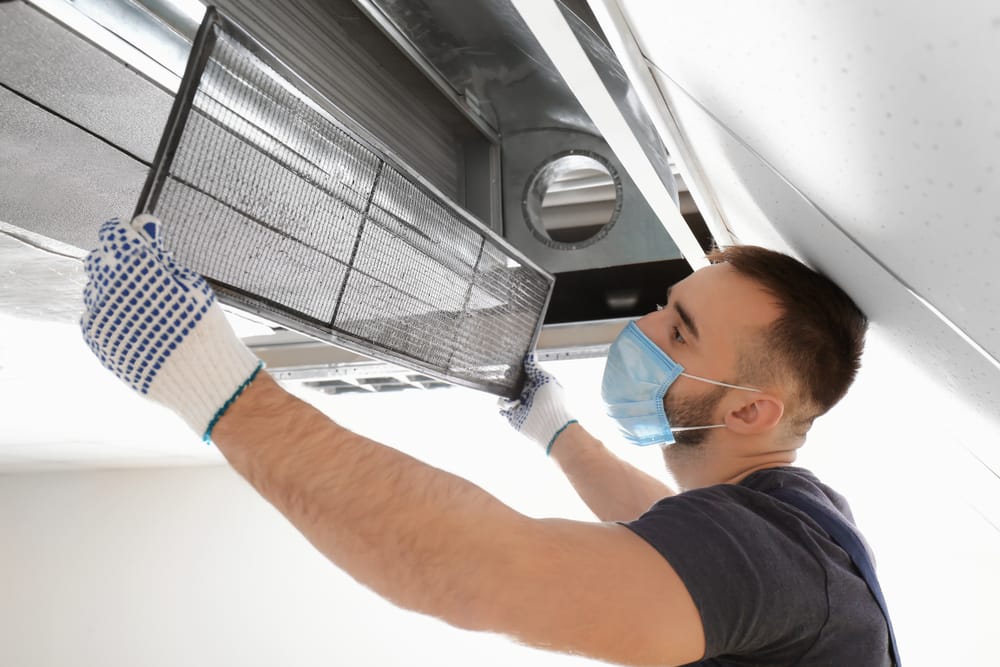
Taking the time to clean your air filter isn't the most fun you'll ever have in your life, bit it is an integral part of air con maintenance. If you want healthy, cost-effective air conditioning provided by your system, it is vital to clean your air conditioning filters. The first thing to realise is that the only time you can have your ducted air conditioning filter cleaned by professional businesses is when it's absolutely necessary. The reason for this is simple: Most ducted air conditioning filters are designed to be self-cleaning, meaning they don't require professional intervention. If any dust or dirt does build-up, it can simply be brushed out or vacuumed. This saves you a lot of money since you won't have to pay for regular cleanings, unless your unit starts showing the below symptoms. - Reduced efficiency due to poor filtration. - Unit overheating (and potential fire hazard). - Lack of cold air circulating through your house. Many professional ducted air conditioning cleaners cannot inspect your system, which means they can't tell if you need to clean your air conditioner and the air conditioner filter or not. Unless the cleaner actually looks at your filter, they won't be able to provide an accurate quote or know when it requires a full or partial clean. In the end, this could cost you more than expected. On top of all this, there are some real benefits to taking the time to clean your air filter on your own: You'll save time and money; you'll get exactly what you need without any unnecessary extras; and maybe most importantly, it's a really easy thing to do. Regular cleaning is critical for those suffering from [conditions like asthma](conditions like asthma). In order to be able to clean the filter on your air conditioner, you will have to know where the AC controls are and be familiar with some of the key parts of the machine. These include: - Fan coil. - Return air filter (and other air filters), also known as the return air grill. - Heat exchanger. - The frame. Additionally, make sure to read the instruction manual before you start cleaning your filter yourself. Each air conditioner model is slightly different, and the instruction manual will let you know of any key considerations you need to keep in mind before you start cleaning (including what steps you need to take for fixing the filter if it is damaged). Finally, make sure to wear protective equipment, including gloves - [air conditioning filters](/guides/air-conditioning/how-to-clean-an-air-conditioner-filter) can get really dirty, especially if you haven't done any cleaning in a while, and a pair of sturdy rubber gloves will help protect your hands. ## Where is the filter on a ducted aircon? A typical ducted air conditioning system will have two sets of air conditioner filters (this includes the return air filter): One filter - the return air filter - is located in the unit itself and another at the point where the cold air enters your home. The filter inside your ducted air conditioner sits right near the coils. Depending on the model, it may be easy to remove or a bit more challenging; however, we recommend hiring a professional for this job if you're not confident in your abilities (or lack thereof). This way, you can make sure all dust is removed without damaging anything. The second filter is located behind an access panel—usually near the evaporator coil or inside an enclosed space. You'll need to pull away any insulation or materials that might be covering it and then simply vacuum it out. What if you're unsure of where your return air filter and other air conditioner filters are? The best advice is to call in a professional ducted air conditioning cleaner who will know exactly where the air conditioner filters are located and precisely how to clear your air conditioners. The benefits of hiring a pro far outweigh any potential difficulty. Not only will it save you the time (and possible cost) of damaging your system, but it also means that somebody with experience will be able to inspect all your filters (including the return air filter) and determine whether or not you need to clean your air conditioner at this time. ## How do you clean the outside air conditioner filter? the outside air conditioner filter is an important part of your system which needs to be kept in good working order (the outside air filter is one of the two filters in your air conditioner - the other is the return air filter, which usually includes your AC unit). Just like with any other component, cleaning it yourself will save you money and time—but only if you know what you're doing. If our professional cleaners are unable to help you out when it comes to cleaning your outside air conditioning filter, there are some things you might try on your own: - You may be able to remove the outside unit cover without too much difficulty. - Once inside, remove any debris, or dust particles found around the coils (including the fan coil). - Use a brush or vacuum cleaner to remove stubborn particles that remain stuck in the crevices of the coils (including the fan coil). There are other options if you're still not sure what to do. For instance, you could contact a manufacturer warranty service representative who may be able to offer advice on how to clean your particular unit. Be sure to keep in mind that neither method is guaranteed to work since it will depend heavily on your specific type of system and the types of air filters used. If this is something you feel uncomfortable doing or unable to do, then hiring a professional service remains by far your best option for keeping your system in good working order. ## How often should aircon ducts be cleaned? Before you can determine when your air conditioning ducts should be cleaned, it's important to understand what they are and exactly how they work. Ducted air conditioning works by sending cooled or heated air through metal pipes throughout your home. This means that after passing through the main unit in your garage (or wherever), the air will gradually spread throughout your entire home via these ducts which help distribute the cool or warm air evenly. There are two basic types of air filters used in ducted systems. ### Standard filter A standard filter that stops dust, fur, and other particles from entering the system itself where it could potentially cause damage. This type of filter is is also known as a return air filter, or a return air grill. The return air filter is generally located inside the main unit at all times unless you take it out to clean it. ### Lint filter An air conditioner's lint filter, which is located near the evaporator coils—in other words, in an enclosed space where you wouldn't typically be able to access the inside of the system. This area is referred to as a "return" or "supply" plenum. There are many factors that help determine when your ducted air conditioning filters should be cleaned. If you run your unit continuously for 24 hours a day, then you'll need to have both the return air filter and lint filter professionally cleaned by an air conditioning service at least once every 6 months. However, if you only use your system during certain times of year (like summer), the cleaning needs of your return air filter and lint filter will vary depending on how frequently you use the AC. ## How do you clean a reverse cycle filter? No matter what type of air conditioner you have, there's a good chance that it has some kind of air filter that needs to be regularly cleaned. This is true even if your system doesn't use ducts for distributing the cool or warm air throughout your home; rather, they may be made up of mesh grids which are typically placed in front of the main unit's fan where they help catch all kinds of the debris and dust particles before they enter the evaporator coils. The frequency with which you clean these air filters depends on how frequently you run your unit—and whether or not you're removing large amounts of dirt, dust, and debris, as well as particles like dust mites, pollen and pet dander. For example: - If your AC runs 24 hours a day, you should have these air filters cleaned by a professional service at least once every 6 months. - If it runs 10 hours or less per day, cleaning your filters once every 3 to 4 months will suffice. In addition to the number of hours your system is used on a daily basis, you'll also want to clean the evaporator coils in your air conditioner regularly too—especially if they become caked with dirt, dust, and debris. In fact, this is one of the most important things that need to be done regularly in order for your system to run efficiently while maximising energy efficiency and reducing running costs and power consumption. ## How often should I change my reverse cycle filter? If you're not sure when your cooling system's air filter was last replaced, it's a good idea to inspect it first to see if it looks dirty. If so, this is a clear sign that you need to replace it as soon as possible. You should also remember that your system's air filter performs the same basic function of an air conditioning filter, only on a much larger scale since it needs to be able to stop debris and dust particles from entering into (and blocking) your evaporator coils and pipes. | Type of filter | Cleaning schedule | | -- | -- | | One flat panel air filter located inside the main unit | Once every month when used continuously. | true | | One or two standard round fibreglass air filters located inside the main unit. | Twice every six months when used continuously. | true | | One standard round air filter located in the return plenum. | Approximately once per year when not in continuous use. | true | If your system contains a pleated panel filter, a second flat panel air filter, and a lint trap, then it's recommended that they be replaced as per the below. - At least one time every 3 months when used continuously - Once per 6 months when not in continuous use. The air conditioner lint trap should also get checked at least twice per year to remove any blockages caused by dirt, dust, and debris which can't be easily cleaned. - undefined ## Can you put a wet filter in your air conditioner? Nowadays, most modern-day air conditioning units are designed to be compatible with reusable filters. However, this doesn't mean that you can stick your old air filter back in once you've cleaned, especially if it's still wet or damp with water. If your evaporator coils are located inside of the main unit, then this shouldn't be too much of a problem since they're typically protected from damage by its metal casing. However, if they're placed outside next to your condenser unit or close to the ground where they could easily become damaged due to exposure to harsh weather conditions (such as rain water), or by accidental water exposure, then there's definitely a chance that putting a wet air filter back into place will cause problems. Permanently installed air conditioning systems that have evaporator coils located in the return plenum (typically behind a grill) can also be damaged by wet filters. What's more, if an air conditioner unit contains a refrigerant leak, you'll need to get it repaired by a professional AC fixing service as soon as possible. In such a situation, putting a wet air filter back into place will only make the situation worse. ## Can I still run my air conditioner even when the air filter is dirty? It's important not to wait until your cooling system's air filter becomes excessively dirty before replacing it. A dirty air filter can lead to: - Reduced indoor comfort levels. - Frequent and expensive fixing requirements. - Maintenance issues. - Shorter equipment lifespan than expected. In order for your air conditioner to function properly, the heat exchanger needs to work effectively. If it doesn't, it will significant affect your comfort levels. The heat exchanger works by getting clean air to pass through the evaporator coils. This will ensure that they can get sufficiently cold—which in turn allows your system to absorb the heat from the interior of your home. It can then get rid of the heat outdoors before you've even realized it's there. Once this airflow has been reduced, your heating and cooling system won't be able to maintain an indoor climate that will be to your comfort, even if its fan setting and airflow is on high. If you're still unsure about whether or not the quality of air coming into your home could be improved by changing out an old air filter, then consider what typically gets trapped when you use filters that are dirty: - Debris such as dust particles. - Bacteria. - Allergens. - Pet hair. - Pollen. - Mould spores. All of these can affect your air quality and lead to health problems for your family if they're not filtered out before entering your home. Aside from affecting the air quality, they can affect the airflow from your air conditioner as well. Once you change the filter, don't forget to also check its core requires cleaning or replacement as well. This will make sure that it can continue trapping unwanted contaminants efficiently in the future, and ensure your airflow and air quality are returned to normal. ## How do you clean an air conditioner filter without removing it? This is an easy process. First, turn off the unit and remove the air filter cover. Once open, you'll be able to see the air filter inside the return air grille of your air conditioning system. To clean your filter, simply use a vacuum cleaner with a brush attachment to suck up any dirt, dust, or debris that has built up on its surface area. It's best if you wait until most of this material has loosened before removing it from the opening in your air conditioning unit. Next, wipe down all visible areas of the return air grille on your air conditioning system with a damp cloth—making sure that all traces of dust have been removed. When cleaning the return air grill, you can use a cloth that you have dampened with water if you only need a getle wipe down. However, if deep cleaning is necessary, you can use a solution of one part water and one part white vinegar instead. This water and white vinegar solution can also be used on the heat exchanger and AC coils. If you do not have any vinegar handy, you can instead make a solution with water and mild, household detergent. If possible, try to avoid using any harsh chemicals while doing since they may damage some of the materials used to create your cooling system's air conditioning unit. Before closing your air conditioner, you'll need to ensure that all of the dirt, dust, and debris has been removed from the inside of it as well by cleaning its fan blades with a soft dry cloth. This will remove any unnecessary accumulations from each one—which helps increase spin efficiency and overall performance. After this, make sure that your air filter is dry before placing it back into place on your evaporator coil. Finally, close the cover on the return grille and turn your air conditioner back on. You'll be able to enjoy all of its benefits sooner rather than later. If you're still facing troubles with your air conditioner filter, you may have to get in touch with a professional cleaning company. While this will undoubtedly be a more expensive proposition than cleaning the filters yourself, professional businesses will be able to provide thorough cleaning services. additionally, they'll also provide frame fixing helping if your AC frame is damaged, and will be able to help you with any other issues you may have, including with the heat exchanger and fan coil. Furthermore, one problem that a lot of people with air conditioner issues face is that of power consumption. Damaged and poorly maintained ACs tend to consume more power (and have less airflow and poorer air quality), and a professional air conditioner service will be able to help address these issues as well. This can, in turn, help bring down running costs. That said, keep in mind that any additional service, such as frame fixing, energy checks, and general AC fixing and repair services, will likely cost more than what simple air and return air filter cleaning services would set you back by.

How to Clean Fly Screens

How to Clean Fly Screens

There are some things you can do to help maintain the cleanliness of your screens and properly clean them without removing them entirely. Cleaning the floor on your fly screen is quick and easy. First, unscrew the fly screen from its frame and remove it. Use a vacuum cleaner to suck the dirt and dust, then thoroughly wash the screen with a garden hose or in a bucket of warm soapy water to remove any dust and grime. A vacuum cleaner is great because it will suck the dirt inside instead of spraying it out. Rinse well with spray bottle filled with clean water to remove all soap residue, then dry thoroughly either by wiping down with a clean, soft cloth or hanging up to air dry. Once dry, screw your fly screen back onto its frame before replacing it over your window or door opening. Now you can sit back and enjoy more time outdoors without pesky bugs getting through. If the wall of your fly screens has become damaged over time, try using sandpaper on particularly stubborn stains for an effective way to get rid of marks left by stickers or tape. If stains are light, you may get away with just repainting the affected area. Simply use a small paintbrush to apply primer before painting over with fresh white exterior paint. Make sure your window screen is not damaged or weather-worn - it's worth checking that it's tight enough to keep bugs out, but also easy for you to open and close when required. A well-maintained fly screen should last years in the outdoors with a regular cleaning mild detergent. ## Types of fly screens There are a variety of different types of fly screen wall available for both doors and windows with a different working process inside. Here's a brief overview. ### Standard window screens Made from metal wire with a 1mm diameter, these screens have been the standard style since fly screens were invented. It is important to remember that they should not be used as security screens or as barriers to keep pests out of your house or home. Standard fly screens will not prevent someone from entering your house. ### Security window screens Made from high-tensile wire with a 1.2 to 1.5mm diameter, these screens offer a higher level of security protection that is perfect for homes or businesses where security is important. A security screen should never be used as a standard fly screen to keep insects out of your house. Security doors are great for keeping privacy from prying eyes as well as being tough. ### Mesh insect screens This wire fence features small holes that will prevent even the smallest bugs from entering your home without affecting ventilation and visibility. These types of screens are ideal for sliding doors and windows in kitchens, bathrooms and verandas - anywhere you want to protect yourself from mosquitoes when you're indoors but still let fresh air in when you open the window or door later on in the day. ### Mesh insect screens with magnets These are the most secure type of fly screen for doors and windows, made from strong wire fence that can even be used on French or bi-folding doors. They are held in place by small magnetic strips that are attached directly to your door frame so there is no need for screws or adhesives when installing the fence. ## How do you clean fly screens without removing them? Cleaning fly screens can be a bit of a challenge as they are typically installed in such a way as to keep them functional and secure. However, there are some things you can do to help maintain the cleanliness of your screens and properly clean them without removing them from their installation and keep a good airflow by cleaning properly. First, use a soft brush, soft bristle brush or scrubber to gently scrub any dust, loose dirt or dirt that has accumulated on the dry surface of the screen door before cleaning with other materials. You can also use this opportunity to give it a light once-over with an all-purpose cleaner to remove any marks. To clean more stubborn smudges, try using some toothpaste in free measure for cleaning on grease stains or warm soapy water and then spraying it off with a garden hose on low setting from the bore water. Remember to wipe off excess toothpaste before you let the screen dry with salt air. If your screen or the door is stained by paint or permanent marker, use sandpaper or steel wool to remove the offending mark from the window. If you are cleaning your fly screen for better air quality, take a look at your [air conditioner filters](/guides/cleaners/how-to-clean-ducted-air-conditioner-filter) as well. If your screen door is ripped or torn, it may be time to replace it entirely with the new removable fly screens and then clean fixed screens. All removable fly screens are just as they sound, removable making them easier to clean every time there are bugs stuck there. ## What is the best thing to clean window screens with? Use a bucket of water to wash with instead of a hose. This is because the hose can damage the screen because of high pressure. Instead do it the easy way using a bucket and towel to keep the debris away. If you have a metal or steel body, use soapy water or general household cleaners to get rid of sticky grease and grime and keep up regularly vacuum them. For plastic mesh, use some dishwashing liquid, a soft-bristled brush and warm water as it will be less likely to damage the material to clean fixed screens. If you cannot get rid of some stubborn stains with soap and water, try using toothpaste with an old toothbrush for light grease or marker stains with a damp cloth. Simply rub the stain until it comes out, then wipe off any excess before letting the screen dry in a pleasant way. ## How often should fly screens be cleaned? Fly screens should be cleaned on a regular basis for stubborn debris or dirt, depending on their location and your daily usage patterns. If you have pets that go in and out through open doors or windows, more debris or stubborn dirt will collect on the floor of the window over time, so it may need to be cleaned more frequently. Screen doors and window sills are especially prone to getting dirty since they'll typically see constant traffic from humans and animals alike. If possible, it is a good idea to thoroughly clean your fly screens at least once a month with a garden hose with a narrow nozzle on low pressure with a brush attachment. Too much water pressure will damage the dry surface. An easy way to dust is to use an old towel, hose, bucket of too much water to wash the window. ## What are the benefits of metal fly screens? Metal or steel fly screens offer superior protection against unwanted visitors. Their floor is made from high-tensile wire with 1.2 to 1.5mm diameter, offering a level of security that cannot be matched by standard insect mesh found in ready-made or DIY fly screens at home improvement stores or hardware shops. Fly screens are agreat option to increase airflow in your home, according to the Australian Government's [Department of Industry, Science, Energy and Resources](https://www.energy.gov.au/households/household-guides/energy-saving-guide-northern-australia/hot-arid-living). They can be used inside your home too. Try them on French doors and sliding windows where you want bug protection but still need easy access to fresh air when you open the door or window later on in the day. ## How do you clean an aluminium screen? If you have a high-tensile fly screen and want to clean it without the use of power tools, take your time and check your local hardware store for items that can help with the job. You will need rubbing alcohol, cotton balls or cotton buds, white vinegar, tweezers, a portable air compressor or steel wool to rinse gently. Bear in mind these tools may not be effective when cleaning heavily soiled screens. Always remember after cleaning your fixed security screens you also need to clean the window sills. ### Clean aluminium screens naturally with vinegar Dip a cloth into three parts water and one part white vinegar then wring out any excess liquid before wiping down to rinse the surface with warm soapy water on your window sills too. A cleaning tool to rinse well is best for these purposes and air dry after wiping with a towel. This will remove dirt and soap residue from recently cleaned surfaces (which is important since you don't want old soap and debris or dirt mixing with your new cleaning solution). Be sure to clean both sides of the screen and rinse well until dry to avoid leaving any smears or streaks. Or you can dip one cotton ball or cotton bud in rubbing alcohol and use it to carefully wipe down and rinse the entire surface of the fly screen. The small, tightly interwoven screen openings will hold onto grime more than larger gaps and restrict air, so be thorough in your cleaning efforts here. Alcohol evaporates fast but it's still important you allow at least 24 hours for the surface to fully dry. ## Can I pressure wash a fly screen? No, you should never use a pressure washer on your fly screen as it is made from high-tensile wire which can be forced out of position or even snap if enough pressure is applied. It is best to clean and rinse fly screens manually or by using a sponge with a spray bottle. If using a garden hose for cleaning, make sure its pressure is medium to low. Pressure washing may seem like an obvious choice for cleaning dirty screens but using a pressure washer for cleaning will damage the material and cause loose strands to stick out, leaving you with an unsightly mess. So use a spray bottle to wipe the stain. Save the pressure wash [for your driveway](/guides/concrete-decorative-resurfacing/how-to-clean-concrete-driveway) or for cleaning your [roof tiles](/guides/roof-cleaning/how-to-clean-roof-tiles) instead. If the area is particularly dirty, try using a toothbrush for cleaning to scrub any tough grime stains off even on the window sills before heading back outdoors with water and soap. A little elbow grease will go a long way. ## Can I use bleach to clean fly screens? No, do not use anything with bleach in it when cleaning fly screens as this can weaken the wire mesh. The last thing you want is to easily break your screens while cleaning when they're supposed to be the one thing standing between you and unwanted insects! Alternatively, try using a solution of 1 part white vinegar and 2 parts water mixed in a spray bottle to clean dirty fly screens. ## How do I remove a fly screen? Fixed screens can be removed by unfastening the screws at either end of your screen and sliding it out. This is usually quite simple but if you feel like you're doing battle with your fly screen, simply grab a screwdriver, take off the screws at both ends and lift them up so they can slide right off. If this fails to work, try using WD-40 or another lubricant to help break up any rust that might be causing problems. ## How do I fix a hole in fly screen? This is a common problem and it's important to know how to mend fly screens as soon as you notice any damage. More often than not you can fix a hole in your fly screen by using a specialised metal patch. If the damage is bigger, like an entire tear, you will need to buy another piece of fly screen and cut it to size before attaching both sides with patches or tape. You can also grab some clear mosquito netting from an outdoor shop and slip this over the damaged screen as an alternative to buying new mesh altogether.

How to Clean Security Screen Doors

How to Clean Security Screen Doors

Security screen doors are typically made of metal mesh, which means it collects all kinds of dirt and debris. Fortunately, cleaning metal mesh isn't that difficult. Here's what you need for regular cleaning. - Bucket or pail containing a mild detergent for security screens. - Water hose with a spray nozzle to remove the mild detergent for security screens. Remove your security screens from its frame using as little pressure as possible to disregard surface scratches and set them outside on the grass or on a paved surface where you'll be able to clean the security screens without getting dirt inside your home. Wash down both sides of the screen door with water, using a firm bristled brush to scrub off any loose dirt or debris. Rinse the security screens, screen doors and windows thoroughly with the garden hose to remove all cleaning residue. Allow the security screen door to dry in sunlight before reinstalling in its frame. If all else fails, wipe down your security screen doors with mineral spirits and a clean rag and then allow the security doors to dry before reinstalling. Mineral spirits evaporate very quickly, so you'll need to be quick when wiping screen doors and windows down with a cloth or paper towel on your security doors. Be sure not to saturate the screen door because mineral spirits can damage metal mesh, [or even fly screens](/guides/cleaners/how-to-clean-fly-screens), if left too long. You can also try using a window cleaner formulated to remove greasy deposits from security doors or from a coated surface. Don't use excess water and try an air compressor with warm water, dry cloth and soft sponge. ## How do you clean a door without removing it? Those asking how to clean security screen doors without removing them there is an easy way. If you can't remove your security screen door, use a spray-on car or window cleaner for regular cleaning on screens that are visibly dirty. Spray the cleaner onto the screens and wipe them down with a clean cloth for home security. If necessary, add a little water to the cleaning solution before applying it to the screen doors and windows for cleaning screens. Be sure to wipe off any excess water before reinstalling the front door. ## How do you clean a metal mesh screen? The easiest way to clean your security fence is to use a garden hose with a spray nozzle attached to properly clean them. If your security screen doors are made of aluminium and set in an industrial environment, they can become pitted and worn over time by exposure to the elements. Try polishing them periodically with car wax or automotive-grade cleaner using a soft brush in free measure. While you're at it, clear away cobwebs around the edges of your security screen doors with tweezers or paint remover tools so they won't interfere with the operation of your security screen doors. Give all-metal screens inside and out a good wiping down for optimal performance every couple of weeks to keep dirt buildup at bay and ensuring they pass fresh air through them. ## What are security screen doors? Security screen doors are screens set inside sturdy metal frames. This type of door provides security while still giving you easy access to your home without having to unlock or open the main entrance. The best security screen doors have sturdy mesh backgrounds that are strong enough to keep out trespassers, insects and debris. They are also easy to clean. Security screen doors are an excellent choice if you want protection from the elements but don't want to make your home appear "institutional" or "prison-like." They can be made out of mesh, which lets salt air circulate through your home, yet still provides you with adequate protection against bullies, robbers and bugs. ## How do you clean an aluminium screen door? To clean an aluminium screen door, simply wipe down the security screen doors with a damp cloth dipped in mild soap and water. If you have stubborn stains or scuff marks that won't rub off easily, try using a pencil eraser or white toothpaste to remove them. You can also use an automotive window cleaner for greasy fingerprints and smudges. Be sure to rinse thoroughly with clean water before reinstalling your security screen doors. ## How do you clean off fingerprints on metal security screen doors? To remove fingerprint marks from your metal screen door or steel wool, simply wipe them down with a clean, damp cloth dipped in mild soap and water to prevent break-ins. Rinse thoroughly with water to remove the cleaning residue and then dry before reinstalling your security screen doors. You can also try using an automotive window cleaner or soft bristle brush or a damp cloth (microfibre cloth) dipped in mild soap and water to clean your security screen. This process is also good for a [glass splashback](/guides/cleaners/how-to-clean-a-glass-splashback). If these don't work, you should probably contact a professional to remove stains from your aluminium screen doors because they may have become permanently discoloured over time. ## How do I remove a security screen door for cleaning? First, inspect the hinges on your security screen doors and make sure they're in good working order before the screen door open. You can then remove your security screen doors for cleaning one of two ways using a soft bristle brush. If you have single-panel security screens, release the tension on the hinges by turning screws counterclockwise with a screwdriver until they're loose enough to slip out of place. Make sure not to damage the locking mechanism. Then slide the panel out of its frame and wipe it down with soap and water before reassembling it. You can also lift up each side of your security screen doors and release the tension on the top hinge by sliding a flat blade screwdriver underneath it. ## Can I use a pressure washer on a security screen door? You should never use a pressure washer on your security screen doors. While the force of the water from a pressure washer may be enough to loosen the screws that hold your security screen doors together, it can also damage their surface, making them susceptible to rust and corrosion. You also don't want to try using a power washer or graphite powder on security screen doors because it may warp the metal framework. They may be handy for [cleaning roof tiles](/guides/roof-cleaning/how-to-clean-roof-tiles) though. ## How do you clean a Crimsafe security door? Crimsafe security doors are made from a grid of steel mesh over an aluminium frame, which has powder coating to prevent corrosion. To clean your security screen or your Crimsafe security door, you should wipe it down with a damp cloth dipped in mild soap and water before rinsing thoroughly with water to remove the cleaning residue. Don't scrub harshly or use too much force because it will damage the powder coating and regularly clean them with a soft cloth. You can also use an automotive window cleaner or damp cloth (microfibre cloth) dipped in mild soap and water to safely clean the powder coating. If the stains are permanent, you may need to contact a professional to restore your aluminium security door's original appearance. ## How do I clean mould off a security screen door? To clean mould off a security screen door, you should scrub it down with a soft-bristled brush and detergent or a cleaning solution and regularly clean for good results. Then rinse the area or soapy residue to clean your screens with warm water and clean water to remove any detergent residue before allowing it to salt air dry completely. You should also check for holes in your security window screen that may lead to the accumulation of moisture and encourage mould growth. If you have single-panel security screens, examine them closely for rusting screws on the corners of the frame. These indicate that there is probably a hole somewhere along the bottom where rainwater trapped inside is able to seep through. ## How do you prevent security screen doors from sagging and sticking? The main reason why your security entire screen may be sagging or sticking is that the screws holding them together have corroded over time. You can try using a cordless drill to tighten the screws, but if they're too rusty, you should probably contact a professional for help restoring the aluminium security door framework. ## How do I fix my fly screen door that won't close? Often, you'll find that your fly screen door won't close because the magnets on its upper hinge are lined up incorrectly. This usually happens when one of them gets bumped off course during installation. ## How do you clean metal fly screens? To clean metal fly screens, make a solution of hot water and dishwashing liquid and first remove any loose dirt. Pour the soap directly onto the metal screens or spray it onto them with a hose on low setting to wet them evenly. Scrub the screens with a soft-bristled brush before rinsing thoroughly with cold water to remove any soap residue. Then allow your fly screen door to air dry completely before reinstalling it in its frame. ## How do you get the rust off aluminium security doors? You can use ammonia or vinegar that is diluted with cold water in equal parts, or lemon juice to remove rust stains from aluminium security doors because these contain acids that react with iron oxide (also called iron oxide), which is what causes rust stains to form. It's important to wear rubber gloves when cleaning with ammonia because it can irritate your skin. If you have a lot of rust stains, you may want to consider hiring a commercial house cleaning service or asking for professional help from a company that specialises in aluminium security door restoration. ## What are security screen doors made from? Security screen doors are usually made from a heavy-duty mesh of aluminium or stainless steel security doors. You can also find them in stainless steel security doors or polycarbonate with an aluminium frame for increased durability and validation purposes. To find the right security screen door for your home, you should consider what kind of weather conditions it will be exposed to. If your home is frequently exposed to windy conditions, choosing a wind-rated security screen door with strong mesh and frame materials can increase its lifespan significantly. There are a number of Australian standards that must be followed to ensure security doors are safe and installed properly, [available from Standards Australia](https://www.standards.org.au/standards-catalogue/sa-snz/building/cs-023). ## How do I clean aluminium fly screens? To clean aluminium fly screens, make a solution of clean water and dishwashing liquid or baking soda. Spray the mixture onto the screens with a hose to wet them evenly, then scrub them down gently with an old toothbrush before rinsing them thoroughly with cold water to remove any cleaning residue. Finally, dry each screen by hand before reinstalling it in its frame. This is all you need to need to know about how to clean security screen doors. Always clean your screens from dusty deposits and small scratches using a dry towel first. Then you can clean your screens, even one with an anodised surface, with water. A screen that is gently buffed without any detergent residue gives excellent results and lives longer.

Commercial Cleaning Prices

Commercial Cleaning Prices

Most often, commercial cleaners take on two types of jobs: scheduled cleanings and post-event cleanups. The cost of commercial carpet cleaning depends on a number of factors. The type of carpet, commercial cleaning rates used by the company, how many square metres are being cleaned, whether it is regular cleaning or what is needed goes beyond basic cleaning and the overall condition of your carpet are just a few examples. The pay rates for a commercial cleaner in Australia are not rigid but are usually between $30 and $50 per hour. Commercial cleaning costs can be anywhere from $25 to $150 per room for cleaning carpets in commercial buildings, but this may vary depending on whether or not you have any furniture or other products pulled away from the walls or anything heavy moved out of the way prior to cleaning. An office or commercial space with light traffic stains could expect to pay around $100 to $175 dollars to have their carpets professionally cleaned. A commercial building that has multiple offices with a medium amount of traffic might pay between $150 and $275 for office cleaning costs. A heavy traffic building with light stains could pay between $150 and $200 for their carpet cleaning, while buildings with high amounts of foot traffic or those that have soiling issues might pay around $250 to $350 per room as commercial cleaning rates. ## What is included in commercial cleaning? Commercial cleaning is a very broad term. It covers everything from removing litter from shopping centre parking lots, keeping facilities clean and sanitary, window cleaning, to deep cleaning of office space after hours when it is closed for business. While most commercial cleaners focus on their cleaning job primarily on office cleaning, some companies will specialise in facility maintenance such as medical facilities. A good commercial cleaner should be able to handle anything that comes across their desk while adhering to quality control of the local area. ## What kinds of things does a commercial cleaner usually tackle? Most often, commercial cleaners take on two types of jobs: scheduled cleanings and post-event cleanups. Scheduled cleanings are less urgent and usually involve office cleaning activities like facility inspections, window cleaning, trash removal and changing out products such as restroom hand soap dispensers. Post-event cleaning can be as little as mopping up a small area as part of an office cleaning activity or as large as deep cleaning the entire department store after an event. If you have ever been to a convention at a hotel with several thousand attendees, then you've seen just how much dirt and dust gets tracked into the building and onto the carpets, so they may a serious steam clean. A good commercial cleaner will remove all of this debris from your facility so that it is prepared for whatever comes next and leave [security doors](/guides/cleaners/how-to-clean-security-screen-doors) looking brand new. ## What is the difference between residential and commercial cleaning? There are two main types of cleaning: residential and commercial cleaning. ### Residential cleaning Residential cleaning services typically provide basic housecleaning services, such as spring cleaning, shampooing carpets, scrubbing bathrooms, dusting furniture, vacuuming floors, [cleaning fly screens](/guides/cleaners/how-to-clean-fly-screens) etc. Residential cleaners often work on a specific schedule to maintain cleanliness in homes. ## Commercial cleaning Commercial cleaning services provide industrial cleaning for commercial properties such as medical facilities, factory floors as well as office cleaning and office maintenance in commercial buildings. Some examples of commercial cleaning services include removing graffiti from exterior walls, pressure washing sidewalks and parking lots, steam cleaning carpets after construction projects are completed, pressure cleaning or any other task required to keep your commercial space looking its best. Normally, commercial cleaners provide a higher level of service than residential cleaners and the services provided by each type will vary widely depending on what is needed. Expectedly, commercial cleaning rates are most times higher than residential cleaning. ## Do commercial cleaners sanitise the carpets as well? Commercial cleaning companies may not sanitise the carpets, so if you're concerned about germs, you may want to ask them about their procedures. Professional cleaners from commercial cleaning businesses generally do not use bleach but instead will employ the use of commercial vacuum cleaners with a special solution during pre-treatment that is designed specifically for your type of carpeting. The solution helps deep clean the carpet and also helps loosen the soil. ## How should I prepare for professional cleaning services? For best results, remove as much dirt as possible from office spaces before the cleaners arrive. This will help them do their job more effectively. Commercial cleaning companies use equipment that is designed to move much more water than you can with standard household carpet cleaners. As a result, carpets are likely to become wetter, and thus heavier, during the cleaning process, so be sure your carpets are thoroughly dry before putting anything back onto the floor. You can also delegate staff to constantly monitor the cleaning job to guide how each commercial property is to be handled. ## How are commercial cleaning rates calculated? Commercial cleaners charge based on different models in the cleaning industry. This can be fixed price for each type of service they perform, hourly rates or based on a square metre system. ## Cleaning rates per hour Cleaning rates per hour for most commercial cleaning companies are between $30 and $40 per hour. Cost based on cleaning rates per hour can be controversial because amateur cleaners take longer than experts. This means you pay more per hour for the deficiency of the cleaner. Making the commercial cleaning service come at extra cost. Commercial cleaning rates can also be calculated by using cleaning rates per square metre. This is done by measuring the length and breadth of horizontal surfaces (floors) of the business area. This is multiplied to get the total area. ## When should I hire a commercial cleaner? If you have ever had to climb on your hands and knees to scrub the grout between tiles in your business space, then you know why hiring a professional to do the cleaning service is worth it. If your home or business needs deep-cleaning services, do not put it off because the task will only get harder and cost you more. Most businesses keep two cleaners to help in emptying bins, removing rubbish and removing dust but professional cleaners know the best chemicals and procedures to use to ensure the job gets done right, as well as the best cleaning equipment to use in your facility. You can also get them to do office cleaning during public holidays. They may also know how to clean certain [air conditioning filters](/guides/cleaners/how-to-clean-ducted-air-conditioner-filter). ## Do commercial cleaners use environmentally-friendly chemicals? There are some commercial cleaners that use environmentally-friendly chemicals. These might be slightly more expensive than other types, so ask your local commercial cleaning company if they offer this type of service and what it will cost your business. Chemicals used by cleaners are generally not harmful to humans or pets if used as directed, but they may cause damage to your floors with increased cleaning frequency. Some commercial cleaners will offer a chemical-free cleaning products option instead. ## Do commercial cleaners work at night? If you need your office to be cleaned at night, it is quite common for them to do restaurants, offices and many other types of properties. They can often do this type of deep-cleaning work at night so the results will be seen first thing in the morning to ensure that your business is always at its cleanest. For more information on commercial cleaning, take a look at the [Labour Market Insights website](https://labourmarketinsights.gov.au/occupation-profile/Commercial-Cleaners?occupationCode=8112). ## Why should you hire a commercial cleaning company? - Deep clean carpets - Steam clean tile and grout - Clean carpeted stairs - Vacuum rugs, carpets and upholstery - Polish hardwood floors - Shampooing area rugs - Scrubs and disinfects restrooms (public areas) including walls, doors, baseboards and fixtures - Wash windows inside and out - Restocking bathrooms with toiletries such as toilet paper and towel dispensers

Frequently Asked Questions

Do I have to be home while your cleaning?

No. Our cleaning team will work around your schedule—we can clean while you’re at work.

Do the cleaners use their own products and equipment?

Yes. All home cleaners use and provide all their own cleaning supplies such as chemicals, vacuums, mop and bucket and more.

What areas of the house do you clean?

Everywhere! From bathrooms and kitchens, to bedrooms and lounge rooms, wherever you wanted cleaned, simply ask.

Can I arrange a scheduled visit?

Yes. Speak to your local home cleaning staff to set up a daily, weekly or monthly visit.

Download Our App

Screenshot of the Localsearch App
Card highlighting that you can claim and future proof your business with the Localsearch App

Localsearch App

Find local businesses - anywhere, anytime.

Available on the Apple App Store iconAvailable on Google Play icon
Screenshot of the Localsearch For Business App
Screenshots of the Performance and Notifications sections of the Localsearch for Business App

Localsearch For Business App

Manage your business - anywhere, anytime.

Available on the Apple App Store iconAvailable on Google Play icon