Carpenters Guides & Resources

Trending Searches

Plumbers

Dentists

Hairdressers

Electricians

What Does a Carpenter Do?

What Does a Carpenter Do?

Carpenters construct and install everything from houses to fences to furniture, even kitchen cabinets, musical instruments and stairways. They do all these using timbers and other materials and their services are highly sort after by many employers. Carpenters need special tools for their trades on a construction site including hand tools, power tools, technician's tools, ladders and scaffolding equipment. Perhaps the most important tool of all is the tape measure because they often have to take measurements before making any cuts on materials. A carpenter also needs advanced math skills since they will be dealing with angles while working on many construction projects. Some common materials used by carpenters in making wooden structures include plywood, lumber (like boards), nails, hardware (like screws and bolts), concrete and plastic. Carpenters may specialise in a certain kind of [carpentry trade](/guides/carpenters/what-is-a-carpenter) like roofing or cabinet making, but many do general carpentry such as framing (building the skeleton of a house) installing doors, building concrete forms, laying sub-flooring, or wall coverings. Carpenters usually work with co-workers called labourers who help out by doing things like setting up and operating power tools like saws and nail guns, moving materials around and holding pieces into place while they are being fastened together. Carpenters vary depending on their career path specialisation. Many carpenters begin their careers as an apprentice working in tandem with experienced workers. ### Carpenter job duties Carpenters work in the construction industry on both commercial and residential sites, but they typically spend more time working in residential construction. They analyse building plans and give quotations on materials required. Carpenters often begin by helping set up power tools or laying out where materials will be placed (such as the location for a new wall). They also use tools like drills to make holes in materials like wood to run wires through them for various purposes. After that, carpenters attach these materials with nails or screws or other fasteners, depending on what is being built. This can take several hours if it involves sticking two pieces together to form an almost permanent structure like a wall, but may only take minutes if it's building something that won't be around for very long like a bookshelf. ## What is rough carpentry? Rough carpentry is what carpenters do when dealing with structural work for example framing jobs. Framing is the basic structure for any type of building and other structures, whether it's a home or something larger like an office building. Rigging hardware can help during framework installation. Carpenters must be careful when enacting a building framework, since things like electrical wiring and plumbing may need to run through walls (a process known as "chasing") which requires cutting openings in these supports. Carpenters need not only physical strength but also agility to climb ladders to get their materials in place on roofs or above windows. They must pay attention to every finer detail. Their working conditions may vary, but rough carpenters work outdoors. ## What is finish carpentry? Finish carpentry is what carpenters do after rough carpentry when they are building more permanent structures like wall panelling and mouldings. The carpenter decides on the type of wood to be used and then cuts and shapes it into whatever design or pattern they need for their project. For example, a carpenter could use moulding around a window to give it an attractive look or might create wainscoting by adding long panels of wood along the bottom half of a wall so no one will see what is underneath (like dirty baseboards). Finish carpenters also work on cabinetry, custom kitchens, instruments and fine wood products. Finishing touches like these can take many hours, sometimes days if there are intricate patterns involved since the carpenter must carve each piece out before sticking them together in place with glue or nails/screws. A finish carpenter must be detail-oriented to successfully complete their work. In most cases, finish carpenters work indoors. ## What is joinery? Joinery is the process of joining pieces together to make one object. This can be done using adhesives, hardware like screws and nails or some other type of joint that will keep the objects in place without any external help (like glue). Carpenters use joinery frequently since it takes less time than making something from scratch and may need to adapt their designs if they are trying to include existing materials in new projects. Joinery includes things like dowel joints, dovetail joints, biscuit joints, tongue-and-groove joints, box joints, lap joints, mitre joints or a butt joint. All these different types of joinery have specific names depending on the number of parts that go into the overall structure and how they will be attached. They use tools such as levels, rules and framing squares to check for any defaults. ## What tools does a carpenter use? Carpenter tools help carpenters control specific aspects of their work by making it easier to cut and shape wood, and join different materials together. They require both light and heavy tools. In most cases, the most basic tool a carpenter can have is a hammer or small wrench since these are used for nearly all types of joinery and they don't require much power. Tools that do require more power include things like nail guns, table saws and routers. There are also laser measuring devices that help speed up the process described above since a carpenter can just put down a string or wire along what they want to measure and then target it with the device so they know exactly where to place any nails or adhesive. this is used in [formwork carpentry](/guides/carpenters/what-is-formwork-carpentry) as well. Carpenters require manual dexterity when handling tools and should however be cautious when working with sharp tools to avoid injury. ## What skills does a carpenter need? Carpentry is a trade that requires a specific skill set that one must learn before becoming proficient at doing the work. These include: - Blueprint reading and understanding how different tools will help achieve the desired effect. - Understanding basic mathematics like geometry - Knowing how to use hand and power tools effectively and have basic knowledge on how to maintain machines. - Having good physical fitness so they aren't fatigued by heavy lifting or extended periods of standing, bending at the same time kneeling on hard surfaces while working on construction sites. ## What hourly rate can a carpenter expect? The median hourly rate for a carpenter is around $40/hr. Those who have been in the trade for longer will generally make more money as they develop their skills and work on more complex projects that require a greater level of understanding. Construction companies pay experienced carpenters an average salary of around $80,000, however this si just an estimate. ## What education does a carpenter need? Carpentry is generally taught at trade or vocational schools which means most employers will only hire workers with some sort of certification in their field, such as an apprenticeship. Some community colleges offer this type of certification but the course will take longer to complete and require more work from a student before they become a certified carpenter. For more information, take a look at the Australian Government's [training.gov.au](https://training.gov.au/Home/Tga) website Carpenters are in high demand and there is projected job growth in Australia. However, to become a carpenter, one has to undergo technical training by either pursuing short courses in carpentry to attain formal qualifications. They will take classes like algebra, mechanical drawing and critical thinking. One has to also undergo a four-year apprenticeship training if they meet the apprenticeship program requirements.

Carpenters Guides & Resources

What Does Carpentry Involve?

What Does Carpentry Involve?

Carpenters construct building structures, objects, and furniture for clients or their own business. Carpentry is the activity or skill of making things by hand that is usually made of wood. Carpentry requires knowledge about woodworking tools, how to support structures, techniques, materials, and safety precautions through formal training. It takes a lot of time to become qualified in carpentry because it demands years of training and on-the-job training to handle different tools properly. Carpentry is usually done with the use of tools like saws, hammers, hand planes, other materials etc. A carpenter can make stairs, fences, cabinets among other items that are useful for homes and offices. Different types of wood are used in carpentry depending on what will be made or where it will be located (indoor or outdoor). Different woods have different qualities and the choice of wood also depends on what one wants to achieve in the construction industry. Wooden items can be made durable enough for use by painting, varnishing, or staining them as well as treating their surfaces with oils, waxes or metal rust inhibitors at the same time to protect against moisture and insect infestation, etc. It is best to restore wooden furniture, window frames and other wooden items than to replace them and this can be achieved by repainting, sanding, and refinishing the surfaces of the wood. ## What do carpenters actually do? Carpenters are skilled workers of the construction industry that usually work on sites using hand and power tools. They may be employed to construct buildings, bridges, towers, and other structures. Some carpenters specialise in building wooden furniture like cabinets and chairs while others focus on only constructing items for outdoor use like decks or planting platforms etc. They usually have different carpentry skills through years of career progression. Carpenters usually learn their trade through an apprenticeship although some complete a formal certification program before starting their careers either independently or with the help of a company they decide to work for. In some countries, carpenters need to join a union to work and get on the job training. Carpenters are responsible for [marking out formwork](/guides/carpenters/what-is-formwork-carpentry) in building construction, cutting and shaping wooden pieces, assembling structures etc. Carpenters need good coordination skills as well as manual dexterity to be able to use the tools required in their trade and for successful completion of work. They also need good mathematical skills because carpenters work using measuring tapes and pencils when doing measurements before cutting different pieces of wood into the desired shapes using saws or other tools that cut wood or plastic materials etc. and emergency repairs. Before construction or renovation projects can start, the carpenter's measurements are usually taken so that wooden pieces can be cut to the required sizes before assembly begins. It is important for carpenters to do their work safely so they may sometimes have safety meetings with their colleagues who are working on the same site to discuss safety concerns and procedures for handling equipment in a safe manner. A carpenter also wears protective gear like hard hats when doing high-risk construction work at great heights. Carpenters are often expected to lift heavy items by themselves or with the help of their colleagues when necessary since they need to carry tools, wooden pieces etc. from one place to another on the construction site. Carpenters are usually required to do repetitive motions while working which can cause fatigue over time if not done properly. This is covered in their training. A carpenter has to keep a good working posture because resulting injuries that can affect their productivity levels. ## What skills are needed in carpentry? To become a [qualified carpenter](/guides/carpenters/what-does-a-carpenter-do) you need to have many different skills and carpentry techniques learned through formal education, woodworking tools, critical thinking, mathematical knowledge for measurements, and using other tools that are helpful in the trade. A career path in carpentry requires you have patience and persistence since this is a very challenging work especially because not everyone can become a carpenter easily since you will be the project manager of the whole project. You should also be physically fit and able to perform in different work environment usually with co-workers, because some jobs require stamina and strength. This could affect your overall health if not done properly resulting in injuries that would be hard to recover from, especially when working on sites where safety may become compromised. ## What materials does a carpenter use? Carpenters use a variety of materials such as wood, plastic, or metals for their projects in the building framework. They need to determine the most suitable material to be used for their construction projects depending on where they are building and what purpose it will serve when built. When constructing items like furniture, carpenters need different types of tools depending on the size and quality of the wooden pieces being assembled like hand tools, framing squares for skirting boards, and wall partitions. Usually, this falls under finish carpentry. Carpenters need a lot of tools to do their job including measuring tapes for accurate measurements before cutting different pieces of wood into shapes that would fit together without warping or breaking apart before assembling them together using nails, screws or glue, etc. for new construction or to repair structures. Many carpenters are energy efficient in their own work and have definite training in ornamental work. They pay attention to the clients requirements to make the project successful. ## Do carpenters restore wooden furniture? A master carpenter can also restore antique or broken furniture. If you can repair broken chairs, tables, cabinets, and different types of wooden structures then this would be the best career for you. However, it is important to know that restoration involves using some form of material that might affect the appearance of your restored piece depending on what material was used to repair broken items like wood or metal for example. If you are not bothered about how an item looks after being repaired then restoration would definitely be a good option for you especially if some parts were lost during previous repairs/carpentry work etc. Green carpenters are helping save the planet by using sustainable methods, environmentally friendly materials and natural materials in their work. ## What else do carpenters do? Carpenters and joiners are required to do a lot of repetitive tasks in project management which can lead to fatigue over time if not done properly resulting in injuries that could affect their productivity levels. For this reason, carpentry requires you to go through certificate programs, energy efficiency, additional skills, an apprenticeship, good training, and a good skill level. You should also be physically fit because some jobs require you to carry heavy items from one place to another which might make you feel tired after doing it each day for several days in a row. This could affect your overall health if you're not careful resulting in injuries that would be hard to recover from when working on construction sites where safety may become compromised. Carpenters and experienced workers use different equipment depending on the kind of project they are working on and the carpentry trade. ## Where does a carpentry career lead to? A [professional carpenter](/guides/carpenters/what-is-a-carpenter) can become a licensed builder, own their own business ro choose a variety of career paths. Carpenters need to know the different uses of their tools depending on what industrial projects they are working on without forgetting that safety must never be compromised because even small injuries could result in huge problems when working on construction sites where heavy equipment is being used. for these types of works, you can always seek help from in-house carpentry apprentices. All carpenters start from entry level positions and then gradually carpenters learn skills that compliment their career path. You should also have patience and persistence since this is a very challenging job. The Australian Government's [Job Outlook website](https://joboutlook.gov.au/occupations/carpenters?occupationCode=331212) has a handy guide for those more interested in carpentry.

What is a Block Plane Used For?

What is a Block Plane Used For?

A block plane is a small hand tool with a sharp blade that can be adjusted to create and refine carpentery projects. A block plane is used for fine end grain and controlled woodworking. It is perfect for smoothing the surface of boards, removing saw marks, and sculpting small pieces of wood. Small planes like the low angle block plane were once considered essential tools by many woodworkers and craftsmen, and they're still favoured by some professionals today. ## What does a block plane do? The different types of hand planes each have their own uses. Smoothers such as low angle block planes are useful for finishing and trimming end grain work, a jack plane is ideal for dressing down rough surfaces and removing mill marks, rabbet planes cut grooves and dadoes and dado planes cut large slots; shoulder planes are particularly useful on long boards such as cabinet doors. The low angle block plane, sometimes referred to as a "gentleman's plane" is the smallest type of plane. It's perfect for working on small pieces of wood for [carpentry or woodworking projects](/guides/carpenters/carpentry-vs-woodworking). This hand plane is more tiring to use because of its short, fine strokes. The bevel faces up, so it's often used to smooth off the final surfaces of work or to create decorative effects by removing very thin shavings. ## What does a block plane look like? Block planes vary in size. They are usually around 20cm long with a long cutting edge blade that protrudes from the body, small enough to fit in a tool pouch. Most have wooden bodies covered by cast iron or steel caps on top, which protect the user's hands during use. The cutting edge extends freely into the body through an opening in front of it and is fixed at a lower angle of between 0° to 25° depending on the intended purpose of the plane. Some bench planes have a lever a user can adjust to move the blade laterally. To adjust this bedding angle, you can loosen some screws on either side of the block and swivel it to either side of its centre line against another screw. Block planes have a lower cutting angle due to their smaller bedding angle compared with bench planes whose bevel faces down and have a higher cutting angle. ## How do you change a block plane blade? To remove and replace a blade, loosen the lever cap screw, which releases the lever cap. Turn the lever backward to release it. Slide it up past the cap screw hole and remove it. This action sets the cutting edge/blade free. This will release the latch that holds it in place. The blade will now be free. You can then slide out the old blade. Take it off. Replace the old blade with your new one into the channel provided at an angle and follow the process above in reverse to fit all the other parts. Screw the lever handle all the way down. Make sure you orientate it correctly before pushing it down. Some block planes also allow you to change the angle of the blade - make sure you replace it in this case. This process should work with virtually ant bench plane. You can buy replacement blades at your local hardware store. ## What is a rabbet plane used for? The rabbeting plane is used for cutting grooves and dados. Those slots and recesses are often found inside cabinets and furniture. The most common use is for hinges so that doors sit flush against surrounding surfaces. Sometimes, rabbet planes are also referred to as "dado" planes because of the wide slots they produce. The blades used in these types of planes vary enormously and come in a multitude of shapes and sizes. They are a common implement [used in carpentry](/guides/carpenters/what-does-a-carpenter-do). ## What is a shoulder plane? This type of iron plane is perfect for planing long boards such as those used for kitchen cabinet doors or picture frames. It's called a shoulder plane because the blade cuts much deeper than other forms of wooden planes, which means the depth of cuts can often be varied within one pass along the wood. This type of tool can do an incredible long grain job quickly and accurately, removing large amounts of material at once, making it particularly useful when trimming down panel doorways or window frames to size. You may also sometimes find it referred to as a long plane. ## What is a dado plane used for? A dado plane is one of the most useful tools in woodworking and can be used to make slot cuts of different shapes and sizes. It is particularly good at creating wide grooves. These are sometimes known as "bread-and-butter slots" because they're found on pieces of furniture that see a lot of everyday use [made by carpenters](/guides/carpenters/what-does-carpentry-involve) such as bookcases or dining tables. The angles these planes cut at vary between blades but can be anything from 10° to 30°, often depending on their intended purpose. Most larger rabbet or dado planes have adjustable mouth openings, so you should be able to find one with an appropriate angle to suit your needs. ## How do you use a shoulder plane? To use a shoulder plane, with one hand, hold the tote and with the other, the front knob. You should take light strokes so that the blade doesn't catch on the wood. This is especially true when cutting uphill or across the grain. You may need to push down hard to remove large amounts of material, but this could cause it to dig in and force your hands into the blade if not carefully controlled. When planing end grain, work from the edges towards the middle to avoid splitting the grains as you approach the other end of the wood. Around the middle, change direction and plane in the opposite direction. Take care when you're working with boards wider than your shoulder because they can pivot around even when supported by other pieces of wood, which might cause injury if any part of your body comes into contact with them. Always support long boards from below whenever possible while using this type of tool. If you have very small pieces of wood, clamp the block plane upside down. Hold the pieces carefully and slide them on the flat sole and then over the cutting blade. A good block plane works best when the blade is razor sharp. Position the blade in the mouth opening according to the finish desired. Use a short length to achieve a smoother flat surface finish, particularly the ends. ## What are dovetail planes used for? This type of tool is used to create hand-cut dovetails, an essential form of joinery commonly seen in cabinet and furniture making. Much like a chisel or gouge, they produce very fine cuts so can be used for any number of tasks but generally create symmetrical shapes. Dovetail planes have the widest variety of blades out of all wooden planes because their intended purposes vary quite a lot. Some have deeper grooves than others, while some have raised ridges running down the middle partway through the blade, while others have deep grooves from side-to-side running from tip to base instead. ## What type of wood should you use with a block plane? You don't need anything special when it comes to working with wooden planes! In fact, ordinary softwoods work just fine because the blades are so common. You don't need anything too hard or exotic either, although some of these can be used to achieve interesting effects if you want to experiment. It's recommended that beginners stick with softwood while learning about wooden planes, so they get used to the different tools properly before expanding their skillset. ## What type of blade should you use on a block plane? Block planes are very versatile and can be used for almost any job. Most of them have a blade that is around 5cm long, although some larger models may have one up to 4″ in length. These smaller blades work perfectly on softwoods, while the longer ones may struggle with denser materials such as hardwood or plywood. You can test different blades out if you're curious, but it's best to pick a model whose blade suits your needs so you don't have to buy multiple tools when you could get one great block plane instead. ## Can you use a block plane on plywood? A block plane can be used to create grooves in plywood, although it can't remove much material at any one time. This is because the blade only has a small amount of space to move, whereas most hand tools have a lot more available. The movement on these planes tends to be very simple, which means they're better for shallow grooves and cutting end grain rather than wider, deeper grooves. ## Prepping a new block plane for use When you buy a new block plane, it will come with very sharp blades attached to the body of the tool. These blades may need some work before they're ready for use because new planes can sometimes have edges that don't meet each other properly or uneven surfaces, which could cause problems later on. You'll find a complete guide on how to prepare a new plane below: - Check that your blade isn't warped. - If required, clamp your blade into a vice and file down any irregularities. - Ensure that both sides of your blade are completely flat so they meet up evenly when inside the plane. - Check if there is any resistance as you push the blade backward and forwards between two pieces of wood. If it's too tight, you will need to sand down the corners of your blade until they meet up more easily. You can use a block of sandpaper for this and don't need to remove too much material or just enough so that there is no resistance when the blade is moved. For more information on the skills of a carpenter, take a look at the [training.gov.au website](https://training.gov.au/Training/Details/CPCCCA2002).

What is a Finger Joint in Woodwork?

What is a Finger Joint in Woodwork?

A finger joint in woodwork is a type of wooden joint consisting of two or more pieces cut to interlock. In other words, it is a type of wooden joint that utilises opposing fingers on either side, which meet at the centre point between them. It’s called a finger joint because they resemble a person’s interlocking fingers, with one shorter than the other when seen from above. The smaller piece slides into the larger piece, and then they rotate around each other until securely but easily locked in place. They are commonly used for any number of woodworking projects, most notably where sturdy joinery is required, such as mortise and tenon, dovetail, and box joints. Finger Joints can be used where short lengths of wood are needed or when adding strength to the joinery by making it more complex. A good example is picture frames. The finger joint is a common joinery method in [carpentry and woodwork](/guides/carpenters/carpentry-vs-woodworking). It can be applied in many household DIY projects. The finger joint is widely used in constructing jewellery boxes, kitchen drawers, cabinets, and other similar items. Finger joints are also used to join two pieces of timber to form one unit of greater length than that of each piece. ## Is a finger joint the same as a comb joint? Finger joints are also referred to as comb joints because they resemble the shape of the comb. These types of joints join two pieces of wood at right angle corners; for instance, when making boxes, they also go by the name box joints. A finger joint can also be referred to as a square finger joint when used to join wood corners at 90 degrees, as is the case with furniture or fittings with box shapes, such as drawers. ## What are the types of finger joints? There are two basic types of finger joints; end-to-end and edge-to-edge. The only difference between these two is where exactly the fingers cut into each piece is located, whether on an end or on an edge. The end-to-end finger joint is used to make long pieces of timber. You can use the finger joint to join two or more pieces of timber into one long piece by joining them at their ends. An edge-to-edge finger joint results in a square angle that forms the box joint. Another common type is the mitre finger joint, but this one is slightly more complicated than just cutting along a straight line. It requires that two separate pieces be glued together with their faces perpendicular to each other, then cut down by exactly half their length, with one piece being twice as long as the other. ## Can a finger joint be used to make a box? Yes, a finger joint can be used to make a box, hence the name box joint. In fact, they are quite popular for use in the making of simple boxes due to their simplicity and ability to add additional strength and durability along with beauty and interest. Finger joints are usually suitable for furniture projects that require both small but sturdy joints and pieces that need to fit together closely without gaps or spaces between them. ## Is a finger joint stronger than other types of joints? Finger joints are very strong and, depending on the thickness of the wood used, may suit certain structural and non-structural projects where strength is needed. Finger or box joints can provide more resistance to stress, particularly for small pieces which won’t otherwise hold together well due to their diameter. Thicker pieces should use slightly larger grooves/keys (like half or full). Generally speaking, any type of wooden joint that has less movement in it because of using keys will be stronger than those with large open spaces between them, which can come apart under pressure, like mortise and tenon. All the different wooden joinery methods have their own unique advantages, so it’s important to understand what they are for your projects. Despite its name, the finger joint is not just for fingers. When it comes to woodworking, the term has two meanings; one is a joint which resembles fingers (which can be confusing), and another refers to a joint where at least one of the logs is small compared with the other log. The joints themselves are simple enough if you know how to make them, just make sure your workspace is [well ventilated and free of dust](/guides/carpenters/what-is-a-dust-extractor). ## How to make finger joints with hand tools A finger joint is a simple joint to make using readily available hand tools a [carpenter would have](/guides/carpenters/what-is-a-carpenter) on hand. You can also hire top quality tools from a shop near you to do this type of work. ### Cutting the groove The first step is cutting the groove into one of the pieces you wish to join; this can be done either on an edge or on one of its ends, depending on your project and preference. To cut the groove - use a dovetail saw to cut the groove lines horizontally. If you are working with small pieces of wood that need even finer cuts, you can also use a coping saw. For large pieces of timber (lumber), especially if it's an end-to-end cutting job, you can use a table saw. Then use a sharp chisel (mortise type) to cut out the groove. Use a file and sandpaper to smoothen out the lines so that it fits snugly in the piece you plan to use for joining. You can also use a marking gauge or just centre line up two pencil lines at 90 degrees from each other and mark across with your knife's blade. Remember which side is going to be your top board, as this will be visible when all boards are glued together. ### Cutting the fingers This activity involves cutting the fingers that will go into the grooves of the other pieces. The wood piece you wish to join will need a groove cut into it parallel to the edge or along where the end is going to be. This can be done with a marking gauge and knife or drilling holes at either side of your intended groove and chiselling away the waste between them. To attain a visually appealing finish, make sure all boards are sanded flat using sandpaper so that the joint lines go neatly together when glued. Otherwise, there'll always be a little gap somewhere that isn't quite flush. To ensure a perfect lock, gently tap the timber pieces so that the fingers fill the groove spaces completely. ### Gluing the joints Brush glue evenly onto one face of each board being joined and press together carefully, making sure everything fits well. The ends will probably not fit perfectly, but small gaps like this won’t matter too much as long as the overall woodworking project looks great. ### Clamp the pieces together [Clamp your woodworking piece](/guides/carpenters/what-are-band-clamps) to the bench or some other surface that won’t move about during gluing. Ensure there are no gaps or spaces between clamps, as this could cause the boards you are working on to slip out of place. Using hand tools for this kind of job isn't particularly difficult, and the end results can look great if done properly. ## What wood is best for finger joints? The wood you choose for a finger-jointed project should be selected carefully to give the best possible results. The kind of wood used will depend on what you are making and possibly other factors such as your budget. Some kinds of wood work well with certain kinds of projects while others don't, so take this into consideration before choosing the material you'll use. Hardwood generally works better than softwood when it comes to creating joints that fit closely together because it is generally not as flexible or flimsy, meaning that things won't move around too much when put under stress or pressure from heavier objects placed upon them. ## How do I finish a finger joint? If a joint doesn’t go together very well, you can try to trim it. Alternatively, sanding it down can often help do away with any gaps or spaces. This is a quick and effective way of dealing with issues like this but make sure your woodworking project is finished before attempting this, or else you might end up spoiling it all. A wood glue may give better results, especially if the seams between furniture boards are not sitting flush together on their own, so do try using one of these for added safety. Using a wood finishing stain can also help improve the look if your joints aren’t quite perfect because the colour can be matched to finish off any imperfections. It is almost impossible to hide small gaps in the joint if they have been left unfinished, so adding some kind of protection or at least a topcoat will help lessen its appearance while still maintaining a classy look. Is it is part of a DIY project, make sure you stay safe with these [tips from Queensland Health](https://www.health.qld.gov.au/news-events/news/7-safety-tips-renovation-diy-project).

Carpentry v Woodworking

Carpentry v Woodworking

A carpenter and a woodworker may use different types of wood depending on the purpose of the job. Carpentry is a term normally used to describe the skilled trade of furniture and cabinet making, whereas woodworking can be defined as carpentry or joinery but woodworking also includes millwork and pattern-making. Carpenters may build cabinets and trim. Traditional "finish" carpenters, those who apply finish, do not make cabinetry. Therefore today it is common that the terms (carpentry and woodworking) are used interchangeably. Another difference between carpenters and woodworkers is that woodworkers often specialise in small production shops such as custom closets, home office furniture, staircases, fine wooden boxes etc., while carpenters/carpentry typically work on large commercial construction projects such as houses and factories [or with formwork](/guides/carpenters/what-is-formwork-carpentry). Both woodworking and carpentry are identified as construction trades and both woodworking and carpentry work on wood which serve the building process. ## Do carpenters build furniture? Yes, the job involves working with different species of tools and wood to create a finished product such as furniture. The traditional carpenters' toolbox or carpentry toolbox for carpentry job would include a carpentry saw, carpentry hammer, carpenter chisel and carpenter planes; in addition to that, carpenters could also use small home appliances such as a power drill or a router. A [modern carpenter](/guides/carpenters/what-is-carpentry) would have a much larger range of tools which may include table saws, band saws, joiners, mortisers, planers and routers. Carpenters also learn how to install kitchen cabinet(s) and countertops. The carpentry trade requires more time on the job for training than does the furniture making trade although both trades require similar skillsets for creating finished pieces of work from raw materials. Carpenters also cover ornamental work. Although both professions (woodworking and carpentry) are exposed to many of the same dangers such as falls and exposure to power tools, there are some things that make one more exposed than the other. Woodworkers normally work with larger pieces of lumber on a regular basis while carpenters require using smaller objects. ## What does a joiner do? A joiner is another type of woodworker. This occupation came about due to the invention of the lathe where the woodworkers are responsible for cutting and shaping wooden joints and fittings such as panels, door frames, window frames, staircases etc. that are mass produced at the same time. Joiner woodworkers might be asked to make household items, or cabinets, however their main job is to make the joints and fittings [used in house construction](/guides/carpenters/carpentry-vs-construction-carpentry). A good joint makes a solid structure while a bad joint will start failing soon after it is built, hence it proves to be a complex task for the woodworkers. Studies show that the cost of repair usually far exceeds the initial cost spent on making a sound fitting in the first place. ## What is a cabinet maker? This woodworker is responsible for designing, making and installing cabinets and carpentry elements such as wood cupboards, wood shelves, wood drawers etc. based on blueprints made by architects at a construction site. Wood cabinet makers or the woodworkers are often also interior designers who make items such as wood tables, wood chairs, doors, and other wood home decors. A wood cabinet maker or a woodworker creates wood cabinets and other pieces of furniture which are used for storage purposes after following plans made by architects or interior designers. Woodworkers may also serve as installers for building and placing cabinet(s) in their designated places based on specifications given by investors or house owners. This demands skills. A good combination of patience, skill and creativity are necessary for this profession because it requires an eye for detail since minuscule deviations result in a defective piece of work. ## What is the difference between a carpenter and a joiner? Let's dig deeper as there's a difference between woodworking, carpenter and joiner. The difference between woodworking types are as follows: The joiner is one who works in wood, while the carpenter on the other hand is one who builds structures at a site. Carpenters install wood products assembled by joiners. A carpenter has more skills than just woodworking and has to be familiar with other aspects such as installation of flooring, windows etc. Joiners are not involved with construction but rely solely on working with wood. Luthiers make musical instruments. However, they're all trades. Trades, that deal with wood constructing tasks. These tasks demand training. ## What does a carpenter do? A carpenter is responsible for building structures of wood or other materials such as metal, concrete etc. The [job of a carpenter](/guides/carpenters/what-does-a-carpenter-do) ranges from construction to repair and maintenance through hand tools and power tools. Carpenters measure and cut the building materials used at the construction sites. They also install wooden floors and windows in buildings among other things. In addition, they might be involved in merchandising where furniture is sold after receiving orders from clients. A good knowledge of the trade ensures that the end product will meet with specifications, while complications during construction can result in waste which leads to losses on behalf of the investor - this is why experience and skill level are very important when it comes to carpentry work since each project has its own set of challenges that need to be overcome effectively and efficiently. They're the furniture makers and also involved in wood carving. There exist woodworking machine setters who use the tools woodworkers utilise in the construction industry. They may frame walls and floors and install and create shelving. Such work requires machines and extensive training. ## Do a woodworker and a carpenter use the same tools? Each have different tools. A woodworker involved in woodworking usually has more woodworking tools than a carpenter does for large projects, including heavy machinery. These include saws, planes and other types of machines to help with the construction process. Most carpenters use these same types of tools but not as frequently since they generally work on existing structures rather than creating new ones. For example: A carpenter might be needed to repair or install flooring whereas a woodworker during woodworking will build cabinets out of raw materials such as lumber. ## Do cabinet makers also install cabinets? Cabinet installation refers to the act of putting together cabinets that are designed by an architect or interior designer while installing them at their designated places based on specifications given by investors or house owners - this applies for both commercial and residential properties. Cabinet making refers to the process of designing and building such cabinets as well as other items used for storage purposes. Cabinet makers design panels, drawers and other parts following blueprints made by architects or interior designers before assembling them into finished products. They may also serve as installers who place cabinets in their designated places based on specifications given by investors or house owners. Both cabinet installation and making require knowledge of carpentry since they both rely heavily on woodworking although cabinet installation is usually outsourced to construction worker carpenters during renovations or construction projects. ## What kinds of wood does a carpenter and woodworker use? A carpenter and a woodworker may use different types of wood depending on the purpose for which it is being used. This includes the properties of the wood as well as its price because there are some pieces that can be more expensive than others. In addition to this, they both have to consider how difficult it will be to cut or shape each specific type of wood before making any design or construction plans since their job depends heavily on woodworking. Although cabinet installation deals with concrete and metal work occasionally, most projects require designing and building wooden cabinets/furniture using various tools such as power saws and screws among others. The New South Wales Department of Fair Trading has some really useful [information about carpentry work](https://www.fairtrading.nsw.gov.au/trades-and-businesses/licensing-and-qualifications/carpentry), however check to see if any regulations apply to your area.

What is a Carpenter?

What is a Carpenter?

A carpenter is a woodworker who works with timber to build things such as furniture, frames, and various structures. They also build things like gates and fences. Carpenters are in high demand and most young people have embraced this career path as many choose to pursue carpentry short courses like certificate programs while others take a four-year apprenticeship. Some go for further studies in carpentry. Carpenters should possess math skills to take measurement of the materials required. Carpenters learn and pay attention to a lot of repair techniques in furniture making and building trades. A professional carpenter usually has a few key hand and power tools that they use for most of their carpentry trade. ### Hammer A carpenter uses a hammer to drive nails into things, and to move and take apart objects. Most hammers are claw hammers, meaning the end of the hammerhead is curved like a claw. ### Hand saw A hand saw is used to cut larger pieces of wood (or other materials) into smaller, more manageable sizes. Saws come in various shapes and sizes based on what they're meant to do; there are crosscut saws, rip saws, circular saws, etc. The teeth of a saw form an angle (the depth or thickness cut into the material), which is measured in teeth per inch (TPI). The higher the number of TPI, the finer the cut. Softer woods can be sawn with lower TPI saws, but harder woods need higher TPI to prevent chipping around the blade. ### Chisel A chisel is used for cutting or carving away material. It can also be used to shape wood. Chisels come in a variety of shapes and sizes depending on what they're meant to do; there are paring chisels, mortise chisels, firmer chisels, etc. ### Tape measure A tape measure is used for measuring distances that are longer than your arm span or larger than an object you care holding up next to it. ### Speed square A speed square is used when marking angles or mitring pieces of timber. It's essentially just a triangle with pre-marked angles on it that carpenters use as a guide for cutting and measuring things during carpentry work. ## What is the role of a carpenter? Carpenters are responsible for constructing and building objects made of wood. For example, installing doors, wall partitions and other furniture. Carpenters are required in every corner of construction, they can even work in ships from steel to wooden ships to carry out emergency repairs. They can work in a construction site, carpentry, home improvement etc. When you become a carpenter, you can work on a construction site earning a carpenter salary, or start your own business and earn a higher salary. A master carpenter should be detail-oriented and possess really good knowledge of tools, because their work requires them to be familiar with a variety of different types of saws, hammers etc. It's helpful if they know how to use power tools, but it isn't completely necessary. A carpenter also needs hands with adequate physical strength that are capable of using various implements to cut materials. The Australian Government's [Job Outlook website](https://joboutlook.gov.au/occupations/carpenters?occupationCode=331212) has a handy guide to getting into the industry. ## What are some examples of carpentry? The common carpentry categories include [formwork carpentry](/guides/carpenters/what-is-formwork-carpentry), rough carpentry and finish carpentry. Green carpenters practice sustainable carpentry to lower the carbon effect. Rough carpenters specialise in rough jobs mostly structural work in construction sites for example scaffolding and floorwork. A finish carpenter gives the necessary final touches in the job site, for example, install trim, decking and flooring. Trim carpenters specialise in handling ornamental work. Carpentry is used in virtually every facet of construction projects. Here are some of the different types of carpentry: - Constructing the frames of doors in houses, buildings, etc. Carpenters build up or frame out several different sections at a time with wood. - Framing roofs with beams and joists, then covering them with plywood or sheetrock boards, shingles etc. - Construction carpentry like building fences around homes/property to keep animals inside or keep strangers outside. - Doors often have wooden frames that carpenters construct and install before they're hung on hinges attached to the door jambs (the openings between two adjacent walls). - Constructing sheds and gazebos for yard use and aesthetics. ## What tasks does a carpenter do? A carpenter can [do various things](/guides/carpenters/what-does-a-carpenter-do). Most often, they will construct the frame of a house/building and then work with other tradespeople to finish it out. - Framing up walls for houses - Construct decks, patios, stairs, skirting boards - Lay down flooring (wooden floors, tile etc.) - Fix broken furniture or replace window panes ## Can a carpenter build a house from scratch? Usually, yes. A carpenter may be involved in the construction of a house alongside other experienced workers from the ground up if it's being built by a contractor or developer. Experienced carpenters would construct all of the various parts of a house on-site and then work with other tradespeople to put things together and finish them out before handing over the keys to the homeowners/tenants who will live there. ## Do carpenters install kitchen cabinets? Most carpenters do not install kitchen cabinets or any building cabinetry. The installation of kitchen cabinets is a unique job that involves a cabinetmaker or cabinet installer, who would be brought in to install the kitchen cabinetry once it has been constructed and finished by the carpenter. ## What is a residential carpenter? A residential carpenter is a kind of carpenter who specialises in working with wood, either as part of a larger construction project or as a stand-alone service. The work can involve anything from building custom furniture to laying decking or putting up new walls and rooflines. In many cases, the term "carpenter" can be used interchangeably with "joiner," which refers to those who work primarily on commercial projects rather than residential ones. ## What is joinery? Joinery is the process of joining two flat pieces of wood together. This is done using nails, screws or staples to join these pieces together. There are various joinery techniques that may be used to achieve this, including butt joints where one board is attached to another by being butted up against it. Sometimes instead of being nailed down at their ends, they are interlocked with each other at their sides to produce a stronger hold. Sometimes this is done without using any nails or other hardware, but instead, the pieces are held together by their weight. ## Do carpenters only work with wood? Besides wood products, carpenters with adequate training can work with many different materials, including plastic or metal. Some may specialize in working with only one type of material while others are able to use a variety. For example, some carpenters will work almost exclusively with steel since they find it easier to use than other types of material. ## What kind of projects do carpenters do? While carpenters are usually involved in projects that require the construction of wooden structures, they also have opportunities to complete various smaller jobs using their carpentry skills. These include tasks such as building decks and gazebos for people's yards and patios for their homes. Carpenters can even be hired by homeowners who want custom kitchens or custom furniture built from timber instead of buying pieces that are already assembled. ## Do carpenters do building renovations? Yes, many residential carpenters offer renovation services as well as construction ones. They can work within existing spaces to improve their layout or correct any structural issues that have developed over time. This might include adding new staircases, repairing water damage, or fixing the foundation of a house. ## Do carpenters do exterior building work? Carpenters can be involved in any type of exterior building work whether it involves constructing decks, remodelling kitchens or performing roofing repairs for homeowners who are looking to make their homes more functional and modern. Finish carpenters with adequate skill set can also have the opportunity to complete interior installation jobs, such as installing drywall or flooring materials to improve the appearance of rooms within clients' homes.

Carpentry Costs in Australia

Carpentry Costs in Australia

These costs vary depending on where you live, how much work is involved in the job involves wood and the material used. On average, a carpenter charges is around $40/hour for their services but the cost an differ. So it's important to shop around before committing yourself to a contract. To provide an estimate for your specific job, your contractor should consider the below factors. ### Labour costs Labour cost is is the price charged by carpenters based on an hourly rate or a flat fee that covers labour and materials. The average rate for a carpenter throughout the country is about $25 to $40/hour so expect to pay this amount with additional charges for overtime. ### Type of work The price will also depend on the [type of work involved](/guides/carpenters/what-does-a-carpenter-do). For example, if your carpentry job involves cutting into an existing part of the house, then more advanced skills are required than for other types of jobs. If your carpenter needs to remove old fixtures and re-plaster or repair walls after drilling holes in them, you would need to consider additional costs for these tasks or pay multiple carpenters according to their hourly rate. ### Area and scope of work Additional charges could be incurred if your contractor needs to travel further to complete a job, if he has to split materials from larger pieces (i.e.:removing a door from a frame), or if the job requires more carpentry materials than expected. Research them before you hire a carpenter. ### Experience and skill Don't forget to take into consideration your contractor's experience and skill level with regard to the work you need to be done before you [hire a carpenter](/guides/carpenters/what-does-carpentry-involve). A carpenter who is highly experienced with fine woodworking may charge more for the production of custom furniture than one who has little knowledge in this area. Make sure your contractor understands exactly what you want them to do so that they give you an accurate quote on their capabilities and the price range of their work. Carpentry involves a lot of variables, which means the overall cost for construction varies as well. For example, these costs can vary depending on whether you hire specialised carpenters to build a home, or just have some simple carpentry work done on a room or simple repairs. Additionally, if you're doing any custom carpentry work, it's important to factor in the cost of materials as well as labour because this will determine the overall price of your project. There are some ways you can keep these costs low. ## What does a carpenter do? A carpenter is an expert craftsman who plans, designs and builds things like wooden doors, windows, cabinets, desks and tabletops. The [carpentry profession](/guides/carpenters/what-is-carpentry) requires a wide range of skills which include the following, check them before you hire a carpenter. - A keen sense of design and attention to detail. - Other carpentry-related tasks such as hanging doors, drawers, shelves, wooden ceilings, wooden seating for new furniture, installing timber staircases, timber decks and custom cabinetry. - Maintaining existing structures by repairing sagging ceilings or replacing rotting woodwork with few or no defects. - Installing custom kitchen cabinets that fit your unique needs or installing built-in wardrobes. - Custom work on homes or commercial properties that enhances its aesthetic appeal using budget materials. The carpentry process usually begins with measuring the area where you plan to do the work. This ensures accuracy when planning your project. Afterwards, your carpenter carefully makes notations of your requirements, while also taking into consideration your budget, time frame and even the environment where you will be doing the project. Things like high or low ceilings or how far below ground level the area is must also be considered at this stage. It's possible for carpentry to take longer if you have specific needs that are outside of the ordinary, so it's important to discuss any bespoke conditions you have in advance with your contractor and expect to pay a bit more. The same is true for custom-built furniture. After this stage, construction can begin if additional work is needed before carpentry takes place. For example, excavation may need to happen first if heavy objects are going to be installed. - Detailed sketches before beginning work. - Measuring out dimensions for accurate planning of carpentry tasks. - Following blueprints or instructions. - Providing recommendations for different materials that may suit your needs better, if needed. - Assembling and installing all fixtures like doors, windows, cabinets and partitions. - Repair broken pieces of furniture. - Install new flooring. ## What is the cost of common carpentry jobs in Australia? Carpentry is a term used to describe the process of creating and installing woodworking. Most jobs require having tools like circular or band saws, ladders, drills, and hammers which you probably already have at home. Even though carpentry requires a lot of experience in order to be done properly, it doesn't mean you need to pay a huge amount for every small job that you want to be done around your house or office. For a carpenter, some common tasks are easy to do. Just check beforehand if the carpenter is insured before you get your work done. The average costs of common carpentry tasks are listed below. | Carpentry work | Estimated charge | | -- | -- | | Installing a door, erect wooden frames | $500 | true | | Repairing and replacing ceiling boards, aged wood fittings | $120 to $500 | true | | Creating custom bookshelves (depending on square metre) | $200 to $400 | true | | Installing baseboards to cover ugly corners | $150 to $500 | true | | Installing new windows (per square metre) | $500 to $1,000 | true | | Installing pre-hung interior doors | $150 to $300 | true | | Built in wardrobe installation | $700 to $900 | true | | Building a new deck and timber retaining wall | $2,000 and above | true | | Installing kitchen cabinets | $ 900 to $1,500 | true | | Laying hardwood floors, redoing an old floor | $4,000 and above | true | ## Does my carpenter need to be qualified? Yes, but there are conditions for which state and what levels of work you must hire an accredited carpenter for. For example, some states may not require accreditation for jobs like assembling furniture and small carpentry jobs while others still do. A good rule of thumb to follow is the more complicated the project, the more likely it is you'll be required to hire someone with a valid licence. The main goal is to ensure that they have undergone training and be able to provide quality workmanship on your project, even if it is just a replacement of your cherished wooden cabinet or replacing a timber door. Some common examples of projects include the below. - Installing an internal staircase or timber decking, installing timber retaining walls. - Any kind of renovation projects done either interior or exterior by a rough carpenter. - Building a small deck off the side of your house. - Installing an outdoor BBQ area, backyard pergola building. - Assemble pre-fabricated cupboards and other furniture. - Repair issues that include damaged, warped or missing panels on flooring. ## How much does a carpenter earn a year in Australia? The average salary for a carpenter in Australia is around $73,476 per year or $37.68 depending on their hourly rates. A professional or experienced carpenter may be able to charge more per hour and/or have the potential to earn a higher yearly income depending on their experience level and field of work - i.e.: construction or renovation projects done outside of your home can pay more than a simple carpentry job inside your house etc.

Carpenters Informational Articles
What is Carpentry?

What is Carpentry?

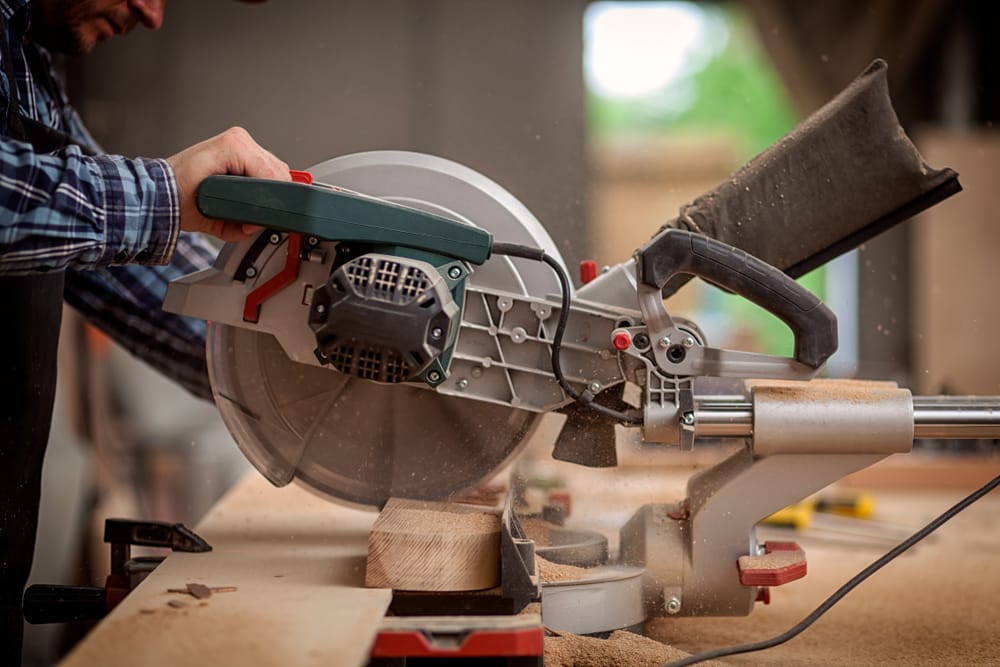
A carpenter is able to build anything that they can imagine with hand and power tools. Carpenters create and manufacture all kinds of things out of wood and wooden products. Not only can carpenters construct and make things out of logs, but they are also able to work with other types of materials such as glass, stone, or metals in the trade. Carpenters build sturdy homes for people to live in, staircases to climb up to higher floors, chairs for sitting on so people can rest their backsides after climbing all those stairs, cabinets for storing food items in kitchens, cupboards for keeping things clean, etc. Wooden planks are used for making flooring materials. A career in the trade can be very rewarding for those who love using their hands and working with their minds at the same time. ## Carpenter tools A carpenter does not just have to work with timber in order to create things. When designing a new product in the construction industry, they must take into consideration the types of tools that will be required for the job at hand. Carpenters are therefore well versed in all types of machinery, especially power equipment such as drills, hammers and saws. A carpenter is also very familiar with other important devices which help them to get their job done effectively, from ladders to the protractor, the tool used by carpenters when measuring the accuracy of angles and corners on a new design before it can be cut and constructed. ## What are some examples of carpentry? There are so many things that a [professional carpenter](/guides/carpenters/what-is-a-carpenter) can make. - Houses and all the items needed inside them such as doors, windows, skirting boards, other wooden fixtures etc. - Walls, wall partitions, installing doors, making custom kitchens, window frames (internal and external). - Chairs, cabinets, floor joists, and timber tables. - Timber flooring of various types including solid floors or skirting boards. - Cupboards and units for storage (including kitchen units). - A carpenter also makes fencing materials of various kinds including timber. ## What are the branches of carpentry? The [different types of carpentry](/guides/carpenters/what-does-a-carpenter-do) can be broken down into the main categories for carpenters. Construction carpentry or building construction involves building entire structures from scratch by the carpenters and is done by rough carpenters, while repair carpentry means fixing any damage or problems with existing structures. ### Interior carpentry Interior carpentry involves designing and building all new interior components for a structure such as doors, windows, bathrooms, etc and trim carpentry is also frequently a part of this. [Trim carpenters](/guides/carpenters/carpentry-costs) trim sides of features like skirtings and cabinets. ### Exterior carpentry Exterior carpentry is the same concept but on the outside of a structure by rough carpenters. Additions are also considered to be part of exterior carpentry work by the carpenters. For example, fitting an extra room onto the side of your house would require exterior carpenters in addition to regular construction carpenters. Exterior additions could include additional architectural features through rough carpentry on the outside of a structure or even just simple maintenance projects such as replacing your front door. ### Restoration carpentry Restoration carpentry involves restoring existing structures or other structures to their original condition. It can also called structural carpentry. This could be done after natural disasters or damage caused by man-made objects such as vandalism or simply wear and tear over time. ### Furniture carpentry Furniture carpentry is the design and creation of wooden objects for inside homes, offices, etc. Furniture making requires the finish carpenters to have fine craftsmanship, the opposite of rough carpentry or [formwork carpentry](/guides/carpenters/what-is-formwork-carpentry). Finish carpentry ensures that the features get an exceptional finish that makes the piece stand out. Those in finish carpentry have an exceptional eye for detail and are hired for broken pieces or other furniture-related tasks as well. Finish carpenters often charge more for their skills. ### Wood joinery Wood joinery is a sub-division of construction carpentry jobs that deal with delicate work using minimum amounts of pieces in order to create things like small chests, boxes, etc that are designed for looks rather than longevity. It requires special tools like framing squares for precision in carpentry work. Softwood (conifers) can also be used for this kind of fine work too, although hardwoods (deciduous trees) are often preferred because they are robust and durable. ## What is the workplace of a carpenter like? A carpenter can be employed by individuals or large companies for their specialist services. They could be part of a construction team working on-site, but they may also work alone as self-employed contractors. The job site of a carpenter is very similar to that of any other tradesperson such as an electrician. However, there are some distinct differences in the carpentry work which make the job more exciting and interesting than some others out there. Carpenters often have access to power tools such as drills, sanders, circular saws etc which allow them much greater freedom in creating things exactly how they want them instead of being restricted to basic hand tools only. They are often required to work in confined spaces and standing or crouching in awkward positions, which takes a certain level of physical fitness and resilience. As carpenters are very skilled with their hands they naturally have a good eye when it comes to visual design. They must make sure that they create exactly what their client wants, whether the client is an individual who has built his own house from scratch or someone placing an order for custom made products. Construction carpentry involves training skills such as maths and geometry in order that the correct measurements are taken before building begins. They also get on the job training as they gather more experience before the career or the jobs begin. High attention to detail combined with good maths skills is a must-have for any carpenter. In order to become a carpenter, you need to obtain an apprenticeship under another qualified carpenter and learn to do different building trades for different structural components to attain skills like fine woodworking, repair techniques and emergency repairs. The length of the apprenticeship differs but can be up to 4 years in some cases. During this time you gain hands-on experience in all aspects of carpentry and building trades so when your apprenticeship ends you are fully qualified, have a career and ready to take on clients of your own. ## What does a carpentry apprenticeship involve? Apprenticeships are a combination of on-the-job experience and a broad range of classroom learning. During your apprenticeship you will receive training in all aspects of carpentry, gaining hands-on experience in all techniques. Classroom learning will cover topics such as maths, geometry, machine safety, blueprint reading etc which are all useful skills for carpenters to have. The length of apprenticeship varies from company to company but it is usually between 2-4 years and the average salary is also different. Getting an apprenticeship is not easy and you must be prepared for lots of hard work, long hours and sometimes stressful situations such as working in confined spaces or high up on buildings where safety could easily be compromised if you make one wrong move. There are also many certificate programs that teach the skills of becoming a professional. Carpentry requires the carpenter to be physically fit due to all the heavy lifting involved during construction projects for buildings. It's estimated that around 80% of the effort is spent creating things like buildings and fixing broken furniture. ## What skills are needed for carpentry? A carpenter's building work needs manual dexterity as well as the below. - A logical and creative mind with good training. - Patience and good attention to detail to fulfill jobs and tasks. - Physical fitness and the ability to work in confined spaces and awkward positions. - Problem-solving skills that they can acquire through training. - An understanding of maths and geometry (e.g. what angles need to be used when cutting wood) is necessary for most carpentry projects. Carpenters normally need basic hand tools to make wood products such as hammers, nails, screws, etc. Some other materials include the below. - Rulers, pencils, other stringed instruments, and compasses. - Tape measures (cloth and metal), plumb bobs. - Chisels and saws (electric and manual). - Circular saws. - Jigsaws. - Nail guns. Carpenters also need the physical strength to move large pieces of wood around all day as well as climbing ladders or scaffolding. They are required to be aware of their surroundings at all times in order not to injure themselves on things like falling objects/tools which could easily happen if they are unaware. Carpenters also need good levels of concentration when working with tools such as saws so must possess the correct level of attention to detail otherwise accidents can occur easily. Young people should have a logical mind that is able to solve problems quickly and under pressure as well as the required skill set especially where measurements may be slightly off and need to be adjusted quickly. This is a problem-solving skill that is often needed where carpenters are building things from scratch such as tables when they install trim, chairs etc. Green carpentry is being recognised as promoting sustainable and environmentally friendly choices. Carpenters may work outdoors or indoors, depending on what sort of projects they are working on at the time which could mean long hours standing in one position e.g. measuring up before cutting wood, or long hours spent bending down to fix shelves into place.

What is Formwork Carpentry?

What is Formwork Carpentry?

Formwork carpentry is a part of wooden structure used to support poured concrete on a construction site. After the concrete sets, the hired formworkers strip already used forms to await the next project. In Australia, the demand for this specific trade is high. It can be classified into three types: ### Ordinary formwork The main function is to hold up the wall material such as cement or masonry materials and other concrete structures so their performance requirement on strength and stiffness is very high. Usually, they are smaller than a light partition box, which can be combined modularly. ### Light formwork The main function is to hold up light partition material such as wood, so their performance requirement on strength and stiffness is less than ordinary formwork. It can be divided into two kinds: one is scissor-type, the other is hydraulic type. It mainly adopts a scissor-type formwork system, which has many advantages in cost, speed of construction and adaptability for complex apartment structures. ### Material-saving formwork This kind of formwork is usually called a light partition box, whose main function is to hold up internal wall material such as cement or gypsum board, but they can't bear outside pressure The formwork carpentry should be prepared at the beginning of the foundations. Also one should check whether it has any problems after finishing the foundation and repair immediately. It can reduce project costs to a lower 1/3. Physical strength and agility are necessary for carrying heavy forms. Construction of formworks can be time-consuming, therefore employers should hire experienced carpenters to speed up the process. ## What is a formwork in construction? Formwork is a temporary structure made by a formwork carpenter crucial for supporting the concrete as it sets and hardens to form the desired shape during the construction process in either large commercial projects or residential construction. It works in tandem with stabilisers and poles for support and other temporary structures and may also require iron rods and steel reinforcement. Formwork helps to [retain wet concrete](/guides/concrete-products/concrete-mixing-ratio). The material can be cast into formwork during the building process to create intricate shapes, such as those required for artistic or aesthetic reasons, or it may simply be desirable to produce large complex structures economically. Although a general contracting crew might work on small-scale formwork, an expert formwork carpenter handles forms for larger structures. Formwork in construction is physically demanding and is high-risk work, therefore, you should always hire an experienced carpenter with the necessary training in formwork or equivalent qualification. Essential qualifications can be attained through formal training and apprenticeship. The Australian Government's [Job Outlook website](https://joboutlook.gov.au/occupations/carpenters?occupationCode=331212) has a handy guide for those more interested in carpentry. ## What is timber formwork? Timber formwork is used for concrete structures to support the concrete as it sets and hardens to form the desired shape (usually flat). Formworkers build various types of forms that work as moulds supporting the wet concrete. They also make concrete slabs and support beams. The material can be cast into formwork to create intricate shapes, such as those required for artistic or aesthetic reasons, or it may simply be desirable to produce large complex structures economically. Timber shuttering or joggle board is a common method for building simple forms to pour wet concrete into patios, slabs, and pads when you are not using more sophisticated methods such as steel formwork, plastic formwork, etc. The style of wood frame has many names including timber jib and T-bar and can be easily made with minimal carpentry skills and tools on site. ## What are the three main types of formwork used in construction? Ordinary formwork is the most common type, which is more sturdy than light formwork, but more expensive too. This type is good for large structures in the construction industry, where the wall thickness would be around 6-8 inches or more. It can also be adapted to any shape required by using different connectors and joints. ### Light formwork Often known as a light partition box, it does not need concrete inside of it to hold up the weight of something on top of it, so they are usually lighter in weight. They can be made from plywood or steel depending on their use or structure size requirement. They can be used to form curved walls and they can even be used as a temporary room which you can easily take down after the construction is complete. ### Material-saving formwork This type of formwork also called a light partition box, its main function is to hold up internal wall material such as cement or gypsum board, but they cant bear outside pressure. This kind of formwork is usually attached to concrete by using screws, nails or glue. ## What are common types of wood used for forming? The most commonly known types of wood that are used for building forms are spruce, fir and southern yellow pine. These woods have a low cost compared to other hardwoods and softwoods and don't warp too much during their working life. They are also very light in weight compared to other forms of lumber so they are easy to transport and work with. ## How long can I expect my wooden formwork to last? Wooden formwork has an indefinite lifespan if it is maintained properly throughout the course of its usage. Obviously, there's nothing like new lumber but like old cars or old houses, formwork will still be able to take abuse before failing completely if it's well taken care of. ## How does formwork affect concrete? Formwork has a huge effect on concrete since it dictates how strong it will be as well as its overall durability after setting along with its aesthetics. If there is no formwork present during the pouring process, there will be no strength to it at all, meaning that the concrete would slowly flow out of the concrete forms and take any shape or pattern. ## Is timber formwork reusable? In some cases, timber formwork can be reused. Sometimes if the concrete is broken down from the wall and a new surface needs to be poured or formed for a different purpose, you can reuse your old formwork with sandbags or new concrete on top of it. Other times when your leftover forms are used to make a replica of an original structure's design, but on a smaller scale of course. ## What are 3 common mistakes new carpenters make when making formwork? The first mistake is not bracing walls correctly. If not enough bracing is given to the side of your wooden forms, then your entire structure will have too much give and leave unwanted impressions on the casted concrete causing cracks and unevenness. ### Not using adequate sized nails When using timber for formwork, you will want to use nails that are sized appropriately depending on the type of lumber you are working with. Using too big or not enough nails can cause your wooden forms to warp and deform making them unusable. ## Not understanding how much weight the wall can bear When making a formwork, make sure to take into consideration what material is going on top of it as well as any pressure from outside forces such as water, etc. If your structure does not have enough [support underneath it](/guides/concrete-formwork/what-size-steel-mesh-for-a-concrete-slab) then chances are something could collapse resulting in injuries and major monetary losses. ## What is the purpose of formwork in construction? Formwork is a temporary structure made by formwork carpenters used to guide and support concrete as it sets and takes the shape and form of your desired design. This type of structure can also be used with other mediums such as plaster or drywall depending on the application needed. Formwork carpenters also construct fillers for sealing gaps in civil projects. They analyse plans and make necessary adjustments to ensure premade form sizes match the exact structure dimensions. Additionally, they also assemble premade heavy plastic forms. New forms are built above the [previously poured concrete](/guides/concrete-products/what-is-concrete-made-from) in tall structures. Formwork is also essential for the construction of beams and columns. ## How long does formwork last? Wooden formwork has an indefinite lifespan if it is maintained properly throughout the course of its usage. There's nothing like new lumber but like old cars or old houses, formwork will still be able to take abuse before failing if it's well taken care of.

What is a Sanding Drum?

What is a Sanding Drum?

A sanding drum is a round steel or fibreglass wheel with abrasive material on the surface, used on an electric drill for wood and metal. Sanding drums are composed of sanding cylinders mounted on reusable drums and can be used on a drill press or a rotating shaft. It's available in different grits and is often included when buying a drill bit set. A sanding drum can also be used with various tools, including high-speed die grinders. Sanding drums are available in a range of grit sizes. Some are oddly shaped work pieces, but the correct size is essential to get the desired result. The different grit sizes include: - 80 grit is very coarse and is generally used to strip the surface of the wood before refinishing or for mild steelwork. - 120 grit is still coarse but will produce an acceptable finish on metal after heavy removal. - 180 grit will give you a good working surface on most metals and enough to smooth out rust marks. - 240 grit will leave you with a nice finish on ferrous metals. - 400-600 grit will give you a polished 'mirror-like finish on aluminium surfaces. - 800-1200 grit will finish aluminium or stainless steel to a bright shine. The higher the grit, the smoother the finish will be. ## How do I use a sanding drum? A sanding drum can be used with various tools, including high-speed die grinders, drill presses, lathes, electric drills and small motors. It has many benefits, including removing rust from metal surfaces by attaching the appropriate grit belt and using it in conjunction with some water for lubrication. For final finishing, attach a finer grit belt. Sanding drums are handy [carpentry or woodworking tools](/guides/carpenters/carpentry-v-woodworking). If you're going to use them for polishing purposes, always use a lubricant. Even water will work. To get the best results from your sanding drum: - Always clamp your workpiece securely in place before starting. - Use a light touch when using the drill and let it do the work. This will generally produce better results. - Store unused belts with a protective coating and keep them out of direct sunlight and away from heat sources like fires and heaters. - Always check that your sanding drum is in good condition before using. If the grit is worn away, protected by a layer of rust, or the protective coating has been removed, don't use it. ## How do you make a sanding drum? You make a sanding drum by attaching an abrasive (e.g., sandpaper) to a piece of wood or metal around a central hub and then ensuring that the whole thing spins easily on its own. To attach the grit to the wheel, you can use staples, nails, or adhesive such as contact cement or superglue. It shouldn't come off while running at full speed. You may also need to beef up your wheel with additional material. These include dowel rods, wooden blocks or non-ferrous metals to provide extra strength for hard materials like plastic, stone or masonry bricks. Another important factor is making sure that your wheel is balanced correctly. If it isn't, the whole thing will vibrate excessively and may even come apart. Some products come with sanding cylinders and reusable drums for attachment to a drill press or other tools. There is also a particular type of sanding drum that eliminates the need to replace sanding sleeves periodically, ideal for [construction carpentry](/guides/carpenters/carpentry-vs-construction-carpentry). You would not need to buy any sanding sleeves because the drum is designed so that a locking device secures both ends of sandpaper to the sanding drum. You can also make the sanding sleeves yourself. ## How do I use a sanding drum? A sanding drum can be used with various tools, including high-speed die grinders, drill presses, lathes, electric drills and small motors. It's ideal for removing rust from metal surfaces by attaching the appropriate grit belt and using it in conjunction with some water for lubrication. For final finishing, attach a finer grit belt. ## Can you use a drum sander in a regular drill? It will make your life much easier if you have an adjustable speed drill with forward/reverse capabilities. These offer the most control when using tools like sanding drums. They allow you to switch the direction in which the shaft spins, they control speed, and there's a trigger that allows you to start or stop at will. You should also make sure that your workpiece is securely clamped down before starting the drill again, it'll save you time and effort if it does come loose. ## What are sanding drums made of? A sanding drum comprises a central hub and an abrasive material attached around its circumference. The abrasive used to attach it depends on what kind of job needs to be done. You can use sandpaper, leather or fabric discs. It depends on whether you need to get rid of rust from metal surfaces (using sandpaper), smooth out small pieces before gluing them together (using fabric) or remove dried paint from windows (using leather). ## What are sanding drums used for? Sanding drums are useful for shaping metal surfaces, smoothing wooden planks before painting them, removing rust from metal objects and finishing pieces with a smooth surface before applying paint or varnish. Sanding belts can also be attached around a drum sander to polish softwood or hardwood up into a gleaming finish after being cut down to size. However, this will only work if the wood is hard enough. The outer layer of the sanding drum is lined with grit abrasive responsible for polishing and removing scratches on surfaces. However, aside from metals and woods, it is also suitable for use in fibreglass. In some cases, users also use it for cosmetic purposes like sanding off gel polish. It shows how delicate and precise the sanding drum is, specifically shaping, finishing, and grinding your project. Its small size is also advantageous in getting to hard-to-reach places. While not strictly a drum sander, some people also use rotary tools with diamond cut-off wheels to grind down surfaces like concrete or masonry before painting them. ## What is a caramel wheel? Caramel wheels polish marble, ceramic or stone surfaces into a smooth, gleaming finish. They are essentially sanding drums with ultra-fine grit attached to them and not really used for wood which a [carpenter would work on](/guides/carpenters/what-does-a-carpenter-do). Before using your caramel wheel, you must check the condition of the grit. If it's worn away or protected by rust or paint, don't use it because you won't get good results and might damage your precious floors. Caramel wheels can be used with buffing pads to remove marks made by floor machines when used on newly installed tiles. These machine marks look like black lines across the tile or marble surface when this happens. ## Can you use a sanding drum with a Dremel tool? Yes, you can. Sanding drums with Dremel is particularly useful for removing rust from metal objects. Still, you can also use them on wooden surfaces to smooth them out before applying paint or varnish. A sanding drum is a high-speed cylindrical grinder. You can use the Dremel in the same way as one. Polish up with an old cotton T-shirt or rag for best results when you've finished. For materials like concrete and masonry, consider attaching diamond cut-off wheels to your rotary tool before grinding down surfaces for painting or staining purposes. Select a brand with positive reviews and offers many benefits, various payment options, and a close checkout for best results. For information on how to stay safe while using a sanding drum, take a look at the [New South Wales Government's SafeWork website](https://www.safework.nsw.gov.au/resource-library/manufacturing/wood-safety-kit/sander-hazard-identification).

What is Chamfer?

What is Chamfer?

The word chamfer is a term used to describe a surface or edge that has been bevelled or sloped. The function of chamfers or bevels is to remove any sharp edges from a plane and to make it more aesthetically pleasing. Chamfering can be performed on both wooden and metal surfaces, and chamfer is a common technique used in furniture manufacturing and carpentry from the middle French time whereas bevels are performed on glass surfaces or any glass objects to remove any sharp edges. There are a few different methods that can be used to chamfer or bevel any surface or sloped edge. One popular method of chamfer to use a hand chisel or router to create a 45-degree angle on the bevelled edge of the exterior. Alternatively, a power tool such as a belt sander can be used to quickly achieve the desired transitional edge or chant edge with a chamfer technique. Another important process in chamfer and manufacture is the CNC machining process, which is widely used. When chamfering any wooden object, it is important to take into account the natural grain of the object. If the grain runs in the opposite direction of the chamfer, it can lead to breaks and any other damage to the chamfered edges. In general, it is best to avoid chamfers across the grain if possible. This will prevent any break. Chamfering metal surfaces is a little bit different from chamfering wooden components. With metal, there is less risk of damaging the plane, so it is generally okay to chamfer in any direction. However, it is still important to take into account the natural grain of the metal when chamfered. This will help prevent damage or break and ensure that the finished chamfered product looks smooth and polished. ## Difference between fillet and chamfer Chamfer and fillet are two terms or words often used interchangeably, but there is a subtle difference between chamfer and fillet. The word chamfer simply means a bevelled edge or chamfered edge, while a fillet is a concave curve that is used to soften the edges of a chamfer. The chamfers are mostly popular in [carpentry and woodworking](/guides/carpenters/carpentry-v-woodworking). The main difference between the word chamfers and fillet chamfers are usually straight lines (perpendicular, otherwise called perpendicular lines), while fillets are curved. This makes fillets more aesthetically pleasing, and they are often used in furniture and decorating applications. Filleting is another verb. When choosing from the differences between a chamfer or a fillet, it largely comes down to personal preference. If you want angular and otherwise sharp edges, or mix any bolts then chamfer is the way to go. But on the other hand, if you want a smoother form and more gentle features, a fillet will get the job done. ## What tools are used to chamfer wood? There are a few different cutting tools that can be used to chamfer or bevel wooden objects. The most common tool used to chamfer is a hand chisel. It is a small, triangular-shaped blade that is used to groove the wooden features. Routers are another popular tool examples for chamfers, and they can be used to create sharp angle cuts or curved shapes. Lastly, belt sanders are examples for chamfer and quickly achieve the desired chamfered edge or transitional edge. When using a hand chisel to chamfer or bevel, it is important to take your time and be careful not to damage the interior of the wooden features. Make sure to hold the chisel at a 45-degree angle and use a gentle tapping motion to groove the wooden features and give perfect definitions. Routers can be a bit more dangerous than hand chisels, so make sure to read the manufacturing instructions manual carefully and always use caution when using this cutting tool to chamfer or bevel. Belt sanders are the quickest and easiest way to chamfer woods, but they can also be a bit dangerous to chamfer if not used correctly in the manufacturing industry. Make sure to keep the sander moving in a straight line and avoid putting too much pressure on the blade while the object is being chamfered. All of these tools have their own advantages and disadvantages, so it is important to choose the one that fits your needs and skillset to chamfer. ## How do I chamfer metal? Chamfering metal is a little bit different from chamfering a wooden object. With metal, there is less risk of damaging the material, so it is generally okay to chamfer in any direction. However, it is still important to take into account the natural grain of the metal when chamfering. This will help to prevent damage and ensure that the finished chamfered product looks smooth and polished. When chamfering metal, it is best to use a power tool such as a belt sander. This will allow you to quickly achieve the desired chamfered edges without having to put too much effort into it. Make sure to keep the sander moving in a straight line and avoid putting too much pressure on the blade when the metal is chamfered. This reduces the risk of damage while doing chamfer with the metal, but best [leave it up to a professional](/guides/carpenters/what-does-a-carpenter-do). It is also important to wear safety goggles when chamfering metal, as there is a higher risk of flying debris during chamfers. ## What is wood filleting? Filleting is smoothing out the corners of a project. For example, you can use fillets to make rounded edges or curved corners. To understand how a fillet works, it's important to remember that a fillet is basically just another shape of woodcut. A square edge has 90-degree bevel and if you round those off by cutting a fillet into the edges then you have created a nice curvature in your project. This may be done for aesthetics or to create a safe corner so fingers cannot get caught as easily when passing by. Filleting tools are very similar to chisels but come in different sizes for different tasks. Some common examples of filleting include the below. ### Angle filer This tool is used to quickly and easily fillet the sharp corners of a project that has already been cut. It is a great tool for beginners as it is easy to function and very effective. ### Corner filer This tool is specifically designed to fillet the corners of a project. It has a sharp edge and bevelled edge that allows you to easily remove any excess definitions from the corners. ### Cove filer This tool is used to create curved fillets in your project. It has a curved blade that allows you to easily remove material and detail smooth curves. ### Rounding over This tool is used to create rounded edges on your project. It has a rounded blade that allows you to easily remove material and create smooth, round edges. ### Scratch filer This tool is used to smooth out the two surfaces of your project. It has a curved blade that allows you to easily remove material and create clean, continuous curves. Keen on upskilling your carpentry skills? Take a look at the [training.gov.au](https://training.gov.au/Training/Details/CUAWOO502) website. ## What is the benefit of filleting? The most common function for using a fillet is aesthetics. Another advantage of using a fillet is a safety factor. Without a corner or a sloped edge, it's less likely that someone will get hurt by hitting their hand or finger against the otherwise sharp edges. Plus, the smoother the edges are the better the finished column will look. ## How do I add wood filler? If you're ready to add fillers because your planking needs some texture then just mix up some epoxy resin with sawdust. Make sure to mix these two elements together thoroughly so they can spread evenly across the exterior of your wooden part design. You will then need to apply it with a putty knife in order to fill up any gaps or holes that you find in the planking for a professional finish, [just like a carpenter](/guides/carpenters/what-does-carpentry-involve) would do.

What is a Dust Extractor?

What is a Dust Extractor?

Dust extractors are an essential piece of equipment in most workshops, offering significantly improved safety and hygiene. A dust extractor is a vital device for dust control in most workshops. It assists in and dust removal of the vast majority of the sawdust created by power tools, helping to protect you from fine dust particles that can enter your lungs and affect your health. Not only that, but dust extraction also prevents the spread of fire, which may be caused when leftover particles of sawdust are ignited. It is essential to use a dust collector to remove as much dust as possible. Dust collectors are widely used in most large factories to remove harmful particulates at workshops across the world. It is one of the best ways to protect both workers and machines. It is now common to use different class dust extractors when cutting, sanding or polishing wood, masonry or metal. The following categories of dust are based on particle size. These are Class L, M, H, I, and H. Dust extractors are also helpful to improve air flow by removing large quantities of dust created by power drills from the floor and surfaces and collecting them in a filter bag. As well as this, they can also be used to remove sawdust created by routers and sanders. The extraction tube is made of plastic or metal, which directs air flow into an electric motor through blast gates that suck it up and keep it flowing. This air is then directed into a clear hose and then into a filter bag. For higher efficiency, get a strong and long life filter bag that can carry large quantities of dust. Transferring the fine dust to the dust collector should ensure that all material is kept in close contact with the tube walls, so there is little room for dust build-up. The machine should also be moved across the surface of the work piece at roughly the same speed as this will give the most efficient result and cover a large space. It is important to note that a dust collector should always be used with attached hoses and a suitable filter bag to achieve the highest quality results. Hoses with a smaller diameter work slower, but they are easier to operate with more [intricate woodworking jobs](/guides/carpenters/carpentry-vs-woodworking). ## How does a dust extractor work? A dust extractor works by attaching to the front of your power tool and collecting almost all of the airborne wood dust from the surface and floor. This air is then diverted through a pipe until it reaches the dust extractor's cyclone, where its particles are then separated from the air to be collected. The collected dust is then stored in a container in front of the machine, leaving you ready to carry on with your work without any interruption. This container can be emptied at regular intervals or when it is full. Also, you can get a portable dust collector for your stationary tools. There are two types of dust extraction systems, wet and dry systems. The difference between these two is in their dust collection method. The wet dust collection system will collect the particles in water; this stops dust from entering the air. On the other hand, a dry system collects dry materials using filter bags to capture dust and prevent it from entering the air. In this way, both systems make excellent dust extractors and also work as air purifiers. ## What are the benefits of using a dust extractor? A vast number of benefits come with dust extraction. Firstly, it will help protect your health by removing the vast majority of all dust particles from the air you breathe. By improving air quality, dust extraction helps you avoid getting particles in your lungs that can cause respiratory problems such as asthma and chest pains. You need to extract dust for significant environmental benefits. It will prevent you from sending sawdust to landfills, where it will harm the environment. It also means that you won't need to use a vacuum cleaner or broom to get rid of finer dust particles, saving you time and energy to concentrate on [more carpentry projects](/guides/carpenters/what-does-a-carpenter-do). ## Are there any disadvantages to using a dust extractor? The most significant disadvantage is the cost. The extractors tend to be expensive items, but they are worth every penny if you value your health and safety and the quality of your work. Another disadvantage is that some smaller and older power tools lack the proper fittings required to connect them to the extractor. It is worth checking that any tool or machine you plan to use can be connected to one. Otherwise, consider buying an adapter. There are also disadvantages where noise levels are concerned as most dust extractors are extremely loud. It is essential to wear ear protection whenever you use one of these machines. ## What is the difference between a vacuum cleaner and a dust extractor? There are several differences. Firstly, shop vacs are designed to be used on floors and countertops, while extractors work best on surfaces above waist height, such as benches and tables. Vacuum cleaners tend to have large motors that create powerful suction, damaging delicate surfaces such as wood and tile. On the other hand, Dust extractors use much smaller motors with limited ability that rely on air velocity to grab their particles in filters instead of suction power. It is also important to note that you should never use a vacuum cleaner to remove dust from your workshop or garage because doing so will cause it to get inside the motor and burn it out within no time at all. ## Can a dust extractor be used as a vacuum? Dust collectors cannot be used as a shop vac. They utilise two different methods of collecting their particles. Dust collectors use air volume and speed to collect small particles, while a vacuum uses suction power. ## What tools can I use with my dust extractor? You can use basically any tool that creates airborne particles such as saws and planers, most rotary tools such as grinders and sanders and all types of drills (including cordless). The dust collector is designed for workshop and garage use only. ## How do I clean a dust extractor? It is essential to regularly clean your dust collector to prevent the machine from clogging up and losing its efficiency. Two parts should be cleaned regularly, the filters and the impellers. The HEPA filters are located inside of the tank at the top of your dust collector. It is typically made out of paper or fabric to assist filter cleaning as they can be hosed down with water. The impeller should also be hosed down because sawdust tends to build up around it. You can use a compressed air stream to clean around these components if you wish, but this isn't necessary as simply hosing them down once every few months will suffice in most cases. ## How often should I clean my dust extractor? It is a good idea to wash your filters and impeller after ever use. It will prevent the build-up of sawdust. Cleaning will increase the lifespan of the extractor by protecting its burnout when attempting to pull air when the filter bag is clogged. It is also a good idea to wipe down the outside of your machine to prevent dust from building up. Stay safe while doing any woodworking project. SafeWork New South Wales have a great guide to [avoiding health hazards](https://www.safework.nsw.gov.au/resource-library/manufacturing/wood-safety-kit/wood-dust-health-hazards-and-control) while working with wood.

What are Band Clamps?

What are Band Clamps?

A band clamp is a type of fastener that does not require any tools for installation and can be used quickly and easily. A band clamp is also known as a bungee web clamp, elastic bands and elastics or rubber bands. They are one of the most popular types of fasteners for hanging heavy objects on walls. An example of a band clamp is a web clamp, often used for objects with irregular shapes. Band clamps can be used to hang items on walls, including light fixtures like lighting, ceiling fans and pendants, large tools like drills, saws, and shop vacuum, mirrors and picture frames; shelves; TVs & speakers; almost anything weighing less than about 60kgs. A band clamp is made up of rubber bands, also called elastics or webbing. The elastic is centre-mounted on the connecting piece and forms an X shape when looked at from above, with each arm of the X being stretched taut over its respective object (light fixture, wall shelf, etc). The X shape, when positioned correctly and tightened evenly, holds the objects in place. The band clamps themselves usually come in packs of 10 to 100 and are commonly used on [all sorts of carpentry jobs](/guides/carpenters/what-does-a-carpenter-do). ## What are band clamps good for? A band clamp is suitable for hanging heavy objects to walls, as mentioned above. You can use it for creating assemblies of both ferrous and non-ferrous metals. When used to hold ferrous metals, ensure the band clamp is positioned correctly to prevent distortion of the object's shape. An example of ferrous metals is aluminium, while steel and iron are examples of non-ferrous metals. There are other applications of the band clamp too, listed below. - Store fixtures, such as mannequins and clothing racks, on pallets to make the store look better. - Hang garden equipment from a steel beam in your garage or workshop. - Mounting wheels to reduce the risk of them getting dents. - Tying down cargo in the back of your truck, so it doesn't bounce around or go missing. ## How do you use band clamps? Hanging objects with a band clamp are pretty straightforward, but here are some tips for getting started. - Make sure the rubber bands are in good shape. If they're old and stretched out, replace them. You can check by stretching them to their full length and checking if they return to their original size afterwards. - Be careful that whatever you are hanging is securely fastened to the supporting beam to prevent the risk of falling - e.g., wall studs or ceiling joists, otherwise your object will come crashing down. - Don't stretch the elastic too tight because this could damage what you're hanging. The rubber bands are strong, but not that strong. - Remove dust and dirt from surfaces before applying band clamps to ensure a good hold. ## What are the best band clamps for woodworking? The best band clamps for [woodworking projects](/guides/carpenters/carpentry-vs-woodworking) are those that will hold your project securely at 90°. It's no use clamping a mitre joint together if the object falls apart when you let go of it. You can use a screw to apply clamping pressure for consistent tension. There are individual band clamps for specific purposes in woodworking; they include the below. - Circular saw guide. - Crosscut guide. - Dowel pointer. - Dowel jig. Each of these is built to hold your wood in place while carrying out a particular task (e.g. cutting). Each is meant to be used with its specific accessory (e.g, circular saw, router, etc.). They are not interchangeable, so make sure you know which one you need before making your purchase. ## What are strap clamps? Strap clamps are similar to band clamps, but instead of using rubber bands, a strap clamp uses nylon straps with the body often made of plastic. They are also known as nylon web clamps or fabric webbing clamps. They come in a range of sizes and strengths, from heavy-duty for carrying objects weighing up to about 60kg to very light-duty ones with a limit of less than 5kg. Like band clamps, strap clamps do not require any tools for installation and can be installed quickly and easily, just pull it tight to provide consistent tension and start work. Use them to hang light fixtures like lighting, ceiling fans and pendants; extensive tools like drills, saws, shop vacuums; mirrors & frames; shelves; TVs & monitors; small appliances like microwave ovens, coffee makers and blenders. Strap clamps are also helpful for hanging heavy objects to garage or basement ceilings by being tightened evenly around the rafters instead of attaching them directly to the ceiling joists. ## What are backplate clamps? Backplate clamps are used to attach a light fixture with a box-style body with no straight edges onto a flat surface. You can think of it as an upside-down strap clamp, where one end of the "strap" attaches on the backside of the object and wraps around a supporting beam, while the other end attaches to a mounting plate that is secured to your wall. You'll need four backplate clamps for installing one light fixture, two on each side of the fixture. Place them so they're not visible from the front. To install a backplate clamp: place it onto the backside of your object and pull any slack in the strap through to the other side; attach a mounting plate to your wall where you want it to be; align and push the mounting plate toward the object so that it fits between the straps and tighten by pulling hard on both ends of the adjustable strap for a firm hold. ## How do you use a ratchet band clamp? You can also use it to organise cables or cords by wrapping the clamp around a handful of them and locking them in place. It is beneficial to move your computer and entertainment equipment around (e.g., taking it with you on vacation). Ratchet band clamps are generally used for creating assemblies. They keep objects together, such as making curved wooden parts stick together while doing [various carpentry jobs](/guides/carpenters/what-is-carpentry). They're not meant to hold a heavy work piece. As with other band clamps, these come with their own set of instructions: make sure that whatever material you clamp together gets a firm grip so that the object won't drop when you let go of it; avoid stretching them too tight as this will make them lose their hold; don't let the ratchet mechanism become wet as it might jam and break. ## What are quick-release clamps? These are also known as cam clamps, bar clamps or multi-grip clamps. They consist of a rubberised hand knob on one end and a clamping arm extending to various lengths by turning the handle's wheel clockwise against it. Multi-grip clamps also come in two types: long bar type and U-type. The long handle version is used for significant assembly work,such as when [building formwork carpentry](/guides/carpenters/what-is-formwork-carpentry), while the U-type provides more stability but has limited reach. Both feature a simple push lever system that enables users to release their hold, hence its name quickly. Place the piece that you're trying to secure in the jaws of the clamp; once positioned, push down on the handle knob so it can close tightly against it; move to where you want to set the object and tighten by turning the wheel clockwise until securely held in place; if your work requires adjusting or repositioning, release clamping pressure by pushing down on the release lever and repeat until it is clamped correctly for a firm grip. Stay safe while doing any woodworking project. SafeWork New South Wales have a great guide to [avoiding health hazards](https://www.safework.nsw.gov.au/resource-library/manufacturing/wood-safety-kit/wood-dust-health-hazards-and-control) while working with wood.

Carpentry vs Construction Carpentry

Carpentry vs Construction Carpentry

General carpentry is closely related to construction carpentry but differs in how the work is done. Carpentry is a skilled trade where carpenters work on buildings, houses, etc. to produce everything from the initial laying of the foundation finishing touches in the interior such as kitchen cabinets or door frames. Construction carpentry is essentially carpentry skills used for construction sites. Construction labourers who practice construction trades are usually employed by general construction companies building new homes and businesses, repair shops restoring older structures. The work they do is very much like carpenters, but they cover the entire range of construction trades including road construction and other commercial construction. Construction workers perform physically demanding tasks that usually involves woodworking, moving materials, loading building supplies, and various other skills learned during a specialised training or apprenticeship program. A construction worker might build [formwork carpentry](/guides/carpenters/what-is-formwork-carpentry) or erect moulds that will be used in making concrete blocks, brick paving stones or stone columns. Unlike production carpenters, construction workers apply their different carpentry skills in different construction environments instead of just a few types of construction projects. A construction worker may also be asked to build scaffolding operating equipment for other workers engaged in painting houses or buildings. Although this kind of work is similar to production carpenters, it's more specialised. Construction workers may also assist carpenters with physical labour tasks such as removing hazardous materials, building decks and patios for homeowners, erecting scaffolding to be used by painters and plumbers. They might even build steel structures that are used as temporary storage sheds or other similar uses. ## Does carpentry fall under construction? Yes, carpentry does fall under construction. Construction workers typically work in the building of homes, houses and businesses either from the ground up or after many repairs to the existing structure. While the job responsibilities of a carpenter is to construct and repair structures made with wood and other materials, install fixtures, drywall and more, construction workers work with steel, concrete and other construction machinery and building materials and also assist with lifting heavy equipment used at a construction site. Both a carpenter and a construction worker are aware of the building plans and design layout schemes that will be used while constructing and building structures of homes or buildings. ## Can a carpenter build a house? Building a house is a part of the construction industry. So yes, a carpenter [can build a house](/guides/carpenters/what-does-a-carpenter-do). This does not mean that he will be able to do it on his own, though. In most cases, there will be specialists from the field such as a project manager who will have to work with him on some basic tasks if he wants to have any chance at success in building a home for someone else. The only people really capable of being successful builders are those who come out of production building programs, which take years and years of practice to perfect the necessary skill set. ## How to become a carpenter To become a carpenter is not easy. Although the career offers variety and opportunities for advancement both as an employ or in your own business, it also comes with a long list of requirements that must be met along the way along with a decent level of physical fitness. The first step towards a lucrative career as a professional carpenter is gaining an education from an accredited trade school or technical institute. Upon completion of this program, you will have acquired valuable knowledge of carpentry and different building methods and have been exposed to key skills required by entry-level construction professionals. The next step on your journey to becoming certified as a carpenter would be acquiring several years of experience working in any number of different carpentry jobs like framing, building cabinets, skirting boards, door frames and other structures, and additional tasks such as installing fixtures and wood floors. This hands-on approach to learning what the construction industry is all about will give you the skills necessary to start your carpentry career. If you complete one of these many apprenticeship programs (obtaining two years of experience), you should be ready to take the certification exams required by different states for successful completion of said program. This would mean that you are ready for many job opportunities as formal carpenters, self employed experienced workers or start your own business, certified by the state in which you live and qualified for a higher salary. ## How much does carpentry cost? Carpentry costs depend on the type of project you are working on as well as where you live. If you are looking at making minor fixes around your home, then you may only need to pay a few hundred dollars for the project. If you are building a major addition to your home, then the cost can be close to $10,000 added up by the many hours worked. There is no way to give an accurate estimate because there are so many variables involved. The best way to find out how much it will cost for specific services in your area is by contacting local construction contractors and getting bids from them but typically, you can expect to pay around $40 per hour. ## Do construction carpenters make formwork? Yes, both construction carpenters and carpenters apply their skills in making formwork. Construction carpenters use more heavy machinery like saws, drills and hammers whereas carpentry uses mainly hand tools such as mallets, chisels and planes. To make formwork, construction carpenters use a method called "pre-cutting" to create forms for concrete. This is very different from the making of wood formwork where construction carpenters will use construction equipment such as chain saws and drills to cut the material into shapes that are easy to handle. In this case, it's almost like carpentry except that they have heavy equipment at their disposal. ## What is formwork precutting? Formwork precutting is a form of construction that uses pre-cut wood for creating concrete structures. If you are building something like a wall or block foundation, then this method of laying out the structure will be used to create strong and sturdy forms without any waste or problem areas. Before using this technique, make sure the plans are correct because it is very difficult to fix mistakes after heavy machinery has been used on the material. ## What are some basic carpentry tools? There are many different types of basic carpentry tools available depending on what [type of carpentry](/guides/carpenters/what-does-carpentry-involve) will be done on a given project. Here are just a few examples: hammers, screwdrivers, saws (both power and manual), chisels, planes, levels and yardsticks, measuring tapes, safety glasses and dust masks. A few of the many other tools available include clamps, drills, nails and screws along with common carpentry tools like a mitre saw or a radial arm saw, both of which are used to cut boards or plywood, as well as screw guns for applying hardware. ## What is the average income for a carpenter? The median annual salary for carpenters in 2021 is around $70,000 per year or $37.59 per hour. For more information about carpentry, or hiring a licensed carpenter, take a look at the [New South Wales Department of Fair Trading](https://www.fairtrading.nsw.gov.au/trades-and-businesses/licensing-and-qualifications/carpentry).

What is MDF Made From?

What is MDF Made From?

Medium density fibreboard panels have a smooth wood-grain finish and are often used in combination with other materials, such as plywood. Made from wood pulp and resin, Medium Density Fibreboard (MDF) is a tough, strong, and moisture resistant material with many uses in construction, joinery, decorative home projects, and furniture making. The production process for MDF wood involves pulp being mixed with water and then heat is applied to the mix. This causes the natural wood fibres to separate from each other and become extremely fine. The resulting material is then pressed into sheets at high temperatures and under intense pressure. It finally goes through a cooling tower, where it comes out ready for cutting or joining. MDF can be cut using power saws or knives, but small pieces should be cut using blades designed specifically for cutting MDF because they make much finer kerf (cut width). Saw blades should always be very sharp and when cutting MDF it is crucial to have a [good dust extraction system](/guides/carpenters/what-is-a-dust-extractor) because it tends to have a large number of particles in the air. MDF can be made from softwood residuals or hardwood fibre. Finished board thickness is measured in density. Due to the different characteristics of materials, a thick MDF panel made of softwood fibre rated at the same density as that of hardwood fibre is significantly different. The surface quality depends on how well the board has been machined after manufacture, so final sanding is also an important factor in achieving a high standard finish. Resin-type wood fillers are usually required to close up any defects or irregularities in panels composed of natural wood fibres that are not perfectly aligned. The tiny spaces left between them may result in uneven moisture absorption and therefore changing dimensions after installation. ## How is MDF made? MDF is made using heat and pressure to compress wood pulp into sheets. The main raw materials used are sawdust, wood shavings, and ground-up wood scraps, in addition to either natural or synthetic urea-formaldehyde resin binder. The process of manufacturing medium density fibreboard typically involves the following steps: ### Wood pulp mixing Pulp is mixed with water in a large vat to form a wet slurry. The exact composition of the pulp varies depending on whether it will be used for structural or decorative MDF panels but typically contains sawdust, wood chips/shavings, cellulose fibres (wood pulp), synthetic resin binder, and an optional co-solvent. ### Primary screening The slurry then undergoes primary screening to remove any oversized particles that would later negatively affect its strength and dimensional stability during production or hinder performance at high temperatures. ### Transfer of lightweight fibre All the remaining lightweight fibre materials are transferred into vacuum forming equipment. They are repeatedly sucked through nozzles while being heated up under pressure, which causes them to expand significantly before being cooled again. ### Mixing with binder The flow of slurry is then directed into a water tank where it is mixed with preservatives, lubricants, wax. The synthetic resin binder is added as the main bonding agent in order to enhance MDF's binding properties. Wax improves the moisture resistance of the MDF. The sheet forming dry fibre is fed into a pendistor. This machine evenly distributes fibre into a uniform mat right below it. ### Compression and drying The mixture is pressed onto high-temperature screens using hydraulic pressure rollers, which are covered with an adhesive textile mesh that forms the basis for the next step in the process when they are heated underneath by steam or gas. The strength and density profile are achieved by the continuous hot press effects of the high temperatures that activate the bonding resin. The precompression process ensures uniform density, mat thickness, and good mechanical strength making it [ideal for some carpentry jobs](/guides/carpenters/what-does-carpentry-involve). ### Hot pressing After the hot press compression under extreme heat in a final heated expansion chamber, the boards are left overnight to dry before being cut into smaller pieces during secondary screening in preparation for gluing. This is typically done on power saws for structural MDF panels, but only knives are used in decorative MDF manufacturing because there is no need to speed up the process. ### Cooling and finishing The panels are then sent through a cooling tower, where they come out ready for cutting or joining. ## Is MDF better than natural wood? The answer to this question is quite complicated because it depends on the specific requirements of the manufacturer. As a building material, MDF has many benefits over natural wood, including being low-cost, lighter, dimensionally stable, having a very smooth surface, and very easy to work with, but only when used in place of solid wood for structural purposes. Also, when compared to other manufactured wood products, it is stronger than a particle board product. MDF is also generally denser (a high density board) than plywood and does not have exposed edges when sawed down, as is the case with plywood. While MDF can be glued using conventional adhesives without any problems, specialist equipment is needed for edge gluing boards into sheets that are then cut into smaller pieces. Natural wood components have better mechanical properties than MDF, especially if laminated or veneered/veneer bonded for additional strength. This makes them more suitable for certain decorative applications such as cabinetry and furniture manufacture, where dimensional accuracy is very important. The weight of natural wood is typically 15-20 kg per cubic metre, but MDF panels are available in thicknesses ranging from 4 to 40 mm with a corresponding bulk density of only 0.5-0.7 kg/L depending on the specific production process and raw materials used. This makes it significantly easier to transport, handle and install decorative MDF components that weigh several tonnes compared to solid timber or veneered engineered board products, which usually have densities two orders of magnitude higher. High-density MDF boards can also be left unfinished without any problems because they are naturally resistant to moisture, insects, and mould growth, unlike natural wood-based products that need an additional protective coating to prevent them from degrading over time. Softwood fibre panels rated at the same density as hardwood boards will have a lower mechanical strength. While laminated components tend to be much more expensive than MDF boards that are glued together, they can be much thicker without adding any extra weight because of their superior strength and stiffness, especially if hardwood veneers that have undergone a kiln drying process or particleboard fibres with resin fillets around them called 'fibre reinforced panels' (FRP) are used instead of paper and/or cardboard discs. These panels can also withstand temperatures up to 140 °C without risking combust or substantial warping. Many of these products also have a significantly reduced need for re-treatment in comparison to bare natural wood components, which tend to warp and split over time unless regularly treated with wooden oil or an environmentally friendly water-based product. In general, MDF board panels are perfectly suitable for interior applications by [carpenters or woodworkers](/guides/carpenters/carpentry-vs-woodworking). They benefit from better dimensional stability when exposed to ambient conditions because of the lack of moisture in the air compared to natural wood that can expand and contract considerably under different humidity levels. The surface hardness and wear resistance is also much higher on high-density MDF boards used in all types of construction, including flooring, wall cladding, staircases, kitchen worktops, and furniture manufacturing. Natural wood components have significantly superior mechanical properties than MDF boards, especially when it comes to strength and hardness. This makes them more suitable for certain exterior applications such as staircases, kitchen worktops, and furniture manufacturing, where they are resistant to mould growth, warping, insects, and lasting moisture absorption. ## What are the health concerns regarding MDF? There have been health concerns about the safety of MDF, especially the urea-formaldehyde emissions released into the air from disintegrating MDF board. There are certifications issued by various global bodies to address these concerns. These include those guidelines issued by the Californian air resources board. The European formaldehyde classes have 2 main categories (E1 and E2) relating to formaldehyde release. E1 boards should release less than 0.1 parts per million of formaldehyde and E2, between 0.1 to 0.3 The risks associated with exposure to MDF's urea-formaldehyde dust particles are similar to those related to inhaling wood dust if the product meets the EU's E1 standards. SafeWork New South Wales has a handy guide to the [hazards of wood dust](https://www.safework.nsw.gov.au/resource-library/manufacturing/wood-safety-kit/wood-dust-health-hazards-and-control) from materials such as MDF.

What is a Router Table?

What is a Router Table?

A router table gives a carpenter or woodworker a space to mount a router along with clamps and fences. A standard router inserts into the top of the table, producing clean cuts and making it easier for people without extensive training. A router table is easy to use, making your work more efficient and safe. It allows you to make quality cuts on wood pieces that are longer, wider and thicker than those made by a handheld router. Routing tables can be used with bits of different sizes and several types of edge treatments. A router table speeds up the routing process as it has a router table fence for precise cutting [on woodworking jobs](/guides/carpenters/carpentry-v-woodworking) and clamps to keep boards in place when cutting. The table also provides a flat surface to work on, protecting the wood's edge from damage by the fence when pushed against it. ## What are router tables used for? A router table is mainly used for accurate straight-line cuts through thicker materials than you could manage with just a handheld router. They are also used to produce a finished edge on boards and more advanced woodworking techniques, which demand multiple cuts from different angles. Routing table entries increase your productivity and workflow. It eliminates the handling hassle that comes with the handheld router. For ease of use, a routing table consists of various accessories for various cutting and shaping tasks. Benchtop router tables can be adjusted and tilted to match the cutting angle of the router bit. It makes it possible to create joints that fit together perfectly, such as mortise and tenon joints. A router table can be stationary or portable, depending on your needs and preferences. Stationary models tend to be larger than their smaller counterparts, but they usually feature more functionalities like dust collection systems, adjustable fences and more extensive clamping mechanisms. These types of router stations are suitable for the workshop and, if you decide to go with a stationary model, it would be best to invest your money into router bits that can help you create unique pieces. Portable router-mounted tables come in several types, such as folding models and bench-mounted systems. These tend to fall somewhere between full-sized stations and smaller handheld routers. Portable tables use clamps or fences similar to portable routers. Still, they cannot be used as efficiently as their larger counterparts or benchtop models, despite their benefits like easy storage and transportation. ## Which tools can you use with a router table? A router table works best when paired with routers, but they can be used with several other hand and power tools, such as jigsaws, palm sanders and drill presses. Woodworking operations require stopped cuts like a half-blind dovetail pin or mortise. In addition to this, you could also use a router table as a work surface for sanding and other activities that do not require precise cuts. A router table is a versatile tool that proves its worth in small workshops and industrial settings, so you should consider purchasing one if you want to take your [carpentry skills](/guides/carpenters/what-is-a-carpenter) to the next level. You can save time by making accurate straight-line cuts on thicker materials, creating unique joints with ease and sanding pieces down with a newly acquired precision. ## Does a router table come with the router? The router table is sold separately, but you can use a handheld one without a router table. Router tables have routing protocols, and they are most commonly used with high-end routers, but you can pair them with handheld models or even drill presses for stopped cuts. However, investing in quality fixed or benchtop routers might prove more efficient than smaller portable devices. ## Are router tables expensive? They can be but depending on your needs and preferences. Remember, there are different types and sizes. You could go for a less pricey model or a medium-density fibreboard if it meets your requirements. It is also worth mentioning that some simpler versions are pretty reasonably priced, yet they offer all of the required functionality except for dust collection systems. ## Benefits of using a router table A router table helps you perform a range of tasks in the workshop, and they can be used in conjunction with several tools. The use of one can help you create joints that are impossible to make with a handheld one, or it could help you sand pieces down more accurately. A router table surface also helps make work easier and faster. It would be best to machine stiles and coped ends for the panel door frame to make raised panel doors. ## Negatives of using a router table A router table is not suitable for everyone, and you might not need one if you do simple woodworking tasks like cutting angles, edge profiling or mortising boards. ## Things to consider when buying a router table If you are new to woodworking or simply looking into buying a new table top for accurate cuts, there are several things to consider before making your final decision. Things such as price range, features, functions, height adjustments and other accessories should all be looked at if you want a positive experience when working on your own mouldings around the house or for [professional carpentry work](/guides/carpenters/what-is-carpentry). If your project at hand requires perfect cut and edge angles, you should consider investing in a router table. These types of workstations will save time and effort by allowing you to make straight-line cuts to thicker materials with ease. Depending on the model you invest your money into, they can also be used as sanding or workspace surfaces. Remember to wear eye protection or safety glasses to protect your eyes. ## What features does a routing table have? Router tables, just like any other workstation or tool, come with a myriad of features that you should take into consideration before making your purchase. The most common types have various protection systems, including fences and adjustable bases. The best models are also equipped with strong fences that can be used in conjunction with an adjustable fence system for increased efficiency. It is also worth mentioning that you should opt for a device with dust collection systems, especially if you work in busy workshops. Some models have built-in vacuums to collect sawdust and other materials, while others need to be hooked up to external vacuum cleaners, so keep this in mind when browsing through different products. ## What is the difference between a benchtop router table and a stationary one? Even though routing tables and stationery ones are designed to offer extra functionality in your workshop, they differ quite significantly in terms of more control, size, shape, faster feed rate, features, bearing guide, price range, etc. Stationary tables usually come with more powerful motors and better functionality. At the same time, benchtop devices are compact and suitable for people who need a table top that is easy to move around. You can use a router table to make raised panel doors. ## What is the difference between a router table and a shaper? Router tables offer similar functions as shapers, but they differ significantly in their base designs. Shapers can be considered more efficient than routers, especially if you opt for models with removable bases because these machines can support bulky pieces of equipment like circle cutters or large bits. On the other hand, router tables have fixed bases that do not allow you to switch up tools at will. Therefore you cannot use them in this capacity. For information on how to stay safe while using toolson your router table, such as a sanding drum, take a look at the [New South Wales Government's SafeWork website](https://www.safework.nsw.gov.au/resource-library/manufacturing/wood-safety-kit/sander-hazard-identification).

Frequently Asked Questions

What kind of work do carpenters do?

Carpenters are full service handymen and home improvement specialists. Services include hanging pictures, repairing walls and bathroom remodelling.

What is drafting?

Carpenters design and draw the required blueprints needed to bring concepts to life.

Do carpenters construct drywall?

Carpenters construct the frameworks for stairways, doorways, partitions and rafters. Drywall is also included.

Download Our App

Screenshot of the Localsearch App
Card highlighting that you can claim and future proof your business with the Localsearch App

Localsearch App

Find local businesses - anywhere, anytime.

Available on the Apple App Store iconAvailable on Google Play icon
Screenshot of the Localsearch For Business App
Screenshots of the Performance and Notifications sections of the Localsearch for Business App

Localsearch For Business App

Manage your business - anywhere, anytime.

Available on the Apple App Store iconAvailable on Google Play icon