Accountants Guides & Resources

Trending Searches

Plumbers

Dentists

Hairdressers

Electricians

Personal Tax Return vs ABN Tax Return

Personal Tax Return vs ABN Tax Return

All persons employed and working in Australia are required to file a personal tax return annually. To do this, an individual must register with the [Australian Tax Office](https://www.ato.gov.au/) (ATO) and be issued a Tax File Number (TFN). For tax purposes, an individual can make either make employment income or business income. A person with both types of income sources must declare a combined income tax return for the tax year. ## What is an ABN? Similar to individuals, a business owner(s), self-employed or corporate, must register their own business with ATO. Business owners are allocated an Australian Business Number (ABN) which they use to make the annual tax return. Any business operating in Australia whether a sole trader, a partnership, or a company [must have an ABN](/guides/accountants/abn-vs-acn-tax-return). Most individuals who maintain an ABN are must file an annual income tax return. This is independent of whether the firm makes a profit or a loss, regardless of whether or not it exceeds or falls below the tax-free threshold. An individual with employment and business income has a personal and business tax liability. Such persons have both an ABN tax and individual tax obligation. People with an ABN must pay income tax, superannuation contributions, and/or Goods and Services Tax GST (if applicable) on their own behalf. A partnership business earns a partnership income. It pays partnership income tax. A company makes income from its business. It pays tax based on the money earned. If your company earns more than $75,000 per year, you may be fined by the Australian Taxation Office (ATO) if you don't apply for an ABN. A company though is a separate legal entity and files a company tax return based on an income year net income earned from company operations. For those with an ABN, money intended to be paid as tax must be set aside annually. ## What is a tax-free threshold? The tax-free threshold is $18,200. If your earnings from employment, personal interest from investments, businesses, and any other income are greater than this amount, you will be taxed at progressive tax rates. A personal tax return in Australia is an annual return that an individual taxpayer prepares and sends to the ATO to report their income, deductions, credits, and other tax-related information for a financial year. How much tax liability you have is a sum total of these income and deduction factors. A personal tax return consists of several forms, each used to record different types of income, deductions, or other transactions related to an individual's tax affairs. An [accountant](/guides/accountants/accountant-vs-chartered-accountant) will be able to give the best advice. ## Do you pay more tax if you have an ABN? If you're not registered for GST, then it's likely that you'll pay more tax when you have an ABN. This is because the company needs to include the amount of GST in your income, whereas if you were unregistered, GST isn't included in your income-eligible for taxation. ## What happens if I don't lodge either a personal or company tax return? For the majority of tax obligations, there is no option but to make full payment for tax and penalties if you do not file by the stipulated tax time. The ATO can charge penalties on any shortfall in tax due. If you do not lodge your personal, company, or partnership tax return by the due date, even if it's an honest mistake, then this penalty might apply. There may also be instances where you need to file a tax return but don't realise it until the ATO contacts you about outstanding liabilities. ## What is a Business Activity Statement? If you run a business in Australia, you must file a business activity statement (BAS) with the Australian Taxation Office. A Business Activity Statement is a record of all of your business taxes paid or owed to the government during a certain time period. ## Can I pay an accountant to do my ABN tax returns? Qualified, registered, and authorised accountants are tax agents for the ATO. If you are self-employed or running a small business, and aren't able to do your own tax return, an accountant can help ensure the process of filing your tax return is completed correctly and on time. Hiring an accountant will also save you from the risk of a penalty, as there are time limits for lodging your ABN tax returns. An accountant will also help ensure that your business is compliant with all relevant laws. Find out the difference between an accountant and a [chartered accountant](/guides/accountants/what-is-a-chartered-accountant). ## How do I set up an ABN? To set up an ABN for your small business, you must provide the ATO with some basic information about your business and yourself as the key contact. Similar to an individual's driver's license or photo card number, you need to register your business and get its business identification number issued. Depending on business structure, sole traders and partnerships are allocated the Australian Registered Body Number (ARBN). Registered companies are given the Australian Company Number (ACN). These are required when applying for the ABN income tax return number. With all requisite documents, you can register the ABN using an online form with a few clicks and within a very short time period. Once the registration process has been completed, you can begin using your ABN straight away or wait until you start trading before using it. ## How long does it take to submit a tax return? When preparing a personal income tax return, you need to collate all of your financial transactions for the year and report them correctly. If you're not sure how to do this, then it may be best to get help from an accountant or registered tax agent. ## What are tax deductions? Most Australians are familiar with tax deductions although not everyone is entitled to them. Tax deductions are the money you are able to reduce from your taxable income through claiming certain expenses, most commonly work-related expenses. For example, if someone is employed in a job that requires them to drive for work, then they can claim the cost of their car for this purpose at the end of the financial year. Tax deductions can reduce the amount of tax you have to pay. You must be aware that there are restrictions to what can and cannot be claimed as a deduction, so it's important to check the details with the ATO before you deduct tax or claim any costs incurred while working. ## How does an ABN work for companies? A business is considered unregistered if it doesn't have an Australian business number. Your ABN is required by law in Australia if you conduct any kind of revenue-generating activities like selling goods or services. When an entity is registered for GST, it must provide its ABN to the Australian Taxation Office (ATO) and receive a business activity statement (BAS). Businesses that do not register ABN but keep trading may have other businesses withhold payment for invoices issued to them. ## What is PAYG? PAYG stands for Pay As You Go, which means that it is a way of making certain income tax payments throughout the year. You pay tax after earnings rather than paying one big lump sum at the end of the financial year. This means that when your employer pays you, they withhold the tax rate of the income you are earning. This withholding is based on what PAYG is set to be at the time by the Australian Taxation Office (ATO). PAYG deductions by employers are implemented using the tax file numbers that employees submit. ## What is an ABN? An ABN stands for Australian Business Number and it's not physically attached to any one person, but rather a company. The reason why the business gets this kind of number is that every company needs an identification number in order to interact with other companies like banks or even suppliers. It is an 11-digit number, a key means to a unique business identity. When applying for an ABN, you must provide details about your business like where it operates from and how many people work there. You also need to provide evidence of your identity. Once your application is approved and processed, the Australian Business Register will issue you with an ABN number to use on all business documents.

Accountants Guides & Resources

ABN vs ACN Tax Return

ABN vs ACN Tax Return

An Australian Company Number (ACN) is an 11-digit number issued to a company by the Australian Securities and Investments Commission (ASIC). An ABN is a 9-digit number that identifies your business entities for all goods and services tax purposes with the ATO. It is sometimes referred to as an Australian Business Number or Tax Identification Number. You will use this number when you lodge your income tax return, apply for government grants, or are involved in any business activities including with other businesses. An ABN is required if you are registered for GST purposes with the ATO, however, it is not necessary to have an ABN if you are not trading commercially or if you are a sole trader business structure. To register for an ABN you need to complete a business registration service application form and provide the below. - Your full name and address. - The date you intend your online services to commence trading. - Details of your proposed business activity. - Any other relevant information requested on the application form, including tax agent registration number details of any previous or related names used by the applicant or director(s). ## What is the difference between an ABN and ACN? An ACN of an Australian company is the same as a business owner number. The business address is used by all federal government departments, the [Australian Tax Office](https://www.ato.gov.au/) (ATO), [Australian Securities and Investments Commission](https://asic.gov.au/) (ASIC) and other separate legal entities to conduct business with registered companies. You are required to quote your ACN on all correspondence with the ATO. It is mandatory for you to include it on any tax returns, forms or schedules you prepare in relation to your business dealings with the ATO or ASIC. You can obtain an ACN by registering online through myGov. ## Should I use an ABN or an ACN? It is advisable to use the ACN as it eliminates the need for you to include your sole traders business number on any forms or documents sent to the ATO. For example, if you are lodging an Australian Business Activity Statement (ABAS), there is no requirement to state your business number on this form; however, if your Australian registered body number was not quoted, it will delay the processing of your tax registrations. ## Why would I need an ABN or ACN? All businesses need to apply for an ABN for the below. - Conduct business with other organisations. - Claim income tax concessions and pay entitlements such as Australian Payroll Tax, GST and Fringe Benefits Tax (FBT). - Make certain claims for input credits on the Business Activity Statement (BAS) and lodge a BAS including PAYG instalment activity statement. - If you are selling goods or services to consumers or another business, you will have to register for the Goods & Services Tax (GST). In addition to registering for GST, your business is also required to hold an ABN. This is essential if your business is registered for GST. ## What is the ABN and who needs It? The ABN (Australian Business Number) is a unique identifier for your business and is your small business identification number with the ATO. It's also known as a tax file number or TFN and it makes it easy to do business by cutting down on paperwork and allowing us to communicate directly – that means less waiting around, more getting on with your own business. You can apply by phone, using an ABN details lookup service (telephone), online through myGov, post or in person at any Australian Business Register Centre. If in doubt, best to see [an accountant](/guides/accountants/accountant-vs-chartered-accountant). ## What is a Tax File Number? A Tax File Number (TFN) is a unique identifier assigned to you by the Australian Tax Office. It's also known as a tax file number or TFN and serves two purposes: it ensures you have a way to pay your income taxes, and can protect your personal information from identity theft. If you're an individual earning money from employment or running a business, or receiving benefits from Centrelink, Medicare or the Veterans' Affairs Department, you need to apply for a TFN. Your TFN is compulsory if you want to open bank accounts, start up a business operating in Australia , buy shares/mutual funds, purchase real estate property in Australia and get married and register the marriage. ## What is the difference between an ABN and a TFN? An ABN is to do with your business while a TFN is [for an individual](/guides/accountants/personal-tax-return-vs-abn-tax-return). You can get an ABN if you run a business, and you get a TFN from the Australian Taxation Office (ATO). Both numbers are used to pay tax. How to apply: - Online: my.gov.au - By phone: 13 28 61 - In person: go into any Australia Post shop or visit the ATO website for more details - By post: complete an application form and send by mail to the ATO - undefined ## How long does it take to get an ABN? The process can take up to seven days once you've submitted your application, however, this time may vary depending on the quality of your application and the particular business structure. An [accountant](/guides/accountants/what-is-a-chartered-accountant) may know the best way to speed things up. ## How long does it take to get a Tax File Number (TFN)? It takes about two weeks after submitting your TFN claim form for the ATO to send it back to you. Once you receive your TFN, be sure to keep it somewhere safe as you will need it if you want to lodge a tax return or apply for benefits like Austudy or Newstart.

What are Chartered Accountants?

What are Chartered Accountants?

Chartered Accountants (CA) are governed by a professional body in both Australia and New Zealand. A CA or a Chartered Accountant should meet the requirements specified by the ICAA (Institute of Chartered Accountants Australia). An accounting professional must complete the three years certified program to qualify. Professional accountants need to have completed education and have experience in the following areas to become a CA. - Audit and assurance - Accounting systems and processes - Business Law - Business Valuation - Business Acumen - Economics - Financial Accounting and Reporting - Finance and Financial Management - Financial Planning - Information and Communication Technology - Management Accounting - Risk Specialisation - Self-Managed Super Funds - Taxation ## What does a Chartered Accountant do? The education and experience of Chartered Accountants helps deliver accurate and efficient guidance. The Institute of Chartered Accountants ensures that CAs adhere to a code of ethics. It helps professional accountants to meet high standards of auditing and accounting. ## What is the difference between a Chartered Accountant and an accountant? Chartered Accountants Australia enables students to get qualified in the CA ANZ program offered by the Institute of Chartered Accountants. A professional without these qualifications but with [taxation and accounting expertise](/guides/accountants/how-much-should-a-tax-return-cost-in-australia) is an accountant. A professional accountant specialises in business accounting, bookkeeping, payroll or tax structuring. A Chartered Accountant can handle complex auditing and accounting issues. Businesses also seek a CPA degree and practical experience of accountants. ## When to use a Chartered Accountant Hiring a Chartered Accountant is necessary for sound advice on all business accountancy matters large or small. The three-year degree program to become CA is said to provide knowledge and experience across accountancy, finance, and business. ## What is a Chartered Accountant's salary? The average salary for a professional Chartered Accountant is around $120,000. The typical salary for a graduate from a professional body is $86,000. The differences in pay are due to experience, age, work type, gender, cities, post, and designation. The average salary for Chartered Accountants is between $113,600 and $127,000. For accountants with an experience of up to a year the salary is around $106,000.

How much should a tax return cost in Australia?

How much should a tax return cost in Australia?

The lodging process to submit a tax return is not as challenging or scary as people may think. The Australian Taxation Office offers free tax return services for employees, traders or businesses. You will pay service fees if you appoint tax agents or tax accountants to lodge tax returns on your behalf. Alternatively, you can fill in the tax return forms and seek tax reviews yourself. A registered tax agent will guide you through the tax return policies and processes to ensure you get the most appropriate refund. Tax return costs are tax-deductible. Personal tax return accountant fees range from $75 to $220 on average, while the median ranges between $90 to $130 across various states. To avoid fines and penalties you need to lodge your tax refund claim before the deadline date of 31st October every year and ensure all income data entry is from the 1st July to 30th June. ## Do I have to pay when I lodge my tax return? You don't pay any amount to access or lodge tax returns. However, there is a tax return price to pay if you hire tax agents to lodge on your behalf. Also, it's good to note; you have several options to choose from when filing a tax return or refund. These include online tax platforms like the myTax portal, using a registered tax agent, and filing tax return papers, among others. Before claiming a tax refund, ensure you have: - Bank statements and account details. - Payment proof from all your employers. - Receipts of all your expenses. - Spouse income statements if married. - Insurance information if you have a private health cover. - Summary of payment from Centrelink . ## How much does an accountant cost? The cost of hiring an accountant depends on what service you want. For instance, the average cost of bookkeeping services is about $40/hr, while tax services range from $60/hr. For those in need of business accounting and advice, the average rate stands at $48/hr. The hourly rates vary across the various states. For example, an accountant based in New South Wales charges on average $35/hr for bookkeeping services, while in Victoria it's $37/hr. For those in Queensland, they ask approximately $44/hr for the same service. [Chartered Accountants](/guides/accountants/what-are-chartered-accountants) are also a popular choice for specialised work. The lodging process is not as challenging or scary as often portrayed. The [Australian Taxation Office](https://www.ato.gov.au/) has a helpful program, myTax, which provides users with crucial information and pre-fills a lot of data. All you need to know is which deduction you can rightfully claim. Common expenses that qualify for deductions include work-related, self-education, donations, and fees for tax return services. The latter only applies if you hire an accountant.

Accountant vs chartered accountant

Accountant vs chartered accountant

There are legal restrictions to the use of the terms accountant and chartered accountant in Australian business practice. It is often assumed that all regular accounting services are able to provide taxation services in business growth. However, only those with a professional qualification as a Chartered Accountant (CA) or Certified Practising Accountant (CPA) have the right to represent themselves as Chartered Accountants. To receive this professional accreditation the local accountant must pass exams set by their national professional accounting body, CPA Australia for the CPA designation and The Institute of Chartered Accountants in Australia for CA designation. The chartered accountant must also complete years of relevant work experience before being admitted into membership of one of these large companies or accounting firms. This means that for public practice and giving business advice (working on their own account), someone with a Chartered Accountant (CA) or Certified Practising Accountant (CPA) designation can be admitted as an accountant to the Australian Securities & amp; Investment Commission (ASIC) and therefore offer financial services in what is known as "public practice". Financial accounting is one of the restricted activities defined under Section 9 of the Act which only people who are registered with ASIC will be able to provide corporate governance on business affairs. Accountants working in investment planning and real estate business needs to be updated with latest market trends for the best investment opportunities. ## Public practice - Preparing financial statements, reports or preparing financial documents that comply with accounting standards or another law relating to financial reporting, including consolidation financial statements (a). - Giving a valuation under a law relating to assets of a corporation, registered managed investment scheme or disclosing entity (b). - Giving opinions about any matter mentioned in paragraph (a) or (b). The only people who are "registered" as an accountant with ASIC are those who have been admitted as a member of either the institute of CPA Australia or the Chartered Institute of Management Accountants. While these business organisations have slightly different membership requirements, the certified public accountant both require at least five years relevant work experience and completion of a professional examination set by one of these organisations before a candidate can be admitted to their ranks. According to the standards of some organisations, the certified public accountants require professional indemnity insurance for protection of both the Chartered Accountant and the financial management body. ## Which is better, a chartered accountant or regular accountant? There are many larger non-profit organisations that believe that chartered accountants and corporate accountants do the same job. But, this is not true at all, they actually do different jobs altogether. Chartered accountants mainly deal with business audits, while tax accountants work on taxation matters. Chartered accountants are also required to know about financial planning, management services and many other things of the business which regular accountants do not need to be aware of. The Chartered certified accountants participate in a budget meeting to provide information about financial and investment opportunities. Professionals in both these fields have qualifications that are different from each other, including the level of their academic qualifications. ## Does an accountant have to be chartered? A chartered accountant, or CA, is a professional who provides financial services and advice to individuals and business purposes. A chartered accountant has undertaken years of training and education in accounting as well as professional experience before being given this designation by his or her national professional body. Although most chartered accountants work deals with financial matters such as business audits, forensic accounting, sales taxes and other taxation matters. One is not required to be a member of CPA Australia, but for public practice, one should be registered with the Securities and Investment Commission (ASIC). The only people who are "registered" as an accountant with ASIC are those who have been admitted as a member of CPA Australia or the Chartered Institute of Management Accountants. ## When do I need a chartered accountant? A chartered accountant is someone qualified to conduct financial studies for individuals and businesses. Broad experience chartered accountants can help with tax advice, business strategy, corporate finance, business auditing and other financial practices. Chartered accountants are highly qualified by competing years of training and education(undergraduate degree) in accounting as well as practical experience before being given this designation by their national professional body. ## What does a chartered accountant do? A chartered accountant (CA) is a professional who helps in providing accurate records for the financial transactions of individuals and businesses in an orderly manner. A chartered accountant has successfully completed years of training and education in accounting as well as practical experience before being given this designation by his or her national professional body. Although most chartered accountants deal with a financial situation such as financial audit and taxation, one does not need to be a member of CPA Australia to work in public practice. They also conduct risk analysis for the corporate individuals which help in making investment decisions for the future. They help in reducing tax liability and other matters including annual tax returns. ## What does public practice mean? Public practice means that the accountant is allowed to provide financial advice and ensure that the financial practices follow the state and federal laws which may directly impact their clients' business. This status does not imply any particular level of expertise, simply that one is allowed to give these types of advice under the current legislation in Australia. They prepare the ongoing record of financial statements and keep financial records of the business. ## What does a chartered accountant do? A chartered accountant (CA) is a professional who provides service to the financial interests of individuals and businesses by maintaining financial records. They participate in budget meetings. A chartered accountant has undertaken years of training and education in accounting as well as practical experience before being given this designation by his or her national professional body. Although most chartered accountants deal with financial issues such as business auditing and taxation, one does not need to be a member of CPA Australia to work in public practice. They help in paying tax returns of huge corporations. ## What does CPA mean? CPA is an acronym that stands for "Certified Practising Accountant." The chartered accountant are members of the CPA Australia organization. These members are auditors and advisors who work as independent auditors and advisors to businesses, accountants and individuals and help in preparing tax-related documents or tax returns. They must complete a minimum of 150 credit hours at an accredited college or university along with a specialised bachelor's degree. A member cannot use the letters "CPA" unless they are in full-time practice as a public accountant, have been admitted by CPA Australia and their name appears on its register.

What is a Property Accountant?

What is a Property Accountant?

A property accountant is someone who has received special training in the field of land and property accounting. This includes both financial management of the real estate, as well as general accounting knowledge specific to the industry. A strong background in all facets of accounting and finance is beneficial for anyone considering a career as a property accountant. Property accountants are often employed by property investors, either directly or by way of an external service provider that manages their properties on their behalf. They may also be hired by companies that provide specialist services to landlords. Property accountants work closely with real estate agents, lawyers, and other professionals involved with purchasing, renting, and property management. At times, they will act on behalf of landlords or tenants where transactions or disputes occur between them (for example submitting invoices, cash receipts, or statements on behalf of landlords and tenants, collecting rent arrears). Their role is particularly important for large property portfolios, where a single investor may have hundreds of properties under management. A property accountant has asset management responsibilities that include tracking rental income and preparing annual budgets for the same, tracking expenses related to the property, as well as the associated interest payments and capital repayments (borrowings) on mortgages. They review the general ledger to ensure all transactions are reported correctly. They also perform regular reconciliation of accounts receivable and accounts payable. This helps them identify discrepancies quickly before they become disputes between parties involved in a transaction involving real estate assets. As such, understanding how tax laws affect each transaction is another important part of the job; both from an individual landlord's perspective as well as that of any business providing services to them. ## What do property accountants do? Property accountants are responsible for managing all activities that relate to property assets, including capital gains (on the sale of properties), land transfer duty, stamp duties, and fringe benefits. In this position, they must ensure any costs associated with holding property are accounted for correctly in reports submitted to the Australian Taxation Office, or relevant state revenue agency. Other duties include maintaining records on mortgage interest payments, depreciation on buildings, cost of capital works undertaken by landlords, and other expenses incurred in ownership of a real estate portfolio. ## How do you become a property accountant? As is often the case in accounting professions, formal qualifications are required before seeking employment as a property accountant. There are many institutions that offer courses related specifically to this role. These include a business degree or a [degree in accounting](/guides/accountants/accountant-vs-chartered-accountant). A University or a TAFE college in particular often offers bachelor's degree and diploma programs. Alternatively, smaller organisations may provide short courses to help people learn the basics of property taxation. ## Competency and skills required to work as a property accountant What competencies must one have in order to be considered for a career in this role? Career counsellors around the world suggest that employers look for individuals with the below skills. - Ability to manage multiple accounts and transactions at once, especially when large portfolios are under their management. - Strong numerical acumen; ideally with some background knowledge in accounting systems such as Xero or MYOB. - Good understanding of tax law across all areas relevant to real estate assets (property taxes, capital gains, etc.) including but not limited to GST, FBT, and taxation of trusts. - Excellent communication skills to interact with a variety of people, including property managers, landlords, and tenants. - Ability to liaise closely with other professionals involved in the property buying/selling process. ## Is property accounting a good field to work in? In Australia, demand for property accountants is significant due to the sheer number of rental properties in most states. This represents a huge potential market for the services provided by property accountants including individuals and small businesses investing in rental homes as well as large businesses providing management services to landlords with dozens if not hundreds of tenants. ## Can a property accountant do regular accountancy? Although property accountants are similar to regular accountants in that they both work for clients to compile monthly financial reports, their focus is very different. Property accountants are involved in all aspects of taxation related to buying/selling/renting properties, including depreciation on building structures, land transfer duty, and capital gains tax. They may also be required to complete valuation reports on properties that can be sold. Regular accountants meanwhile are paid for more basic functions of compiling your annual accounts for submission to the [Australian Taxation Office](https://www.ato.gov.au/) (ATO) or other relevant state revenue agency. ## What sort of training do I need if I want to become a property accountant? For people who already have experience working as an accountant in some capacity, gaining a qualification in property accounting (usually a diploma or certificate) is the first step, and this knowledge can be gained with online or part-time courses. ## What are the different types of property accountants? Property accountants are also sometimes referred to as 'real estate' accountants, given that they specialise in taxation related specifically to real estate assets, including properties. These individuals can either be employed directly by companies providing management services to landlords or go freelance and hire themselves out to individual landlords or businesses who have rental properties. Alternatively, they may work for a large accounting firm that charges clients fees for the compiling of their annual accounts and associated taxation. ## Is it hard being a property accountant? The profession involves complex taxation issues and compiling regular reports that significantly differ depending on where you are located worldwide. Once you have become a professional real estate accountant, you will need to keep abreast of new laws every year that will affect your clients and the advice you give them. This is a very time-consuming task but comes with a high level of satisfaction given the high value of taxation in today's global economy. ## Are there any jobs similar to property taxation? A real estate valuation accountant is someone who works specifically with the appraisal of property values, including commercial and residential properties. This role can entail giving advice on whether a property should be sold or rented out, how much rent it could fetch, and how much the owner should ask for if selling. The job can also entail compiling reports that provide important accounting information for potential buyers. ## What are the career prospects like in this field? Property accountants may find themselves working in both smaller accounting firms as well as larger companies with hundreds of individual properties under management Some individuals specialise in only one aspect of property accounting, such as capital gains while others become experts in a variety of fields related to purchasing and owning property in their country Some people choose to become specialists in tax filing matters regarding properties in a foreign land from where they live or work. Specialsing in a different location can lead to job opportunities with international real estate companies for example. The average salary for this position varies in different countries. ## Do property accountants handle delinquent accounts and collections? No. The property accountant is responsible for the financial aspect of owning a rental property, not the day-to-day business operations of managing tenants and collecting rent money. These matters are usually handled by an individual or company specialising in such work. Debt collectors typically do such work, which you can [find out more about here](https://www.accc.gov.au/consumers/dealing-with-debt-collectors/what-debt-collectors-can-cannot-do).

What is a Chartered Accountant?

What is a Chartered Accountant?

A Chartered Accountant (CA) is a Certified Public Accountant who has acquired expertise in finance, business and management. Chartered Accounting (CA) is performed by accounting professionals generally employed for advisory services, consultations, or management of businesses and enterprises, including multinationals. These accountants also have to take up financial accounting responsibilities of preparing statements for organisations that need to be submitted to regulatory authorities. They may also be employed to do tax consultancy work or auditing. Most CA firms are associated with a professional body, which organises seminars and training programs for the members of the industry. Doing this ensures continuing professional development. The most popular qualifications globally include the below. - Bachelor of Commerce (B.Com) or Bachelor of Business Administration (BBA) degree with an accounting focus. - Master of Commerce (M.Com) degree with an accounting focus. - Postgraduate diploma. - MBA with the business and accounting modules. - PhD in finance or accounting. ## What does a Chartered Accountant do? Chartered Accountants work to provide financial expertise and advice on business issues. They advise their clients on accounting and taxation matters, including: - Financial reporting. - Corporate finance. - Strategy development. - M&A transactions. - Performance management. - Business strategy and policy making. - Tax planning and consulting. - Budgeting. A [Chartered Accountant](/guides/accountants/accountant-vs-chartered-accountant) also advises their clients on governance, risk management, and compliance issues. They work with individuals, private companies, public sector organisations, non-profit entities such as trusts or charities, and multinationals. They also use tracking technologies to assist their clients with promotional and marketing efforts. ## How many years does it take to become a Chartered Accountant in Australia? A chartered accountant program studies in Australia and New Zealand takes about 3 years. For accounting practice, all core and two elective subjects are completed. Also, a three year Mentored Practical Experience with [Chartered Accountants Australia and New Zealand (CA ANZ )](https://www.charteredaccountantsanz.com/) approved employer is necessary for the certified public accountant program. ## What are the qualifications for a CA? In Australia and New Zealand, the eligibility criteria for a chartered accountant can be divided into two. - Complete CA program qualification from an Australian university after your provisional membership application has been approved. - Recognition of Prior Learning (RPL) for people with significant work experience in managerial or supervisory roles. To qualify by completing an undergraduate degree, you will need to undertake a Bachelor of Commerce (with a major in accounting) at a partner institution. The Bachelor of Commerce program aims to teach students the knowledge and skills required to become accounting professionals, as well as provide them with an understanding of how organisations work. The course content includes units covering key accounting matters such as management accounting, finance and business strategy, information systems, and quantitative methods for business decision-making. The entry requirements for people considering this path are to have strong mathematical skills and an aptitude for the sciences. The program is successfully completed with a compulsory internship, as well as meeting other academic requirements such as compulsory English language units. To qualify, applicants must have three years of relevant managerial or supervisory experience and the ability to provide feedback in at least four of these five CA knowledge areas: - Strategic planning and business leadership. - Management and governance. - Financial management and planning. - Taxation and financial reporting. - People and change management. ## What does a chartered accountant do on a daily basis? CAs may work indoors in an office setting or outdoors at a client's site (e.g. monitoring construction sites). They might be required to travel occasionally. CAs may also carry out some administrative tasks such as proofreading documents or organising conference calls. They often go through periods of intense workloads which require long hours. - Report on financial statements. - Review financial accounts for accuracy and compliance with accounting standards/auditing requirements, tax laws, and company policies as well as provide advice on financial issues. - Prepare taxation returns (individuals, companies, trusts, etc.). - Offer to advise on business strategy to their clients with limited knowledge in finance. - Advise their clients on business practices including management issues, leadership development, and corporate governance. ## What do chartered accountants earn in Australia? A CA in Australia can earn around $100k annually. The amount you will earn depends on factors such as work experience, specialisation and geographical location. In general, CAs have good opportunities for career advancement. ## What are the different types of chartered accountants? A number of specialisations are outlined below. ### Public practice Chartered Accountant This group comprises over 80% of all CAs in Australia. They provide services to their clients in various industries including retail, construction, manufacturing and mining. Their main activities include financial obligations as well as tax management such as auditing financial statements; tax compliance; business advisory; M&A transactions; mergers & acquisition advice; corporate finance advice. They can also provide income-tax compliance services (e.g. taxation returns) to people and small businesses. ### Industry Chartered Accountant Their main activities include: providing accounting, tax compliance, and business advice services to their clients in various industries. These services are provided to their clients on an ongoing basis. In addition, they may undertake special projects from time to time. ### In-house Chartered Accountant Their main activities involve providing accounting and tax compliance services to in-house teams in various industries. These services are provided on an ongoing basis in Australia's major cities including Sydney, Melbourne, Brisbane, and Perth ### Taxation consultant They provide taxation advice (e.g. income tax returns) to individuals and small businesses. In addition, they can also provide advice to companies on M&A transactions and other special projects. ### Self-employed Chartered Accountant They offer accounting and taxation services to individuals and small businesses. They may hand over some of their work to other accountants or tax agents. This provides them with a flexible arrangement that best suits their needs. ## What qualifications do I need to be an accountant in Australia? In order to be a CA in Australia, you need to complete a Bachelor's degree in Accountancy or Commerce. In addition, you need to undertake a professional accountancy qualification from a CA institute in Australia or an approved institution. It is also possible for Australians with overseas qualifications to gain an Australian Institute of Chartered Accountants (AICPA) fellowship. To qualify as one of the certified Public accountants and to become a member of the AICPA, you need the below. - Bachelor degree in Accounting or Commerce. - Experience working in an accounting firm. - Internship with one or more firms while studying at university. - Approved professional accountancy qualification. ## Which subjects should I study to become a chartered accountant? As part of your Bachelor's degree, you should take accounting units such as investment decision making; internal controls systems; cost accounting; financial statement analysis. In addition, it would be beneficial if you could study other units such as applied finance, economic principles, and marketing. These will help you prepare for roles such as an accountant, tax agent, or consultant.

Frequently Asked Questions

Can an accountant do my taxes?

An accountant can do your taxes when it comes to multiple incomes, investments, or owning a business.

What do accountants do?

The primary task of an accountant is to prepare and examine financial records.

Can accountants certify documents?

An accountant can certify copies of your original document if they are a Member of the Association of Taxation and Management Accountants.

Can accountants provide financial advice?

An accountant can provide financial advice in regards to tax preparation, financial statements, depreciation, etc.

Do I need an accountant?

Not everyone needs an accountant however, there are certain situations where an accountant can help. Accountants are ideal when you are wealthy, own a business or you need help with your finances. Visit the Localsearch website to find reliable and trustworthy accountants who can help.

Download Our App
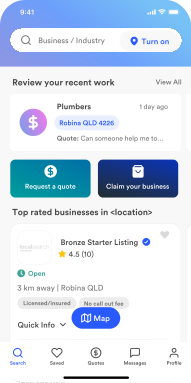
Screenshot of the Localsearch App
Card highlighting that you can claim and future proof your business with the Localsearch App

Localsearch App

Find local businesses - anywhere, anytime.

Available on the Apple App Store iconAvailable on Google Play icon
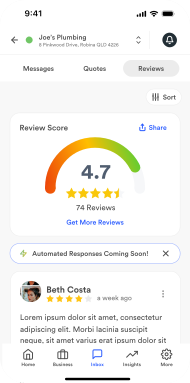
Screenshot of the Localsearch For Business App
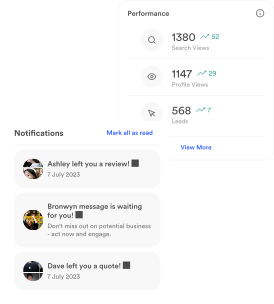
Screenshots of the Performance and Notifications sections of the Localsearch for Business App

Localsearch For Business App

Manage your business - anywhere, anytime.

Available on the Apple App Store iconAvailable on Google Play icon